The Volkswagen Group has revealed the scale of the pressure on the automotive sector with the heavy balance sheet it announced for the third quarter of the year. The group, which includes the Audi, Bugatti, Seat, Skoda, and Porsche brands, posted an operating loss of 5.9 billion euros for the July-September period.
Expectations were for the loss to remain at the 2.6 billion euro level. However, the sharp decline in the Chinese market, high costs, and the impairment at Porsche caused the picture to be much bleaker. The group's net loss after tax reached 2.7 billion euros in the third quarter; in the same period last year, it had announced a net profit of 3.4 billion euros.
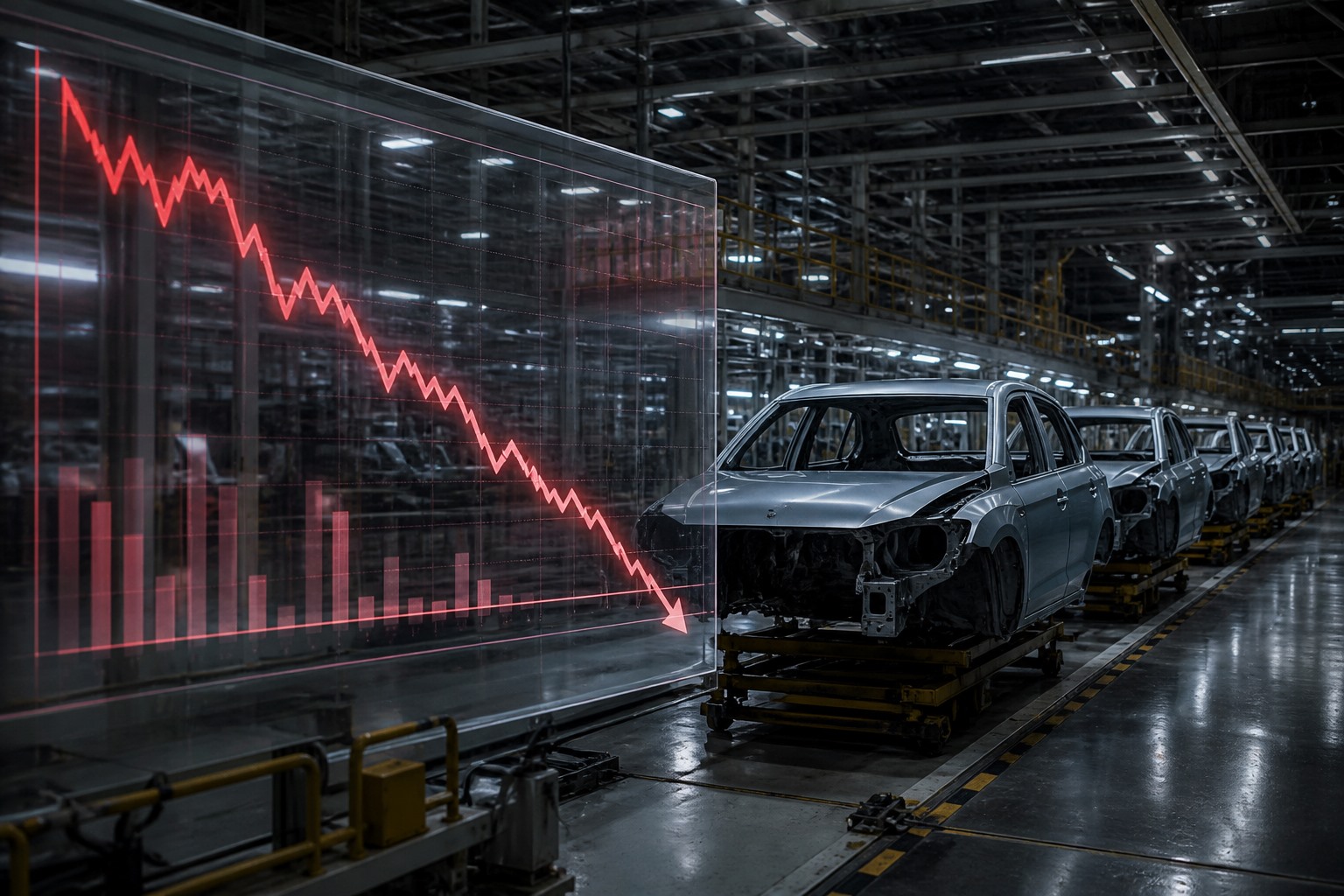
Sales revenue fell by 6.3 percent in the same period to 75.28 billion euros. While global vehicle deliveries decreased by 14.3 percent to 1 million 885 thousand units, deliveries in China fell by 38.5 percent to 406 thousand units.
China and Porsche weighed down the balance sheet
One of the biggest pressure points on the company's balance sheet was the impairment loss originating from Porsche. Due to the deterioration in future expectations, an impairment of 6.4 billion euros was recorded in Porsche's brand value—a non-cash charge that directly impacts operating profit.
An additional asset write-down of approximately 1 billion euros was also made due to market loss in China. Including other items, the total of one-off negative effects reached 7.8 billion euros.
The Volkswagen Group also announced a net loss of 2.72 billion euros for the January-September period. The company's nine-month turnover, which had achieved a net profit of 3.4 billion euros in the same period last year, decreased by 2.2 percent to 233 billion 378 million euros. Total vehicle deliveries fell by 9 percent to 6.01 million units.
The group reported a period loss in China for the first time since it began operating in the country. While its Chinese operations brought in a profit of 744 million euros in the January-September period last year, they posted an operational deficit of 113 million euros in the same period this year.
The heavy balance sheet is considered a factor that will strengthen the hand of Volkswagen, under the management of CEO Oliver Blume, in cost-reduction negotiations with unions. As part of the restructuring plan, the option of laying off 100 thousand employees globally is on the agenda.
There is a risk of closure for some factories in Germany, including the three Volkswagen plants in Hannover, Emden, and Zwickau, as well as the Audi facility in Neckarsulm. If these steps are implemented, the company could face one of the most severe restructuring processes in its 89-year history regarding its facilities in Germany.
Volkswagen management had revised its profit forecasts downward in mid-September. While the company expects total revenue to be approximately 315 billion euros by the end of 2026, it has lowered its operating profit margin target from the previous 4-5.5 percent band to a maximum of 1 percent of revenue.
News Source: 12punto