


What does ignoring the Republic do to whom?


It is Atatürk's saying: "Power is one, and it belongs to the nation."
The following words are written on the wall of the Grand National Assembly of Turkey (TBMM): "Sovereignty belongs unconditionally to the nation."
The name of the organization in the initial phase of our War of Independence is the Kuvayı Milliye (National Forces).
The name of the society organized under a single roof in Sivas is the Society for the Defense of Rights of Anatolia and Rumelia.
The name of the parliament opened in Ankara is the Grand National Assembly of Turkey.
The names of the newspapers published by Atatürk during the years of the War of Independence are Hakimiyet-i Milliye (National Sovereignty) and İrade-i Milliye (National Will).
In his addresses to our heroic army during the war years, Atatürk generally began his words as follows: "Armies of the TBMM."
The War of Independence, in Atatürk's words at the Sivas Congress, is being fought for the principle of "making the National Forces effective and the national will dominant."
There are two ministries with "national" in their names: the Ministry of National Education and the Ministry of National Defense.
These examples can certainly be multiplied.
In all of them, Atatürk's sensitivity regarding national will, national sovereignty, and national independence is evident.
National sovereignty and full independence are the essence of the War of Independence, the Turkish Revolution, and the Republic of Turkey.
Mustafa Kemal Atatürk is the revolutionary who unites and integrates the nation.
He is against the division, segregation, and fragmentation of the nation through sects, religion, ethnic origin, regional affiliation, sub-identities, and through affiliations, memberships, and sensitivities that are remnants of the Middle Ages or residues of feudalism.
Because these sub-identities are the greatest enemies of national consciousness, just as they are the greatest enemies of class consciousness. Just as they divide the nation, they also divide the laborers.
Atatürk's definition of the nation is as follows: "The people of Turkey who founded the Republic of Turkey are called the Turkish Nation."
Atatürk's definition of a citizen is also as follows: "How happy is the one who says I am a Turk."
Ignoring, disregarding, belittling, or turning one's nose up at these definitions does not make anyone more leftist, more revolutionary, more nationalist, more Turkist, or more conservative.
So what does it do?
It makes one an extension, a satellite, and a collaborator of imperialism.
Would you like to get notifications about new developments and save news?
- NotificationsNew developments and breaking news
- SaveNews is stored in the app
Most Read

Two high-speed trains collide in Spain!
New formula for indefinite alimony regulation
Can Yayınları Editor-in-Chief Cem Akaş has passed away
Surprise results emerge from the ballot box in Israel

Allegations involving Turkey in the case of 748 kilos of cocaine seized in Ecuador
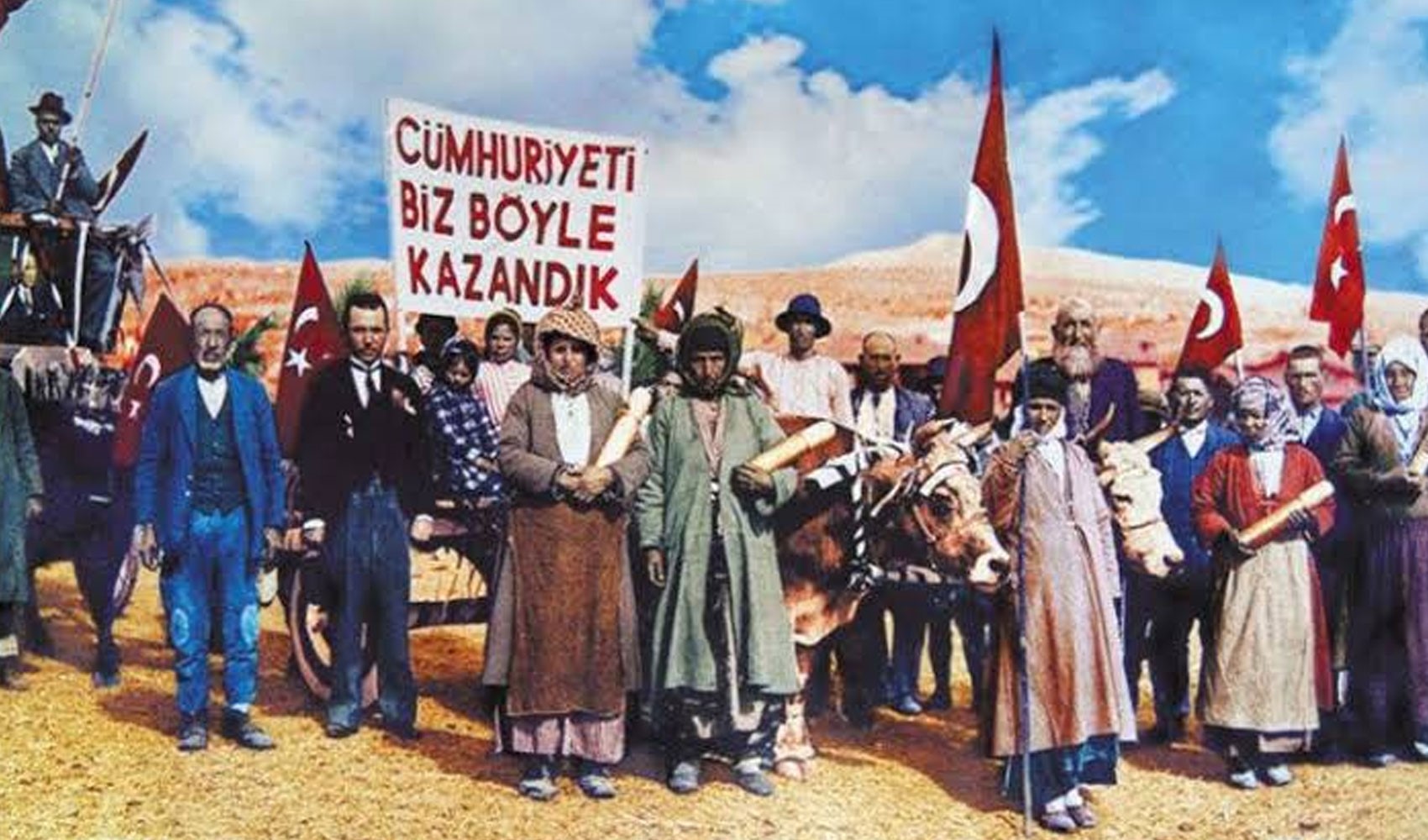
With the Republic, sovereignty was taken from the palace; it cannot be returned to the palace!

The digital era for IDs begins
NEW Party decision from Mustafa Sarıgül!
Striking claim regarding the Erdoğan-Aliyev meeting!
Social media move from Oktay Saral following his resignation