


Who is left from the four horsemen of the apocalypse?


A political era is coming to an end in Europe.
Together, we are witnessing a phase of political change on the old continent that is pushing boundaries and shaking the authoritarian practices that have become increasingly institutionalized since the turn of the 21st century.
This dissolution is not so much a result of consensus among traditional elites, but rather the outcome of grassroots movements reacting to structural stagnation.
Let us put it this way: the process in question has a meaning that goes beyond the familiar romanticism of the opposition in Turkey—the "come on, my brave lion" rhetoric, the passivity of "let's turn on our cell phone lights now," the status-quo-preserving brake mechanisms of "let's gather again later, let's disperse," or "let's not confront our police."
Let us underline with a thick pen that this wave is a radical movement that rejects top-down control, starts literally from the grassroots, is results-oriented, and aims to change the rules!
If we refresh our memories; the process that began in Poland with the removal of the populist-conservative government that eroded democracy, the rule of law, and human rights, turned into a structural break in Hungary with the heavy defeat suffered by Viktor Orbán's 16-year "illiberal democracy" laboratory in the April 2026 elections. Finally, in Serbia, Vucic's 14-year hegemonic power model was shaken by an election victory organized by a student-led mass movement.
This critical development is of a nature that will overturn the geopolitical coordinates of the regional autocracy belt.
The metaphor of the "four horsemen of the apocalypse" established in political literature through Vucic, Orbán, and Erdoğan was based on the similarity of regime typologies along the Eastern Europe and Balkans axis. As of today, this illiberal bloc has lost ground on the Hungarian and Serbian fronts; only Turkey remains.
Of course, each country's internal sociology, constitutional architecture, and alliance mechanisms produce different variations of neoclassical patrimonialism. However, let us not forget that a universal rule is at work from a macro-political perspective! Regimes that instrumentalize the state by abolishing institutional autonomy, make the judiciary an apparatus of power fortification, and tie the public budget to the financing of political patronage networks cannot sustain the production of social consent forever, no matter what they do. In other words, a management approach that turns the state into an extension of its own political power, uses the judiciary and media as a punitive stick, and makes public resources a tool of political loyalty hits a wall at some point.
Let us put on our reading glasses and take a closer look at the change of power in Serbia.
In the early general election held on October 25, the list supported by students received approximately 52.7 percent of the votes and won 139 seats in parliament. Vucic's ruling bloc, which recklessly backed itself with all the state's resources, remained at 39.2 percent. Thus, the Serbian Progressive Party's hegemonic rule, which had lasted since 2012, ended with a heavy defeat.
The starting point of this movement was the collapse of the concrete canopy at the Novi Sad train station in November 2024, which claimed the lives of 16 people. The government tried to cover up this tragedy with bureaucratic excuses as always. However, the students demanded that those responsible for the disaster be held accountable. This anger, which started against corruption, impunity, lack of oversight, and the decay of state institutions in line with political interests, turned into a mass political movement nationwide within two years with a pinpoint strategy.
So, with what program did these young people win the election? That is the real issue here!
They stayed away from the abstract promises, hollow rhetoric, and personal power struggles of the classical opposition. They appeared before the public with a concrete 11-point program gathered under three clear slogans.
With the slogan "Either Serbia or the mafia," they aimed to free the judiciary from political pressure, establish a special prosecutor's police to investigate corruption, recover unjustly acquired wealth, ensure transparent public tenders, and liberate the media that had become the mouthpiece of the government.
Under the heading "Knowledge is power," they advocated for meritocracy in the public sector, ending political staffing, cleansing education of politics, and moving away from an economic model that sees the country as a paradise for cheap labor.
With the slogan "Serbia is growing with us," they pledged to end precarious employment contracts, break import lobbies, produce affordable housing for young families and healthcare workers, and most importantly, bring a doctor to every village in rural areas.
The basic philosophy of this program was not just to change the figures in power. The main goal was to radically change the rules and the system that allow for the monopolization of political power and the state's control over institutions and the lives of citizens.
This is exactly where the difference lies!
The students did not just oppose a personality; they objected to the order that made that personality's power possible, to the institutional decay. They did not just want abstract freedom; they defended the independent institutions that would be the guarantee of freedom.
Let us be honest. The Law and Justice Party losing power in the 2023 elections in Poland and Orbán losing at the ballot box in 2026 in Hungary were also the products of a similar social objection.
However, the Polish experience had shown us another truth; a change of government alone is not enough to solve institutional and structural problems on its own.
The Serbian youth now face a more difficult test: implementing the principled program they defended in the opposition while in power.
When we carefully examine the experiences of authoritarianism and dissolution in Europe, the moral of the story for Turkey is extremely clear and precise.
The ballot box is, of course, an indispensable democratic threshold. However, true democratic change is not completed just by replacing one person with another. Unless the absolute independence of the judiciary, freedom of the media, transparency of public tenders, absolute meritocracy in the public sector, and accountability mechanisms are under constitutional guarantee, the same authoritarian order will reproduce itself with new actors even if the names change.
We can define the biggest disadvantage of the mainstream opposition blocs in Turkey exactly here!
Unlike their Serbian or Hungarian peers, their failure to develop a methodological and radical objection to the order that feeds institutional decay; their focus only on early election calendars, micro-transfers in parliamentary arithmetic, and delegate bargaining.
Yet, the historical truth shown by the old continent stands right before our eyes!
When economic difficulties, exorbitant prices, allegations of corruption, and a sense of injustice accumulate to the capillaries of society, a new, unstoppable social force is born outside that massive state and media power controlled by the government.
The Serbian youth showed the freshest and most concrete example of this to the whole world.
In the final link of the "four horsemen of the apocalypse" adventure, the emergence of dynamic social segments equipped with a rational institutional program and rejecting the futurelessness left to them, outside the massive media illusions and state corridors built by the status quo, is a historical determinism that Turkey cannot escape either.
This shocking transformation in Europe tells us the truth that societies will not submit to the imposed darkness in one way or another and will ultimately determine their own destiny.
That is why, beyond names and temporary governments, we understand much better today the vital importance of embracing independent institutions, the rule of law, and a state that is the protector of the unprotected.
The vision of Gazi Mustafa Kemal Atatürk, who ended the sovereignty of individuals on these lands exactly 103 years ago and handed sovereignty unconditionally to the nation, and who entrusted the future of the country to young minds by saying, "All my hope is in the youth," has been confirmed once again today by the history written by young people in the middle of Europe!
With the will to protect this great legacy left to us, our institutions, and our future, I celebrate our October 29 Republic Day; and I bow once again with respect before the cherished memory of our Republic's founder, our Great Leader Gazi Mustafa Kemal Atatürk, and his comrades-in-arms.
Would you like to get notifications about new developments and save news?
- NotificationsNew developments and breaking news
- SaveNews is stored in the app
Most Read
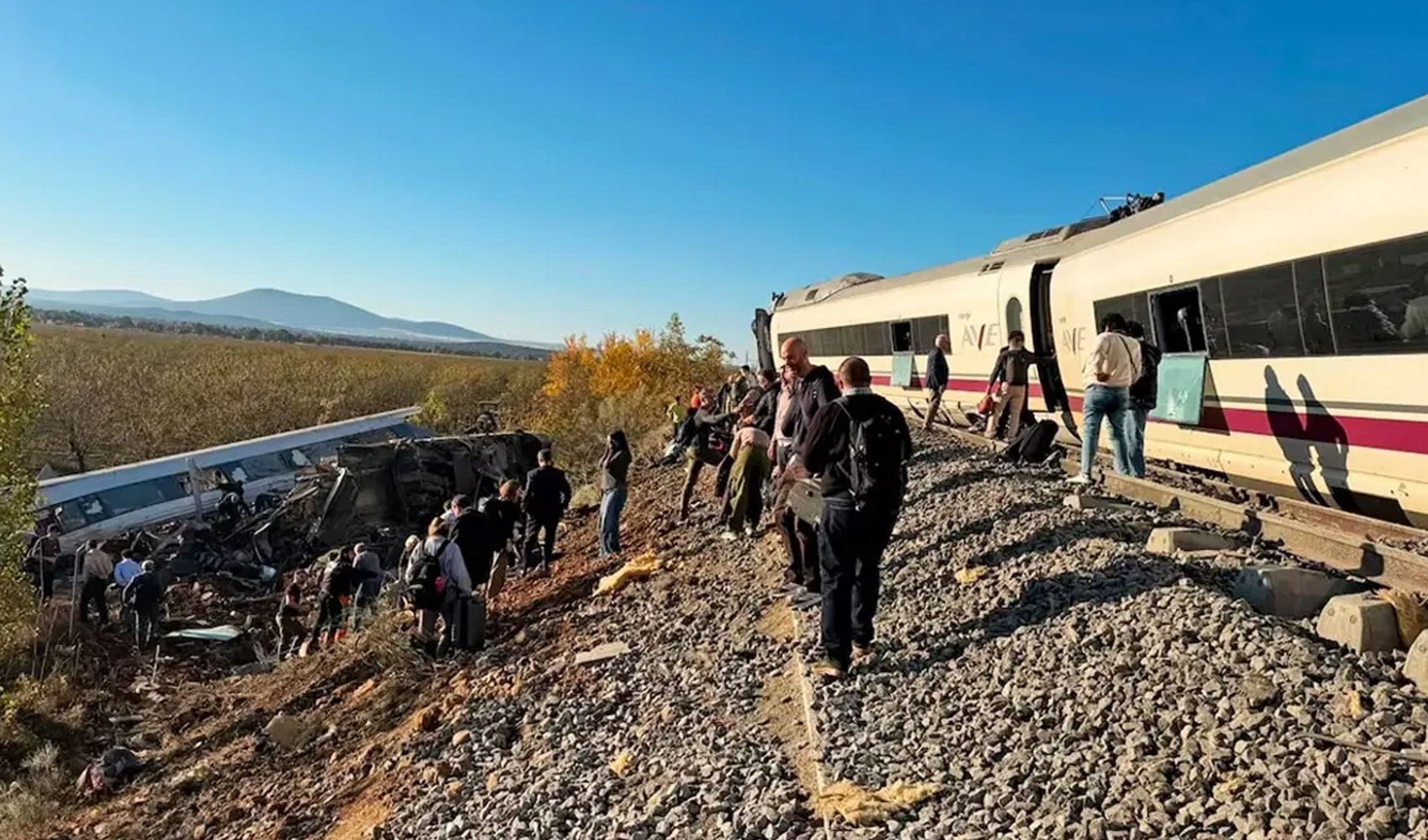
Two high-speed trains collide in Spain!
New formula for indefinite alimony regulation
Can Yayınları Editor-in-Chief Cem Akaş has passed away
Surprise results emerge from the ballot box in Israel

Allegations involving Turkey in the case of 748 kilos of cocaine seized in Ecuador
With the Republic, sovereignty was taken from the palace; it cannot be returned to the palace!

The digital era for IDs begins
NEW Party decision from Mustafa Sarıgül!
Striking claim regarding the Erdoğan-Aliyev meeting!
Social media move from Oktay Saral following his resignation