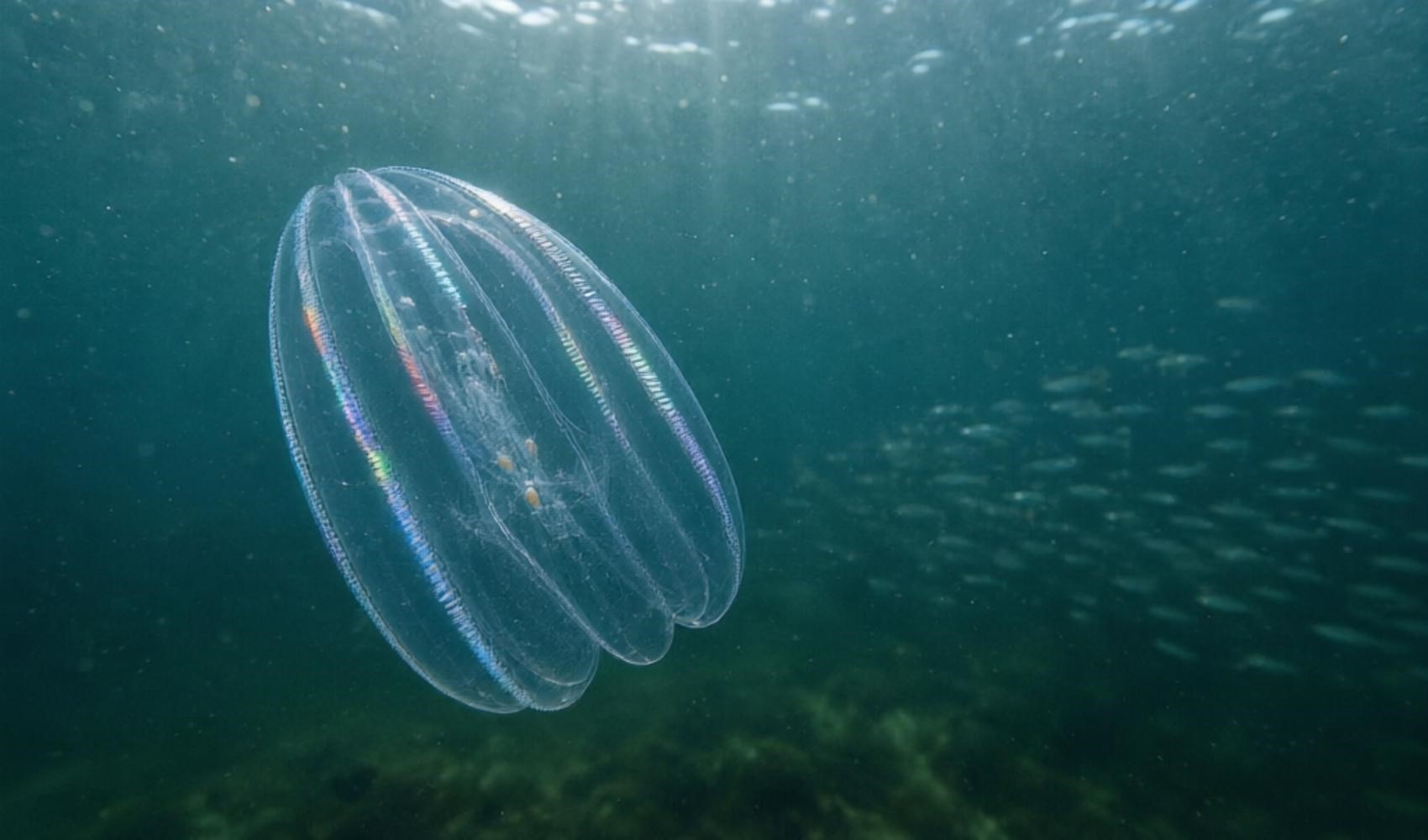
The spread of the invasive comb jelly Mnemiopsis leidyi in the Baltic Sea has become one of the environmental risks closely monitored by scientists. Resembling jellyfish in appearance but lacking the stinging cells found in true jellyfish, this ctenophore is drawing attention particularly due to its impact on fisheries and the marine ecosystem.
It is stated that the species was first introduced to European waters in the 1980s via the ballast water of ships arriving at Black Sea ports from the Atlantic coasts of the Americas. According to information provided in the study Biological Invasions by Marine Jellyfish by W.M. Graham and K.M. Bayha, Mnemiopsis leidyi quickly became one of the dominant species in the Black Sea.
The density of the invasive species in the Black Sea reached up to 400 individuals per cubic meter in 1988. However, its rapid consumption of zooplankton, a primary food source, led to a sharp subsequent decline in the population. While similar densities have not yet been reached in the Baltic Sea, recent research indicates that its rate of spread is increasing.
BALANCE IN THE ECOSYSTEM IS WEAKENING
One of the greatest risks posed by the comb jelly is that it feeds on the eggs and larvae of fish such as sprat and sardines. This can put pressure on fish stocks by reducing the number of future generations. Furthermore, its consumption of large quantities of zooplankton can lead to food competition with many marine organisms and disrupt the natural balance of the ecosystem.
The reason this bioluminescent invertebrate is referred to as a "sea cannibal" is the extraordinary survival strategy it exhibits under harsh conditions. The species can consume its own larvae when food is scarce, and in its adult stage, it can produce large numbers of eggs that it can use as an energy source during times of famine.
According to scientists, one of the factors paving the way for the species in the Baltic Sea is the expansion of "dead zones," where dissolved oxygen in the water drops to very low levels. This condition, known as hypoxia, narrows the habitats of native species while potentially making invasive species more advantageous under certain conditions.
A study published in the Journal of Plankton Research in January 2026 revealed that the three-spined stickleback (Gasterosteus aculeatus), native to the Baltic Sea, could act as a natural balancing factor by feeding on Mnemiopsis leidyi larvae. However, falling oxygen levels reduce the hunting efficiency of these fish, thereby weakening the natural pressure on the larvae of the invasive species.
Climate change makes the picture even more complex. While rising water temperatures may facilitate the spread of the species, the decrease in salinity in the Baltic Sea is not always advantageous for Mnemiopsis leidyi, as the species thrives better in saltier waters. For this reason, researchers emphasize that it is difficult to predict how ecological change in the region will shape the future spread of the invasive species.
According to experts, the "sea cannibal" alarm is merely an indicator of the broader environmental pressures the Baltic Sea is facing. The growth of oxygen-depleted areas, fluctuations linked to climate change, and human activities continue to alter living conditions for native species in the sensitive marine ecosystem.
News Source: 12punto