

The role of bar associations when democracy is under pressure: How to defend the rule of law?
As debates over media freedom, judicial independence, and voter will intensify, it is critical for bar associations to establish a rights-based and continuous line of struggle.




In democratic systems, bar associations are not merely professional organizations for lawyers. They are one of the institutional pillars of the right to defense, the guarantee of a fair trial, and the rule of law. Therefore, when bar associations remain silent during periods of increasing pressure on media freedom, voter will, judicial independence, and the right to expression, it signifies not only a professional shortcoming but also a weakening of public checks and balances.
In Turkey, the recent years have seen access bans imposed on the websites and social media accounts of media outlets, investigations and lawsuits against journalists, and controversial actions taken against local administrations through judicial and administrative tools, all of which have sparked a broad debate in the public sphere regarding the rule of law. While there are different political positions in the assessments of this situation, the fundamental criterion remains unchanged: Democracy is damaged when state power is not limited by independent judicial oversight, the principle of legality, and guarantees of fundamental rights.
The importance of bar associations emerges precisely here. Because legal practice is one of the fundamental tools that ensures individuals are not left alone against the state. For members of the press, elected local officials, opposition politicians, human rights defenders, or ordinary citizens, the effective exercise of the right to defense depends on the legal order not remaining merely on paper.
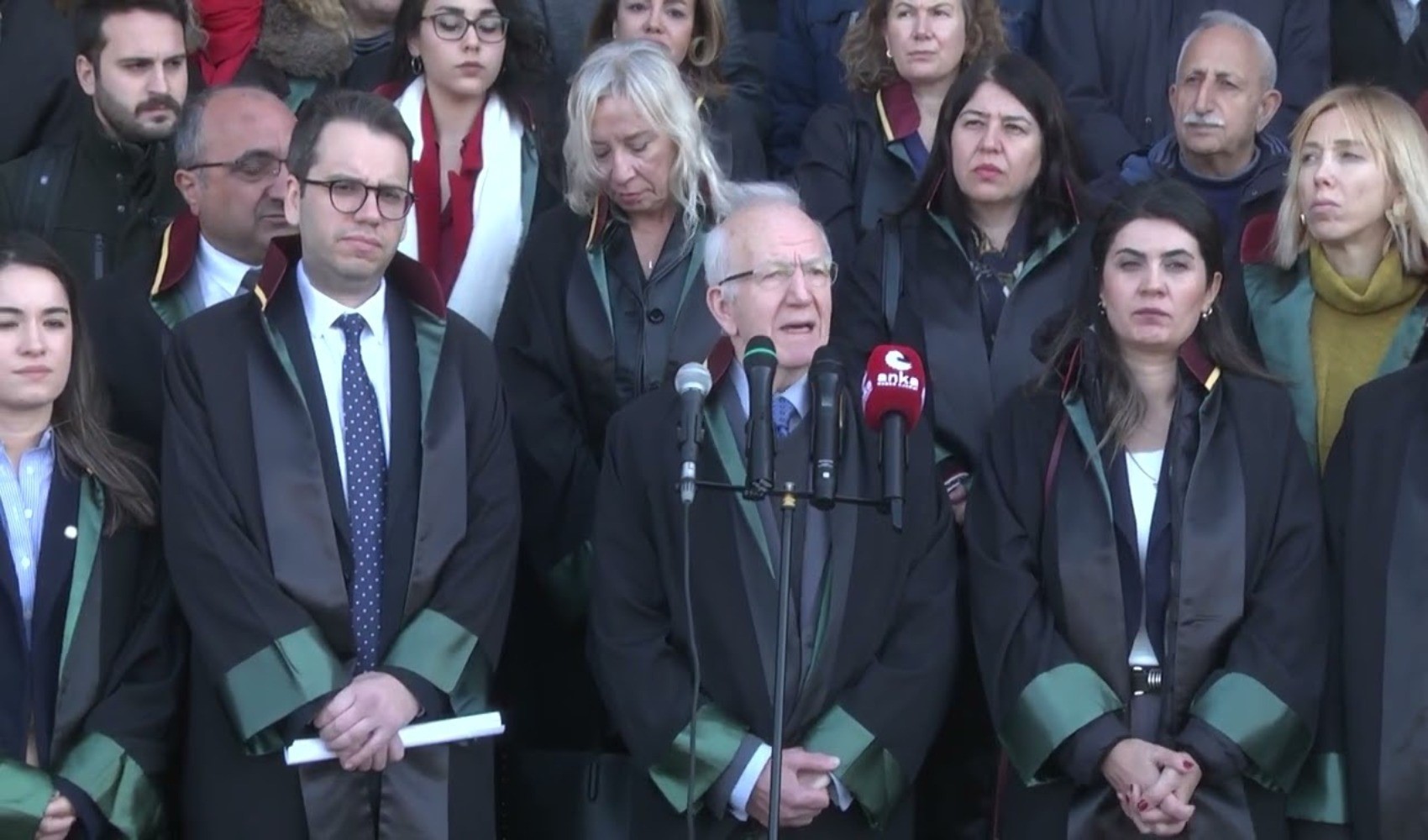
WHY ARE BAR ASSOCIATIONS IN A CENTRAL POSITION?
When judicial independence becomes a matter of debate in a country, the duty of bar associations is not to replace the courts. However, bar associations are obligated to make unlawful practices visible, facilitate citizens' access to justice, ensure that lawyers can perform their duties without being under pressure, and provide reliable legal information to the public.
This role is even more pronounced in the field of media freedom. Access bans, publication bans, the closure of social media accounts, or lawsuits against journalists do not only concern media organizations. The citizen's right to receive information, the oversight of public power, and the healthy functioning of election processes are also directly affected. Therefore, bar associations defending press freedom means defending the society's right to access information, not the professional privileges of journalists.
A similar framework applies to voter will. The removal of elected officials from office, interventions in municipalities, or judicial processes that narrow the political space can only be compatible with the principle of the rule of law if they are subject to open, reasoned, proportionate, and effective judicial oversight. At this point, bar associations should take a position not based on the political identity of the parties, but on the compliance of the actions with legal standards.
WITH WHICH TOOLS IS AN EFFECTIVE STRUGGLE ESTABLISHED?
For bar associations to be effective during periods of pressure, it is not enough to merely publish harsh statements. A statement is part of shaping public opinion; however, institutional struggle requires continuity, documentation, follow-up, and solidarity. Therefore, the steps that bar associations can take can be grouped under several headings.
- - Legal monitoring and reporting: Access bans, journalist trials, interventions in the right to assembly and demonstration, actions against municipalities, and pressures on lawyers should be monitored regularly; decisions, justifications, and allegations of rights violations should be presented to the public through understandable reports.
- - Emergency defense mechanism: Easily accessible lawyer networks should be established for journalists, human rights defenders, students, elected officials, and citizens during detention, arrest, or administrative sanction processes.
- - Strategic litigation follow-up: Instead of just reacting to individual files, bar associations should systematically follow cases that could set precedents in areas such as freedom of expression, fair trial, the right to vote and be elected, and access to information.
- - Constitutional and international applications: When domestic legal remedies are exhausted, qualified application support should be provided in the processes of the Constitutional Court and the European Court of Human Rights. This support should focus on the legal substantiation of rights violation claims rather than political debate.
- - Intra-professional solidarity: In cases where lawyers have difficulty performing their defense duties due to threats of investigation, courtroom pressure, or administrative obstacles, bar associations should provide open, visible, and organized support.
- - Communication with society: Legal processes should be explained in simple language; citizens should be informed through regular awareness-raising efforts about which rights they have in which situations and which application channels they can use.
Some examples from around the world show that legal professional organizations can assume not only a professional but also a democratic function during times of crisis. In Pakistan, the "Lawyers' Movement" initiated by lawyers after then-President Pervez Musharraf removed Supreme Court Chief Justice Iftikhar Muhammad Chaudhry from office in 2007 played an important role in bringing the debate on judicial independence to the center of the country's agenda. At the end of the process, Chaudhry returned to his post in 2009.
In Tunisia, the Tunisian National Bar Association was part of the National Dialogue Quartet established in 2013 to overcome the political crisis. This structure was awarded the 2015 Nobel Peace Prize for its contribution to establishing a ground for dialogue in the country. This example showed that legal organizations could be effective not only in the courtroom but also in protecting channels of democratic consensus.
In South Africa, during the apartheid era, lawyers and legal centers provided legal support to victims of racist laws, assuming important functions in terms of both individual defense and public awareness. These experiences reveal the importance of the capacity of independent jurists to produce documents, reach victims, and preserve legal memory in environments of pressure.
Of course, the struggle of bar associations may lose its effectiveness if it is not conducted on a non-partisan ground. Therefore, the language of bar associations should be based on defending the principle of law rather than supporting a specific political actor. The same standard should be applied without distinguishing between the government, the opposition, a journalist, a mayor, a student, or an ordinary citizen. Otherwise, rights advocacy may lose its legal credibility and become part of daily political polemics.
The real test for bar associations is to maintain the principles prepared in ordinary times during difficult times as well. Press freedom, the right to defense, voter will, and judicial independence are not disconnected topics; they are all connected to the same backbone of the rule of law. When this backbone weakens, the citizen's ability to be protected against the state also weakens.
Therefore, what is expected from bar associations is not just to show reaction, but to establish a sustainable, evidence-based, accessible, and courageous legal struggle. Such a line both strengthens the social prestige of the legal profession and keeps the right to defense, one of the most fundamental guarantees of democracy, alive.
News Source: 12punto
Most Read

Fear haunts the mountains

AKP member takes a step back

Latte 400 TL, bonito 300 TL

'Hunting season' has opened: But this adventure will burn everyone!

Northern Marmara Motorway user manual

Is the pitch bad, Coach İsmail?

Are Chinese robots making history?

From Bilal Erdoğan to Amedspor fans
The question Raci Şaşmaz refused to answer draws attention
Rasim Ozan Kütahyalı claimed he was giving a statement, but the Chief Public Prosecutor's Office denied it!