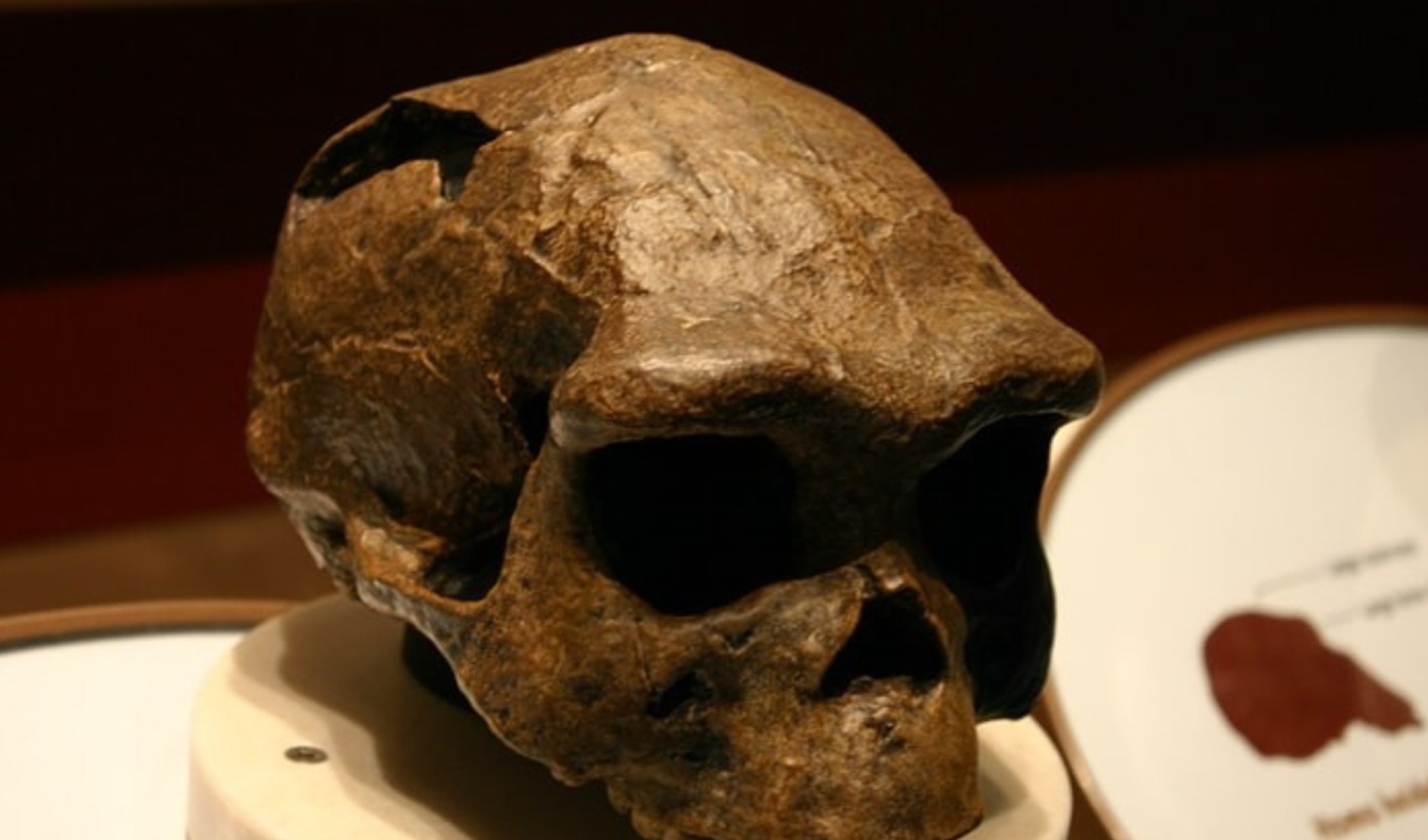
Excavations at the Drimolen Main Quarry near Johannesburg, known as the "Cradle of Humankind" in South Africa, have yielded a remarkable finding for human evolution research. An international research team examined a fossil coded DNH 127, which is stated to belong to an adult Homo erectus individual.
According to the study led by La Trobe University, the fossil shows that Homo erectus lived in the region approximately 2 million years ago. The research, published in the journal Annals of Human Biology, presented findings that push the species' known timeline back by approximately 200 thousand years.
Previously, a Homo erectus skull fragment coded DNH 134 had been found in Drimolen. However, because that fossil belonged to an infant, it made comparisons with the species' adult anatomy difficult. The newly found DNH 127, belonging to an adult individual, provided researchers with a more solid basis for comparison.
TWO DIFFERENT HUMAN RELATIVES IN THE SAME PERIOD
In the study, data emerged suggesting that the species Paranthropus robustus also lived in the Drimolen region during the same period as Homo erectus. According to dating analyses, the P. robustus population in the region approximately 2 million years ago was about 10 to 1 more numerous compared to Homo erectus.
It is noted that P. robustus evolved with large jawbones and large teeth suitable for consuming hard and fibrous foods, while the Homo erectus lineage developed toward smaller teeth and a larger brain volume. Scientists assess that the less numerous Homo erectus showed greater adaptive success in the long term, while P. robustus eventually went extinct.
According to experts, ongoing excavations in Drimolen may provide new information about the early dispersal of Homo erectus, its adaptation to environmental conditions, and critical turning points in human evolution.
News Source: 12punto