

What should you pay attention to in order to avoid baggage fee surprises on international flights?
Extra baggage fees can exceed your travel budget. It is critical to check tariff, weight, transfer, and insurance conditions before purchasing a ticket.



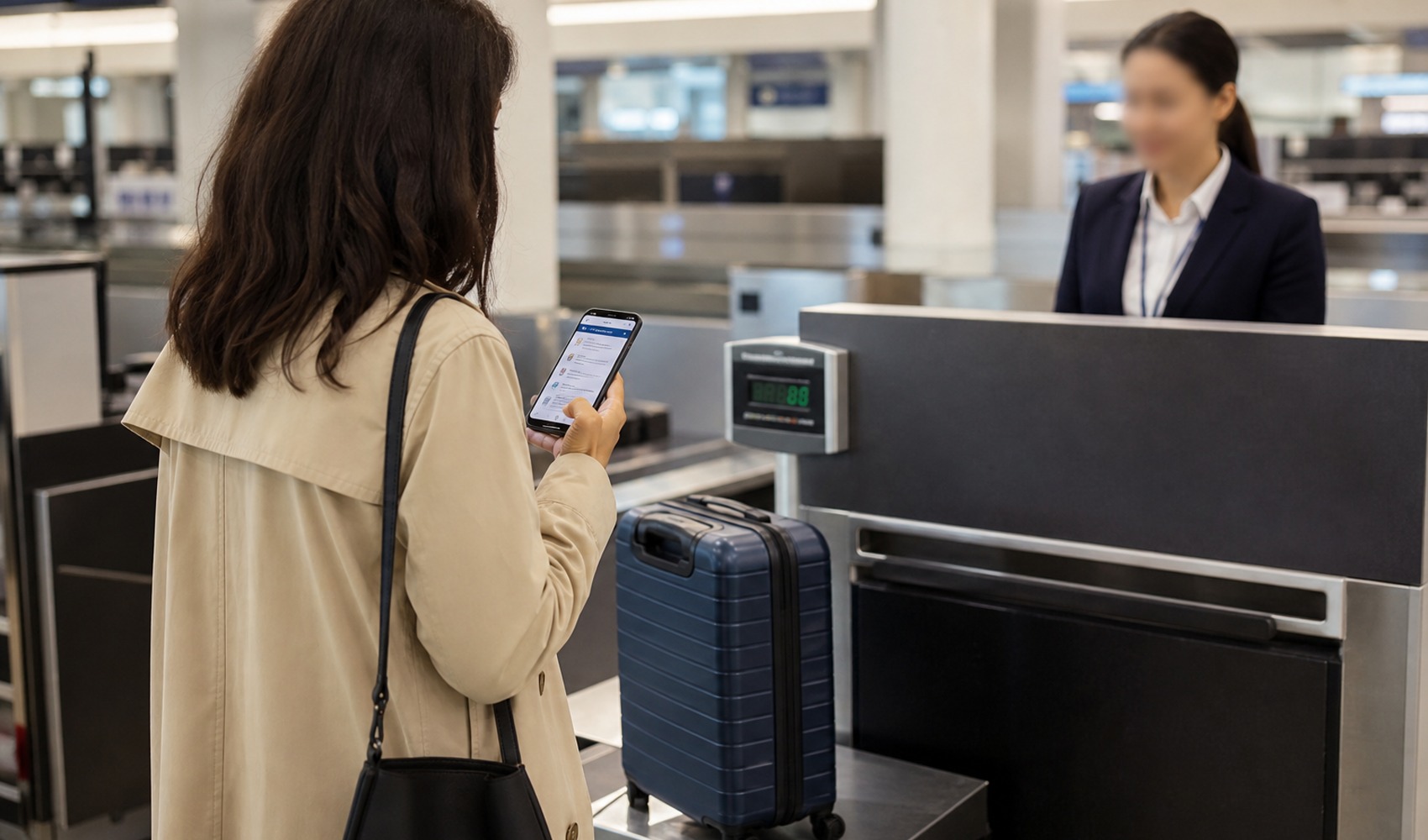
For passengers flying from Turkey to international destinations, baggage allowance is no longer just about the question, “How many kilos of luggage can I take?” Even on the same route, the ticket class, airline, transit country, the operating carrier, and cabin baggage dimensions can lead to different results. Therefore, the high extra baggage fees encountered at the airport are often not last-minute surprises, but the result of rules that were not sufficiently reviewed before the trip.
Especially in low-cost tariffs, checked baggage may not be included in the ticket price; in some tariffs, cabin baggage may be limited to only a small bag. Even with traditional airlines, sub-categories of economy class, mileage tickets, promotional tickets, or codeshare practices can change baggage allowance. Therefore, the safest method is to calculate the “total travel cost” before purchasing a ticket.
WHY IS BAGGAGE ALLOWANCE SO VARIABLE?
Baggage rules are determined by airlines' commercial policies, along with flight safety and operational capacity. As the paid baggage model has become widespread globally, it has become riskier for passengers to make decisions based solely on the ticket price. Sometimes a seemingly cheap ticket can become more expensive when seat selection, cabin baggage, checked baggage, and excess weight fees are added.
International practices are also not uniform. Regulation (EC) No 261/2004, which comes to mind for most people when discussing passenger rights in the European Union, deals more with situations such as long delays, cancellations, and denied boarding; the loss, damage, or delay of baggage is generally evaluated within the framework of the Montreal Convention. This convention provides limits for liability regarding baggage on international flights based on Special Drawing Rights (SDR); however, this regulation does not mean an automatic refund of excess baggage fees.
In the US, the transportation authority has consumer information rules that require airlines to clearly display baggage fees to passengers. In Europe, there have been various debates regarding cabin baggage fees; for example, in Spain, the consumer authority imposed sanctions on some low-cost airlines due to cabin baggage and seat pricing, and the companies announced they would appeal the decisions. These examples show that baggage fees can be seen not only as a passenger-airline relationship but also as a matter of consumer law.
THINGS TO CHECK BEFORE BUYING A TICKET
The most effective way to prevent baggage-related grievances is to start preparations at the ticket purchase stage. Passengers should look not only at the route and time information of the ticket they are purchasing but also at the baggage conditions. The phrase “baggage included” may not be enough on its own; it should be checked separately how many pieces, how many kilos, what dimensions, and what limitations apply.
- - Check the ticket class: Promotional, light, basic, or similar tariffs may not include checked baggage.
- - Check both weight and dimension limits for cabin baggage: Some companies only allow a small bag that fits under the seat.
- - Examine the “operating carrier” information for connecting flights: If the company selling the ticket and the company operating the flight are different, the baggage rule may change.
- - Check the outbound and return flights separately: Gifts or shopping on the return trip can increase the weight more than planned.
- - Purchase excess baggage in advance if possible, not at the airport: For many airlines, online extra baggage can be lower than the fee at the counter.
- - Keep your baggage allowance in writing: The ticket, email, app screenshot, and fee table are important in case of a dispute.

Using a scale at home may not be enough on its own. Since small differences can occur with airport scales, it is safer not to be right at the limit. For example, keeping a bag with a 23-kilogram allowance at around 22.5 kilograms reduces the risk of having problems due to scale differences or items added at the last minute. For cabin suitcases, dimensions including wheels and handles can be considered as much as weight.
| Checklist item | Why is it important? | Action the passenger can take |
|---|---|---|
| Checked baggage | May not be included in the ticket or may have piece/weight limits. | Read tariff conditions before buying a ticket, purchase online extra baggage if necessary. |
| Cabin baggage | Exceeding dimensions can result in fees at the airport. | Check the dimensions of the suitcase including wheels and handles. |
| Transfer | The airline operating the flight may apply different rules. | Check the baggage policy of the operating airline on codeshare flights. |
| Travel insurance | Can provide coverage for baggage loss, delay, or health expenses. | Read the baggage coverage, exclusions, and limits in the policy. |
| International departure tax | There may be a payment that needs to be completed before departure for liable passengers. | Check the current amount and payment method through official channels. |
WHAT TO DO IF A PROBLEM ARISES AT THE AIRPORT?
When the baggage allowance is exceeded, it is possible for the airline to demand an excess baggage fee. If the passenger cannot cover this fee, the first thing to do is to quickly list the options instead of panicking. Items that can be removed from the luggage can be separated, some heavy items that are not prohibited in the cabin can be transferred to a handbag, and if sharing rights between passengers on the same reservation is possible, information can be obtained from the counter agent. However, not every airline may allow piece and weight sharing.
If the fee is very high and the passenger cannot pay, the airline can be asked to show which rule and tariff the fee is calculated based on, in a written format or in a way that a screenshot can be taken. In situations that cannot be resolved with the counter agent, requesting a supervisor, calling the call center, or checking if there is a lower online extra baggage option on the airline's app may work. Despite this, if the excess baggage fee is not paid and the weight cannot be reduced, the airline may not accept the excess baggage.
In critical situations, the passenger's priority should be not to miss the flight. Items removed from the suitcase can be left at the airport's storage services, handed over to someone nearby, or sent later via cargo. Valuables, medication, electronic devices, passports, visa documents, cash, and essential personal needs should never be left in checked baggage; they should be carried in the cabin as much as possible.
If the passenger believes that an incorrect fee has been applied, they should keep the receipt, boarding pass, baggage tag, ticket conditions, and relevant screenshots after making the payment. For flights departing from Turkey, a written application can first be made to the airline. If no results are obtained, depending on the nature of the incident, an application to the Directorate General of Civil Aviation, the consumer arbitration committee, or legal action may be considered. The language of the application should be as concrete as possible; instead of saying “an excess fee was charged,” it should be explained with documents which fee was charged despite which right.
INSURANCE, TAX, AND DOCUMENT CONTROL
International flight preparation is not limited to baggage. Travel insurance can be mandatory, especially in countries that require visas, and even when it is not mandatory, it can provide protection in areas such as health expenses, baggage delay, baggage loss, travel cancellation, or flight disruption. However, not every policy is the same. Even if there is baggage coverage, there may be special exclusions for items such as electronic goods, cash, jewelry, or sports equipment.
The international departure tax is also one of the items that should be checked before the trip. Since the tax amount and payment methods can change over time, the most accurate information should be confirmed through official channels and close to the travel date. For passengers who are not liable for the tax or for special cases, current exemption rules should also be checked.
Passport validity, visa conditions, transit country rules, vaccination or health certificate requirements, consent forms for traveling with children, and return ticket requirements also vary by country. While dealing with baggage issues, one should not overlook document deficiencies that affect the actual right to travel. Especially on connecting flights, the rules of not only the destination country but also the transit country should be examined.
In conclusion, a significant portion of baggage-related grievances can be reduced with a short but systematic check before the trip. Calculating the total cost of the ticket, keeping the rules in writing, preparing the suitcase under the limit, and completing side topics such as insurance and taxes in advance strengthen the passenger's hand. When a problem arises at the airport, the most valuable tool is to stay calm and document every step.
News Source: 12punto
Most Read

Fear haunts the mountains

AKP member takes a step back

Latte 400 TL, bonito 300 TL

'Hunting season' has opened: But this adventure will burn everyone!

Northern Marmara Motorway user manual

Is the pitch bad, Coach İsmail?

Are Chinese robots making history?

From Bilal Erdoğan to Amedspor fans

The question Raci Şaşmaz refused to answer draws attention

Rasim Ozan Kütahyalı claimed he was giving a statement, but the Chief Public Prosecutor's Office denied it!