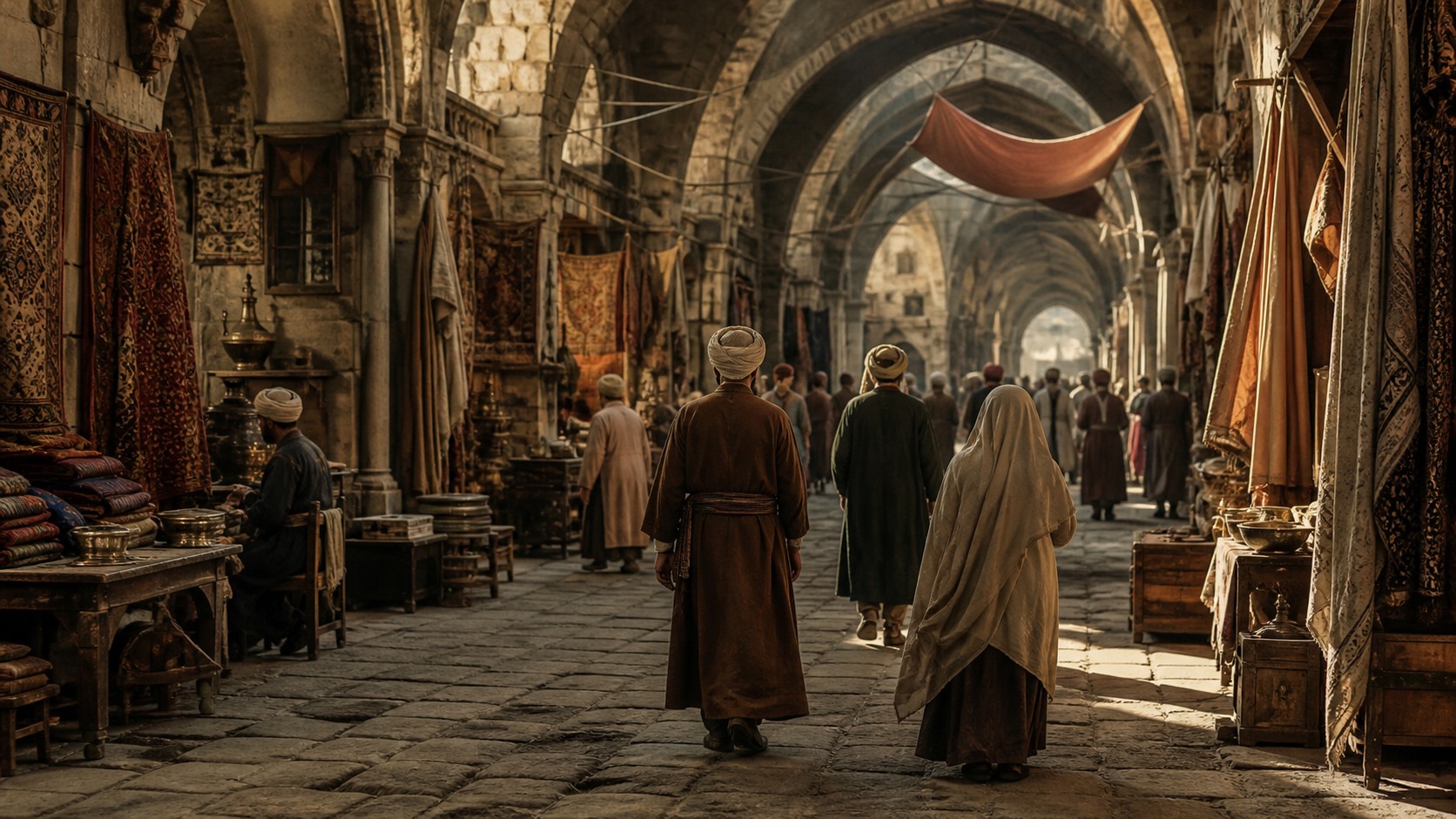
In an article detailing his family's history, which reaches back to Ottoman Istanbul, former British Prime Minister Boris Johnson recounted that his great-great-great-grandmother, Hanife Feride, was brought to Istanbul during the Circassian exile and sold in the Grand Bazaar as a child.
Johnson used his own family story as an example while opposing the debates in the UK regarding reparations for the history of slavery. The former prime minister wrote that Hanife Feride was a refugee fleeing the war-torn Caucasus, crossed the Black Sea in a wooden boat in about 10 days, and was put up for sale in a market in Istanbul.
In his article, Johnson noted that the prices of Circassian girls had fallen due to war and exile, reflecting on the conditions of the era. The former prime minister also quoted a report published from Istanbul by the London Post, which stated, "Never had white human flesh been as cheap as it is now."
Stating that Hanife Feride was later purchased by a Turkish woman, Johnson wrote that the young girl received an education in this home and was married off to a 43-year-old widowed businessman when she was 13. Johnson noted that his sister Rachel and cousin Sinan conducted the family research, and remarked, "We Johnsons are also descended from slaves."
OPPOSED THE REPARATIONS DEBATE
The main emphasis in Johnson's article was his opposition to demands for reparations from today's taxpayers due to slavery. The former prime minister questioned why the "modern Turkish taxpayer" should have to pay for events that occurred under a different administration in Ottoman Istanbul.
Touching upon Russia's role in the Circassian exile, Johnson said that by this logic, one could demand reparations from the Kremlin. However, arguing that this is not realistic, Johnson implied that writing to Vladimir Putin to demand compensation would be futile.
While describing the transatlantic slave trade as one of the grave examples of "man's inhumanity to man," Johnson stated that he does not believe it is right for current generations to bear financial responsibility for the actions of past generations. He concluded his article with the view that reparations should not be paid to the descendants of slaves.
Hanife Feride's story had previously been brought up in the British press. Rachel Johnson had explained in a documentary researching their family history that she learned Hanife Feride had come to Istanbul during the Circassian exile and was married off at a young age.
Boris Johnson's Ottoman connection is established through Ali Kemal, the son of Hanife Feride and Ahmed Hamdi. Ali Kemal, who was involved in journalism and politics during the final period of the Ottoman Empire, was the grandfather of Johnson's father, Stanley Johnson. Ali Kemal's children, who lived in the UK, later began using the surname Johnson, which was their grandmother's maiden name.
News Source: 12punto