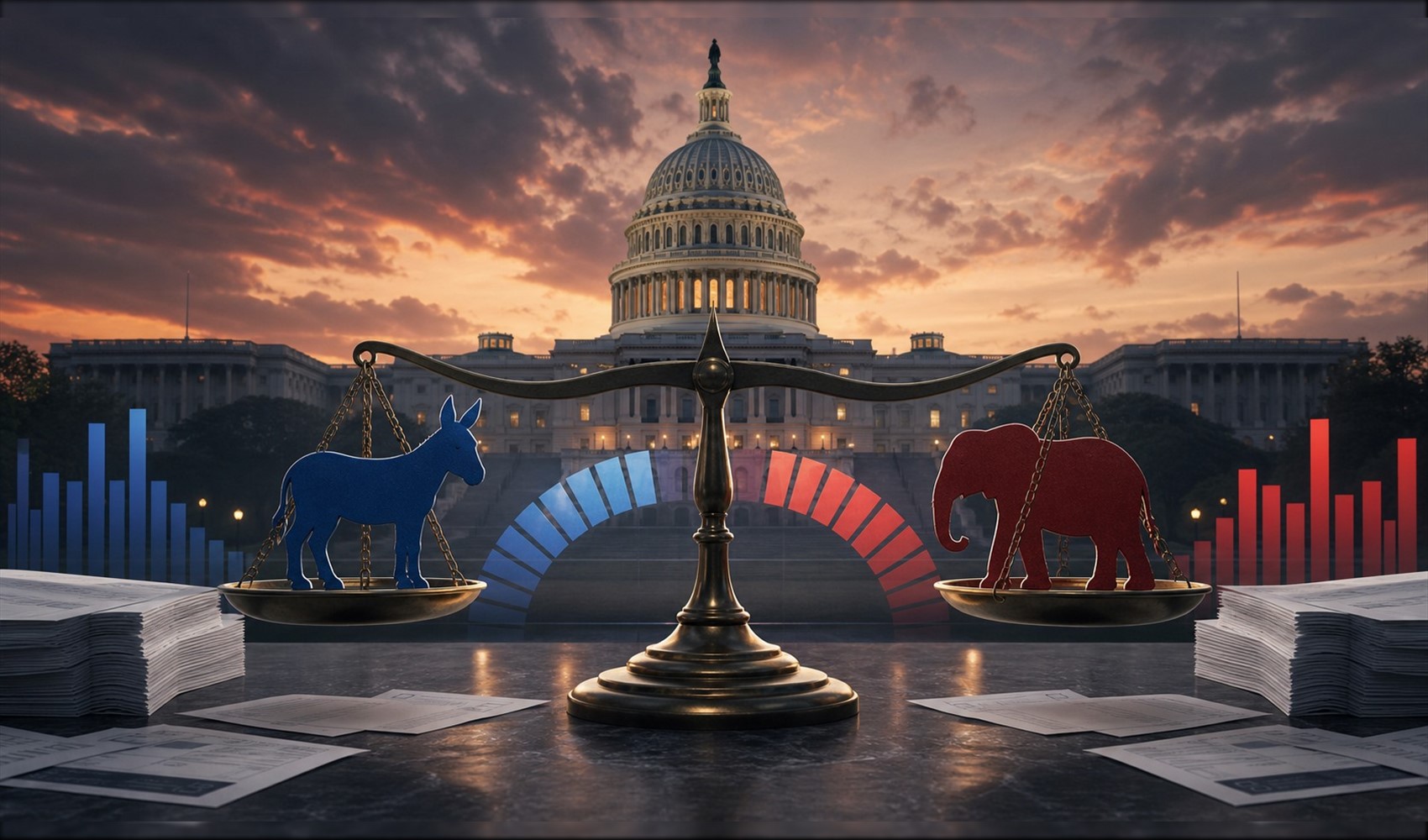
Following the November 3 midterm elections in the US, the balance of power in Congress has shifted in favor of the Democrats. According to results reported by the Associated Press as of 08:15 Turkish time, Democrats have reached 52 seats in the 100-member Senate, including two independent senators who caucus with them. The number of seats held by Republicans remains at 40.
The Democratic lead in the House of Representatives is also notable. According to data published by the AP as of 09:11, Democrats have won 210 seats and Republicans 126. A majority of 218 seats is required in the 435-member House; results in 99 districts have not yet been finalized.
This picture suggests that the remainder of the Donald Trump administration's second term could see more contentious relations with Congress. The shift of the Senate majority to the Democrats could have critical consequences not only in terms of seat distribution but also regarding appointments, budget negotiations, foreign policy oversight, and the legislative agenda.
NARROWING SPACE FOR LEGISLATION AND BUDGET
In the US, the approval of both the House of Representatives and the Senate is required for federal laws to take effect. If Democrats secure a majority in both chambers, it will become difficult for Trump to pass new regulations through Congress on issues such as taxes, healthcare, immigration, and the economy. Democrats may choose not to bring legislative proposals to the floor, demand changes, or request political concessions during budget negotiations.
The federal budget will also be one of the most significant areas of tension in the new term. Defense spending, border security, foreign aid, and appropriations for federal agencies depend on Congressional approval. If a compromise cannot be reached, a temporary shutdown of some federal government operations, as has occurred previously in the US, could be on the agenda.
The new majority in the Senate will also be decisive for Trump's nominees for cabinet positions, ambassadorships, high-level federal officials, and judges. Democrats may reject nominees, prolong confirmation processes, or demand consensus on different names from the White House. Federal judicial appointments, in particular, could create impacts that extend beyond the Trump era due to the length of their terms.
In foreign policy, issues such as military operations against Iran, aid to Ukraine, arms shipments to Israel, sanctions on Russia, and trade with China could face more intense Congressional oversight. Democrats may demand more detailed information from the administration regarding war powers, military spending, and arms transfers; they may also attempt to limit new resource allocations.
However, the change in the Congressional majority does not mean that existing foreign policy decisions or military aid agreements will automatically disappear. The president's veto power, constitutional authority in the executive branch, and the broad room for maneuver granted by existing laws on certain issues remain in place.
If Democrats finalize their majority in the House of Representatives, an increase in investigations into the White House can also be expected. Congressional committees may examine federal spending, public tenders, foreign policy decisions, appointments, and potential conflicts of interest; cabinet members and high-level officials may be called to testify.
The possibility of a new impeachment process against Trump could also theoretically be on the agenda. However, according to the US Constitution, two-thirds of the members present in the Senate must vote in favor of conviction for the president to be removed from office. Therefore, a Democratic majority alone is not sufficient for removal; the support of Republican senators would also be required.
In conclusion, the new balance in Congress does not eliminate Trump's presidential powers, but it makes it difficult for the White House to pass laws, enforce budget priorities, and complete appointments quickly without reaching a compromise with Congress. This situation could mean more institutional friction and a more limited legislative space in Washington.
News Source: 12punto