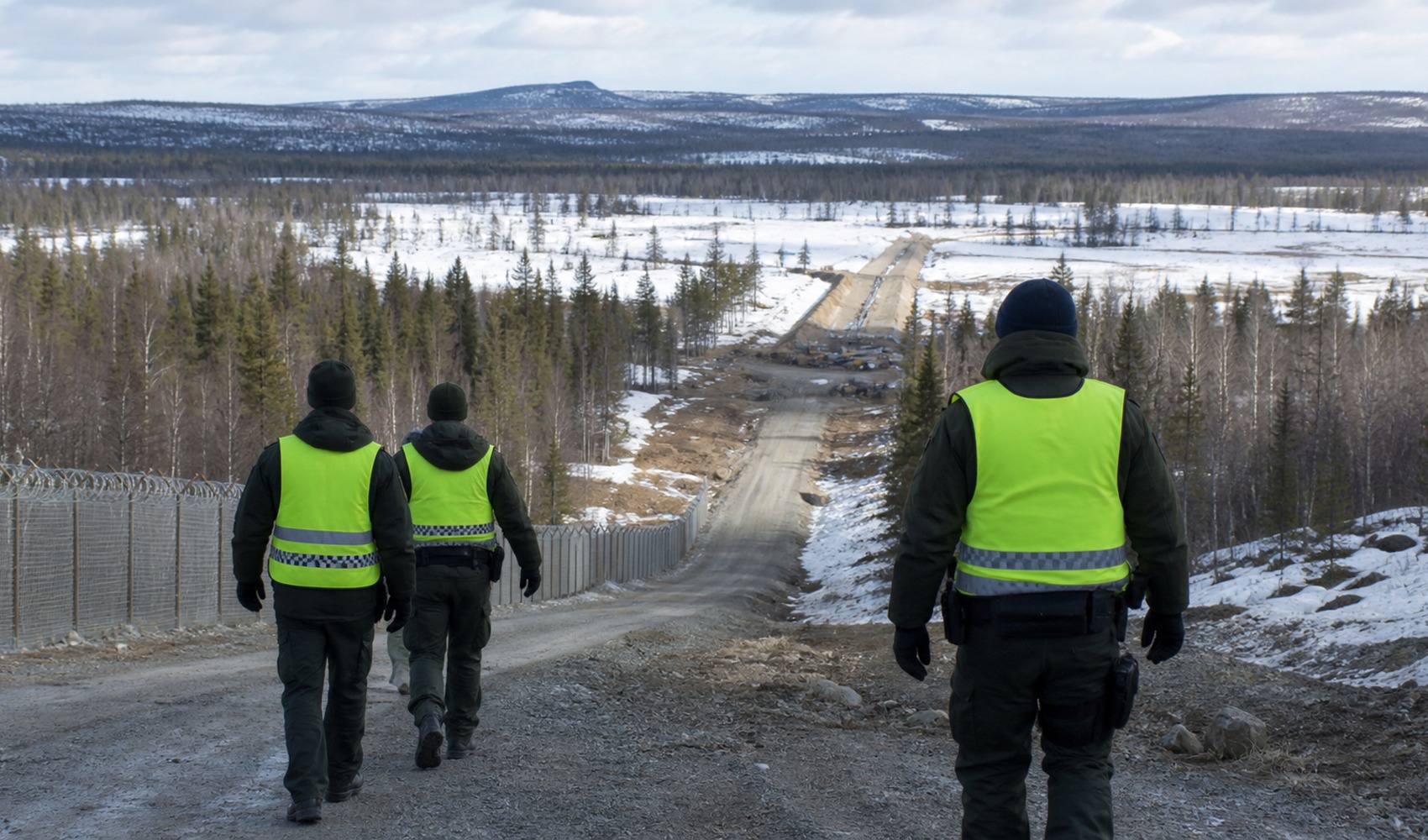
Finland has placed the option of installing new defensive fortifications on its eastern border on its agenda, following assessments that Russia is rebuilding its military capacity. The plans include anti-tank obstacles and ditches similar to the model used in Ukraine.
Finnish Army Commander Lieutenant General Pasi Välimäki told Bloomberg that Helsinki is examining the feasibility of such obstacles along the 1,340-kilometer border with Russia. Välimäki stated that it is necessary to evaluate whether ditches dug in harsh northern conditions would remain functional and whether they might turn into "artificial ponds" due to the climate.
Emphasizing that Finland's security approach is focused on deterring Russia, Välimäki stated that defense is not limited to blocking missiles and drones; it must also include, when necessary, the preemptive capacity to target the other side's launch ramps. Noting that this topic is sensitive in his country, Välimäki said, "This is a difficult issue for Finns, as it means hitting targets on the Russian side."
The Helsinki administration plans to allocate at least 11.6 billion euros for its land and air forces as part of a comprehensive modernization program that will last until the end of the 2030s. The program envisions expanding the K9 howitzer fleet, modernizing multiple rocket launcher systems, and renewing BMP-2 armored combat vehicles.
On the air power side, Finland is expected to replace its F/A-18 fighter jets with F-35A models and add the Israeli-made David’s Sling missile defense system to its inventory. Establishing industrial capacity that can rapidly increase ammunition and equipment production during times of crisis is also among the parts of the planning.
Moscow, meanwhile, continues its criticism of the increase in military spending and activity in Europe. Kremlin Spokesperson Dmitry Peskov had previously stated that there were "very strong militaristic tendencies" in European countries. Russian President Vladimir Putin, while stating that Europe's armament would be met with a response, had described claims that Russia could attack NATO as "complete nonsense."
Russian Foreign Minister Sergey Lavrov also rejected Western claims that the Baltic countries, Sweden, and Finland could be targeted following the war in Ukraine, arguing that, according to Moscow, the real security threat stems from NATO's expansion toward Russia's borders.
News Source: 12punto