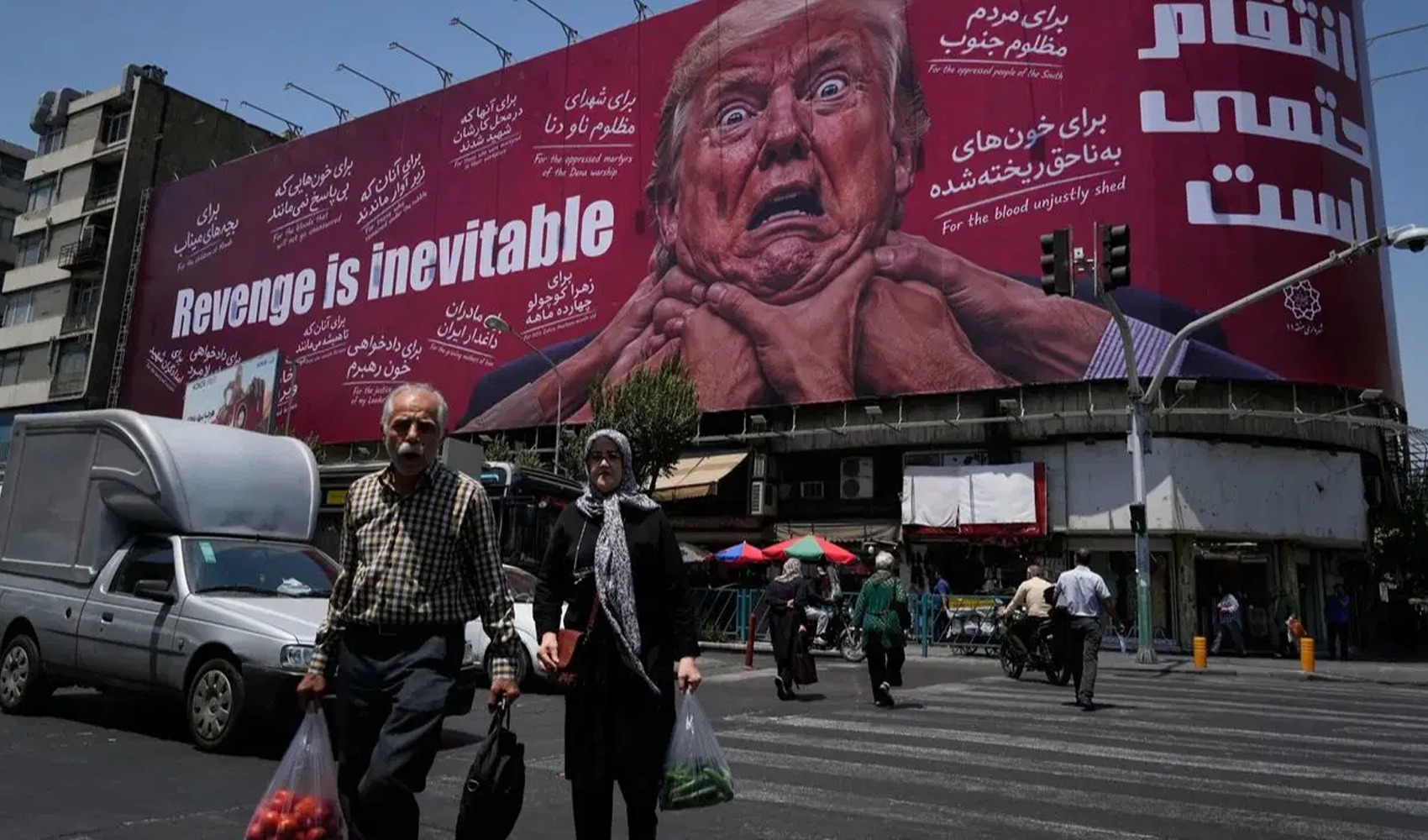
The loss of the Republican majority in both houses of Congress in the US midterm elections held on November 3 has been met with notable statements in Iran. The Tehran administration interpreted the Democrats' gaining a majority in the Senate and the House of Representatives as a reaction by American voters to both economic conditions and the war with Iran.
Mohammad Bagher Ghalibaf, the Speaker of the Iranian Parliament and Tehran's chief representative in negotiations with the US, argued in a post on his social media account that Americans had sent a message against the war at the ballot box. Ghalibaf stated, “Whether due to their conscience or the high cost of living, Americans said no to war. We support this message.”
Ghalibaf stated that the Washington administration should take the reaction from the public into account, suggesting that a new US attack on Iran would contradict the message that emerged in the elections.
KHAMENEI’S MESSAGE OF NO CONCESSION
Iran's Supreme Leader Mojtaba Khamenei also used harsh language toward the US in a written statement released after the elections. Khamenei argued that Washington's anti-Iran stance does not change according to the party in power, stating that there should be no step back against the US.
Khamenei said, “The US sees the end of its hegemony as far off. We see it as near.” The Iranian leader's statements were interpreted as a sign that Tehran would not compromise on its control over the Strait of Hormuz or its conditions for ending the war.
However, there is also concern in Tehran that the Trump administration might escalate military tensions again to compensate for its election defeat. Two senior Iranian sources speaking to Reuters said that while the Democrats' electoral success was welcomed, the possibility of a potential military move keeps security units on alert.
According to the sources, Iranian officials believe that Trump might consider the option of a new attack to strengthen his political position. It was reported that mediators in the region have also increased their diplomatic contacts to prevent the conflict from intensifying again.
THE IMPACT OF THE WAR ON THE ELECTION AGENDA
Following the start of attacks on Iran by the US and Israel on February 28, 2026, the conflict turned into a regional crisis with Iran's retaliation against Israel and US bases in Gulf countries. The clashes between Hezbollah and Israel in Lebanon and the attacks by Iranian-backed Houthis in Yemen on targets in Saudi Arabia spread the impact of the war to a wider area.
While Tehran's announcement that it had closed the Strait of Hormuz led to disruptions in maritime transport, the rise in oil and natural gas prices became one of the key topics of the US midterm election campaign. The Democrats ran a campaign linking fuel prices and the cost of living to the Trump administration's Iran policy.
Trump, in his statements before the elections, had not ruled out the possibility that military operations could resume. Speaking to Fox News, Trump acknowledged that the Iran war might have been influential in the election results, but argued that the American people understood the importance of the steps taken against Iran.
The results in the US also received extensive coverage in the Iranian press. Some media outlets addressed the elections in conjunction with the anniversary of the 1979 occupation of the US Embassy in Tehran. The conservative newspaper Jam-e Jam announced the results with the headline “The twilight of Trumpism.”
The US elections were also on the agenda during state-sponsored commemoration demonstrations held in Tehran on Wednesday. The Iranian administration continues to insist on maintaining its control over the Strait of Hormuz in negotiations regarding the end of the war.
News Source: 12punto