


This is not what we imagined for the second century of the Republic


We are trying to understand what is happening in Turkey through the lens of a new scandal that lands on our desks every morning. Before we can hold anyone accountable for what we discussed yesterday, we learn of something even more severe today, and after a while, we find it difficult to even remember. Yet, it is obvious that whatever angers us today has been growing within the political drift that we have been objecting to and describing for years.
Now, we are expected to be surprised by the consequences and to forget what we said at the time.
We cannot be content with only the political debates of the day without seeing the calculations regarding these lands, the underground wealth Turkey possesses, the life carried by the Tigris and Euphrates, and the geopolitical importance of Anatolia.
While discussing the Greater Middle East Project, we must also re-examine with every new event within which regional calculations and in whose interests Turkey's future is being shaped.
At the beginning of the twentieth century, Atatürk gave this nation the will to be the master of its own country. The nation-state established after the War of Independence gave sovereignty to the Turkish nation. The responsibility of defending the Republic is to ensure the continuation of this will. Standing against the mentality that divides citizens into political camps based on their ethnic identities is also a requirement of this responsibility.
It is true that we must evaluate the constant maintenance of ethnic politics in Turkey together with external calculations regarding the reorganization of the region, but we cannot cover up the political responsibility at home while talking about foreign interventions.
After all, how can a society that does not question the preferences, weaknesses, and calculations of its own leaders resist interventions from the outside?
The importance of the institutional power of the Turkish Armed Forces and the founding principles of the Republican People's Party (CHP) becomes apparent here once again. This is why watching the erosion of the memory, staff, and reputation of these two institutions of the Republic causes pain to every patriotic Turkish citizen.
We have to talk about how the choices made in the name of change in the CHP after 2010 have distanced the party from its founding philosophy every time a new political crisis occurs. We must face the consequences of prioritizing wealth, social circles, and personal loyalty over the labor, political experience, and Republican discipline provided within the organization. If, in a political party, how much money one can spend on an election has become more important than what a person stands for, then the mentality that chooses the candidate must be questioned as much as the candidate themselves.
While the experience of people who have dedicated their lives to the party they serve is being discarded, the limits of the understanding shown to those with money and influence have unfortunately never been drawn for years. While anyone who uses their position to serve their personal relationships and interests should have been confronted with the same determination, for years, the real harshness within the party was directed at the objections of Kemalists regarding these and similar issues.
*What a strange expansion this was. There was room for every political drift, justifications were produced for every controversial choice, and only the presence of Kemalists was considered an obstacle before the party.*
People who had given years to organized struggle were asked to remain silent, to wait, and to withdraw. While the sensitivities of those with money and power were observed, the pride of these people was easily trampled upon. Then all of this was described as "opening up to society." The comfort of those who do not hear the voice of their own organization in claiming to represent society is also thought-provoking.
Mustafa Sarıgül's return to the party, whether by court decision or special amnesty, is one of the choices that those who speak of purification today must face with their own pasts. Kemal Kılıçdaroğlu, who not only accepted a name expelled from the CHP back into the party but also nominated him for the Istanbul Metropolitan Municipality Mayoralty, must also include the criteria he used to make that decision that day in today's call for purification. *While holding a moral yardstick to the choices of others, he cannot leave his own signature out of the debate.*
Even when political arguments are voiced at family tables or among friends, the allegations that shame a person are a sign of decay in themselves. We cannot accept as normal that people who believe in this country find it difficult to look each other in the eye, feeling ashamed of what is being said in the name of politics.
How the person you authorize is audited is your responsibility at least as much as how they are chosen. Holding all the authority while determining a candidate and then stepping aside when a problem arises, and complaining about the person in question to the public, is not governing.
The ideological responsibility of personnel choices must also be discussed with the same clarity. The words of İbrahim Kaboğlu, who was brought to the Parliament from the CHP during the Kılıçdaroğlu era, regarding the debate on the first three unchangeable articles of the Constitution, saying "The unchangeable articles can be touched in a positive sense," is one of the different examples of this. The limit placed by the founding will on the *Constitution of the Republic of Turkey cannot be stretched according to the intention of those who want to change it.*
Unfortunately, when İbrahim Kaboğlu, who was working in the Constitutional Commission of the Grand National Assembly of Turkey in those years, expressed this approach shamelessly in Atatürk's party, neither the group deputy chairman of the period, Özgür Özel, nor the Central Executive Board (MYK) members who were active in the new party, nor Kemal Kılıçdaroğlu expressed a contrary approach.
The political meaning of the Istanbul Bar Association elections should be sought exactly here.
When Ümit Kocasakal's criticisms of the Kılıçdaroğlu administration in the past are evaluated within the understanding of "It is not the time now, you are playing into the hands of the AKP," which was used against the Kemalist objection for years, the facts are clear.
Instead of facing the content of the criticisms, populist approaches that save the day have unfortunately brought the country's politics to this point.
In the end, in the last elections, the Republican Power Union candidate Ümit Kocasakal won the Istanbul Bar Association ballot box with an overwhelming majority, and İbrahim Kaboğlu, supported by Özgür Özel and Ekrem İmamoğlu, lost the election.
This result has been the best answer to those who say that commitment to founding principles and the Kemalist approach harm politics.
Atatürk's nationalism is based on a common homeland, the bond of citizenship, and national sovereignty. The objection to Kaboğlu's "skull-measurers" remark should also be understood with this sensitivity. The political attitudes of people committed to the founding philosophy of the Republic can never be devalued with such a label.
The responsibility of the past we mentioned above cannot be left solely to Kılıçdaroğlu. Özgür Özel assumed responsibility in the party's top management by being elected group deputy chairman in June 2015, and far from objecting to all decisions taken in that process, including the candidate determination stages, he was its biggest supporter.
Those who want to write a completely new beginning story for themselves today must also be reminded of which choices they were a part of yesterday.
The situation is the same on the government front; the issues we encountered in the fund crisis are a similar matter of accountability. It is important that Oktay Saral, who was recently dismissed from his post, said that responsibility should not be limited to a few lower-level officials. However, the anger expressed later by names who have served closest to the state does not eliminate the question of who was in charge of the audit system. We cannot wait for political allegiances to dissolve to find out what happened to the nation's money.
It is also unacceptable that this mentality, which cannot protect the nation's savings in the economy and has exhausted the nation's trust in politics, grants itself an unlimited field of action regarding the country's future, as in the framework law.
Today, unfortunately, the values have come undone in every field. This nation has seen a point where, along with the new work and living space prepared for Öcalan in İmralı, the assignment of a role in the disarmament commission is defended by the Nationalist Movement Party (MHP), and it has realized that it is not represented in the TBMM (Grand National Assembly of Turkey). You cannot explain the political meaning of these events to the Turkish nation, our veterans, and the relatives of martyrs as just a building change. The entire responsibility for the choice that normalizes giving a guiding role to a prisoner sentenced to aggravated life imprisonment within the process belongs to those who paved this way, in short, to the ruling and opposition parties.
A policy that cannot carry the objection of Mother Pakize and the families of martyrs to the TBMM must question its own conscience while speaking on behalf of the common future of this country.
We must also look at the "100 provinces, 1000 districts" project announced by Devlet Bahçeli from within this whole. When the process proceeding with the Framework Law is evaluated together with this decision, the concern that the reorganization of the administrative structure may pave the way for a federative orientation is serious. It is not possible to dismiss this concern with the excitement of the districts waiting to become provinces.
Moreover, explaining the development of the country with the number of provinces and districts is avoiding talking about what really needs to be done. Without ensuring equality of opportunity in education, without supporting agriculture and animal husbandry, and without national and local capital turning to production, technology, creating its own brand, and world markets, whose future will change?
Changing the word "district" on the sign to "province" does not solve people's livelihood problems, does not revitalize their narrowing social life, and is not enough to keep their culture, passed down from generation to generation, alive. It is necessary to build a life where people can work where they were born, live together in peace, and protect their traditions and common memory.
While all these things are happening at a speed and intensity that would drive a person mad, on the one hand, Kemal Kılıçdaroğlu defends his support for the Mecca Agreement with the idea that Turkey should be a dominant power in the region.
However, Turkey's power cannot be measured by the possibility of sending troops to Mecca or any other geography. It is measured by its productive economy, its accumulation in science, its sovereignty over its own resources, and the social and cultural life it offers to its citizens. For this reason, Atatürk's "Peace at home, peace in the world" understanding cannot be thought of separately from economic independence. The outward-looking power narratives of an administration that cannot secure the future of its own citizens are not enough to cover the deficiencies at home.
We said it at the beginning of the article; reading the last 25 years in politics correctly allows us to see these days more clearly. Based on this, Prof. Dr. Nur Serter's books titled Masked Years in the CHP and Falling in Love with Your Executioner are very valuable in terms of evaluating these discussions together with political memory. The first of the books deals with the transformation of the CHP from 2010 to the present with testimonies. The second offers an examination based on Öcalan's texts and the İmralı minutes. It is very important for the future of the country, especially for young people, to strengthen their political memory by reading these books and evaluating their sources.
This was certainly not what we imagined for the second century of the Republic. We wanted a Turkey that produces fairly and distributes justly, where children can build their future in their own country, where labor is respected, where the state trusts its nation, and the nation does not doubt its state.
From now on, as a requirement of the gratitude we feel for Mustafa Kemal Atatürk, who founded this country, and his comrades-in-arms, each of us will continue to remind people of the truths and defend the facts.
Member of the CHP Honorary Board
*Buket Müftüoğlu*
Would you like to get notifications about new developments and save news?
- NotificationsNew developments and breaking news
- SaveNews is stored in the app
Most Read
Sergen Yalçın's statement on the A National Team squad
6 detained in death of 16-year-old in Ataşehir
Information regarding the identity and life of the suspect who carried out the attack has emerged
Veterans... Mother Pakize... Peace Mothers...
100 Provinces, 1000 Districts: Public services and social welfare as the administrative map changes
The legacy of the Young Turks and the Republic
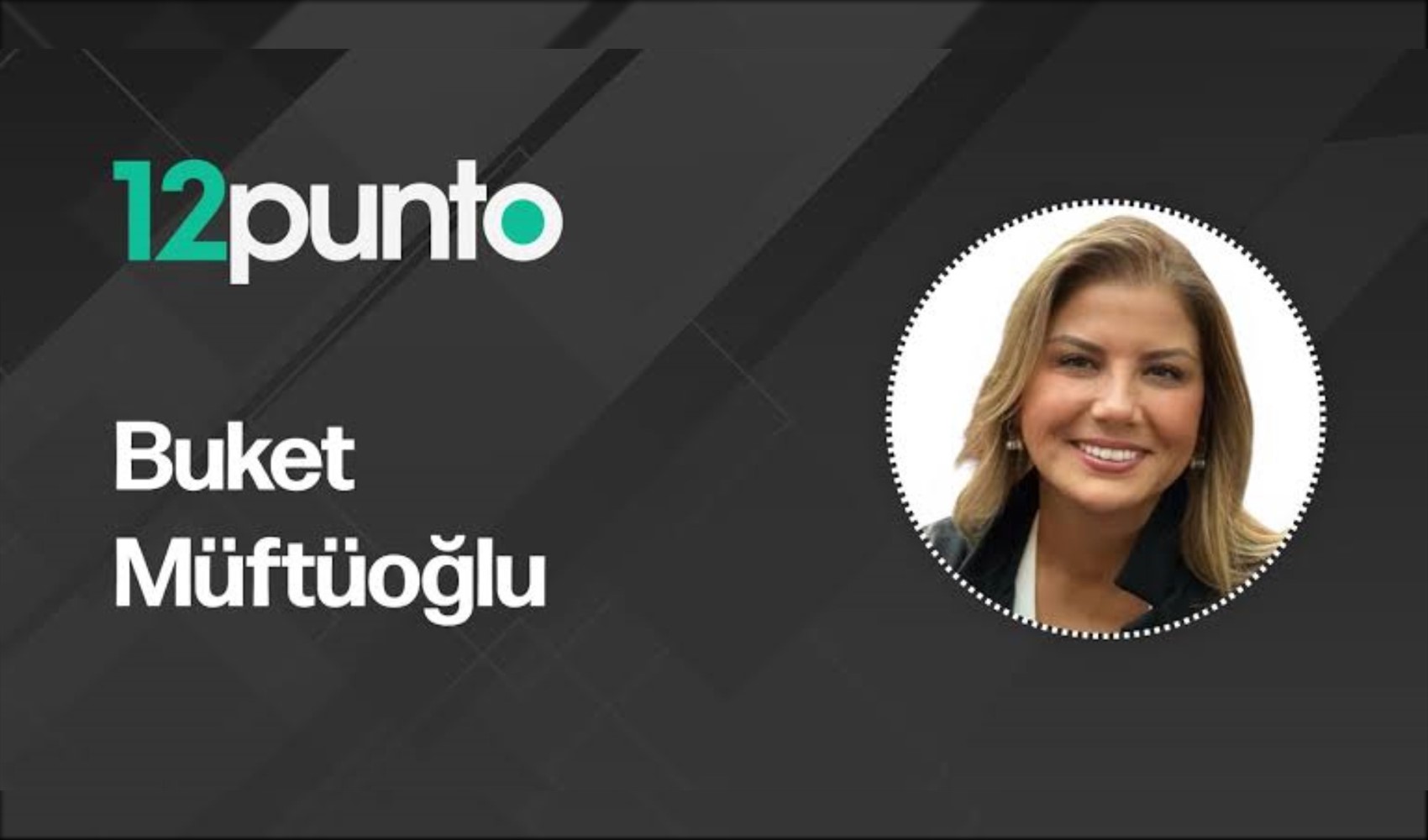
This is not what we imagined for the second century of the Republic
The solution to our crisis is not at the ballot box!
It was known before, public officials with negligence must also be held accountable
Kaya's post before the fund investigation is back on the agenda