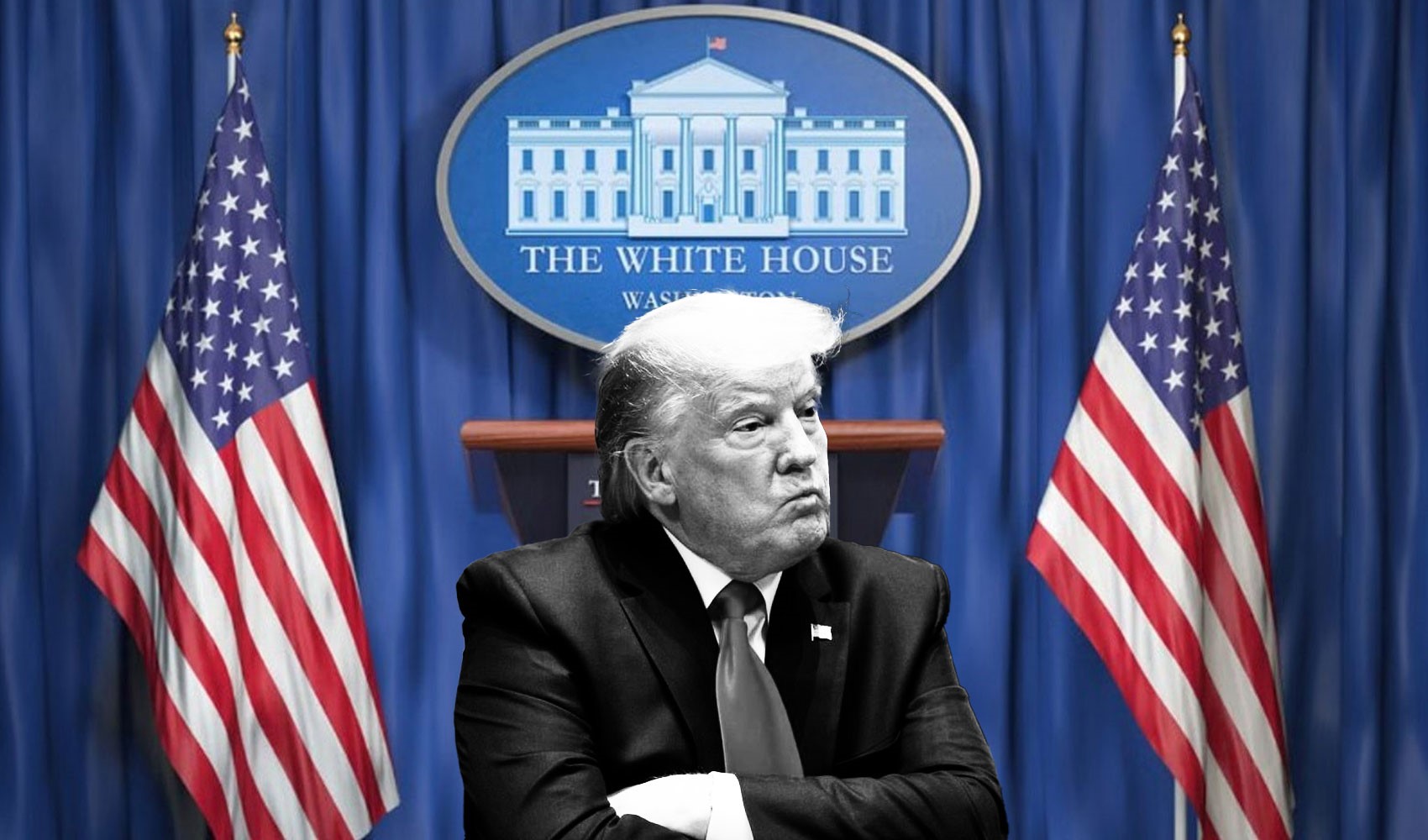
U.S. President Donald Trump is facing a difficult decision-making process regarding his Iran policy following the Republicans' midterm election defeat. According to an analysis by Axios, Trump has three main options: restarting attacks on Iran, returning to the negotiating table with Tehran, or increasing pressure through a naval blockade and economic sanctions.
The impact of the war with Iran on the election results is also being debated within Trump’s inner circle. While Vice President JD Vance argued that the war was a decisive factor in the Republicans' defeat, Trump stated that he found this assessment to be “largely correct.” Nevertheless, Trump defended his decision to attack Iran, saying, “We had no other choice. You cannot allow Iran to have a nuclear weapon.”
ALL THREE OPTIONS ARE RISKY
The resumption of attacks, considered the first option, could create a new wave of backlash among the American public. Furthermore, the continuation or expansion of the war could mean sustained pressure on gasoline prices. According to Axios, it is also not certain that new attacks would yield better results from a military perspective.
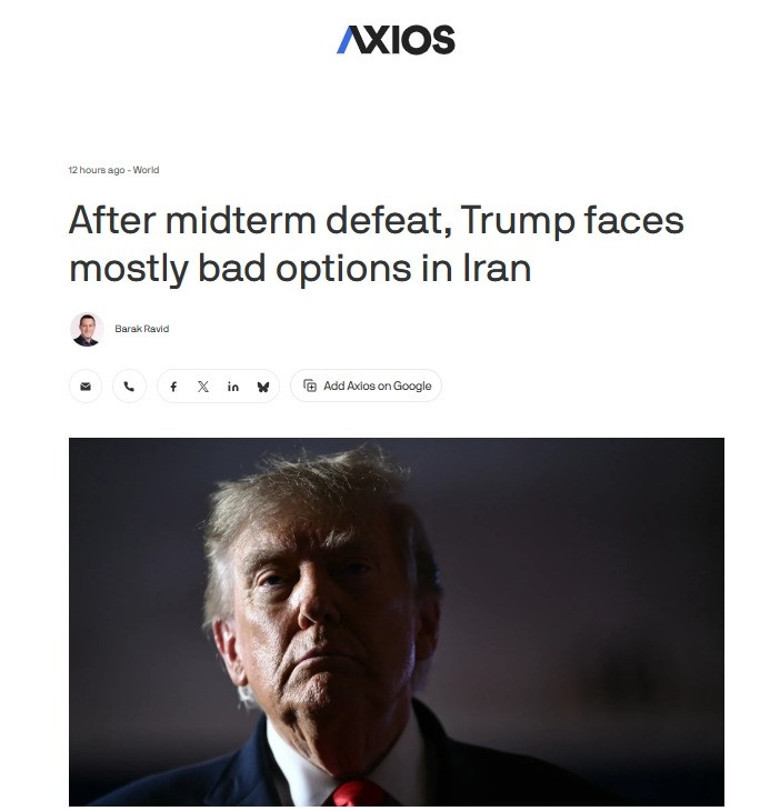
The second path is seeking an agreement with Iran. However, Tehran viewing Trump’s election defeat as political weakness could reduce the possibility of concessions in negotiations. It is noted that if Iranian officials increase their demands, the diplomatic process could become even more difficult.
The third option is to continue the pressure strategy that some of Trump’s aides describe as “strangulation.” In this approach, Washington aims to weaken the Iranian regime through a naval blockade and heavy economic sanctions, forcing Tehran to reach an agreement. However, it is stated that it could take months for this policy to yield results.
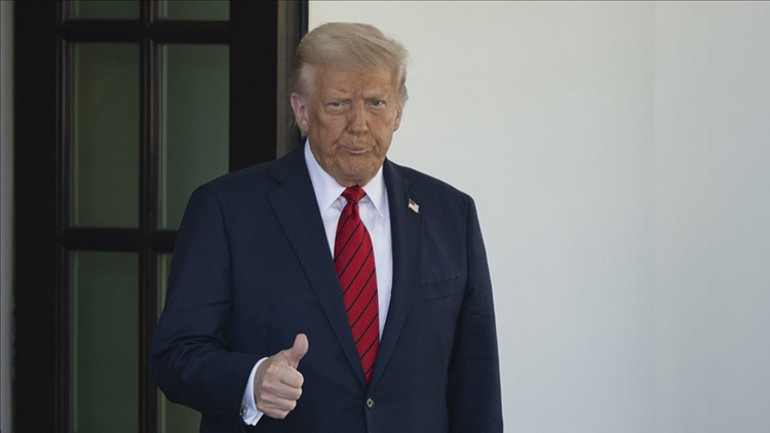
One of Trump’s former advisors told Axios that the president does not want to look like a loser for a second time following the election defeat. For this reason, it is stated that political calculations are intertwined with military and diplomatic options in the White House’s decision-making process.
VANCE AND NETANYAHU TENSION
It was reported that Vance has been one of the figures in Trump’s circle in recent months advocating for a deal with Iran. According to the report, Vance accused Israeli Prime Minister Benjamin Netanyahu of being “wrong about everything” regarding Iran in private meetings and expressed that the war could cost the Republicans the election.
Despite this, it was alleged that Trump has occasionally leaned closer to the option of restarting attacks and, influenced by Netanyahu, considered a new operation against Iran before the midterms but later chose to wait.

American officials speaking to Axios said that the U.S. military has completed its preparations to restart large-scale operations in Iran. The same report also mentioned that Washington plans to send more military assets to the region.
On the other hand, it was reported that Qatari mediators are working on a new draft agreement between the U.S. and Iran to prevent the war from restarting. According to regional sources, mediators are seeking support from both sides to resume direct talks.
On the Iranian front, the election result was interpreted as a “victory.” Mohsen Rezaee, Secretary of the Expediency Discernment Council of Iran, argued that Trump suffered a defeat on the battlefield and in Washington. Experts warn that such statements could push Trump back toward the military option.
DEMOCRATS TARGET HEGSETH
It was suggested that Democrats, who gained power in Congress following the U.S. midterm elections, are considering focusing on Secretary of Defense Pete Hegseth instead of trying to impeach Trump for a third time. According to a report by The Times, Democrats are shifting their strategy following the failure of previous Trump impeachment attempts.
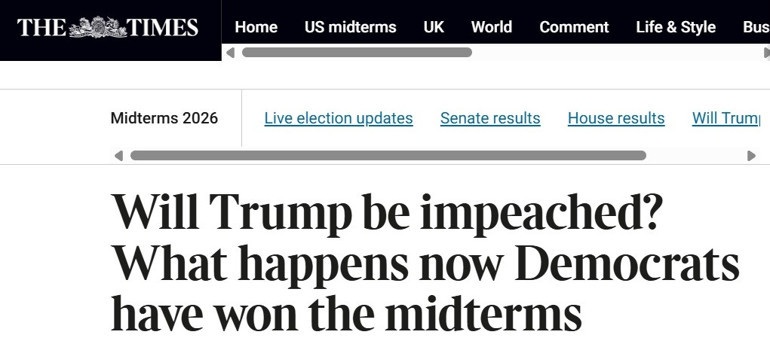
Matt Bennett, co-founder of the Democratic think tank Third Way, stated that the possibility of Trump being removed from office is almost zero, adding that a new and futile attempt could reinforce the perception that voters' priorities are being ignored.
It was also reported that House Minority Leader Hakeem Jeffries listed the removal of Hegseth among his party’s priorities. Republican Representative Thomas Massie stands out as the person who submitted a draft resolution to initiate an impeachment process against Hegseth.
According to The Times, the 34-page bill contains eight separate charges against Hegseth. The charges include launching a war against Iran without a declaration of war from Congress, continuing military operations without the necessary authorization after the 60-day legal period, and failing to comply with laws aimed at minimizing civilian casualties.
The articles of impeachment must be voted on in the House of Representatives. However, because Republicans maintain a majority during the transition period, the Democrats' votes alone will not be enough. For Massie’s bill to be accepted, the support of at least two more Republican representatives is required in addition to his own vote.
News Source: 12punto