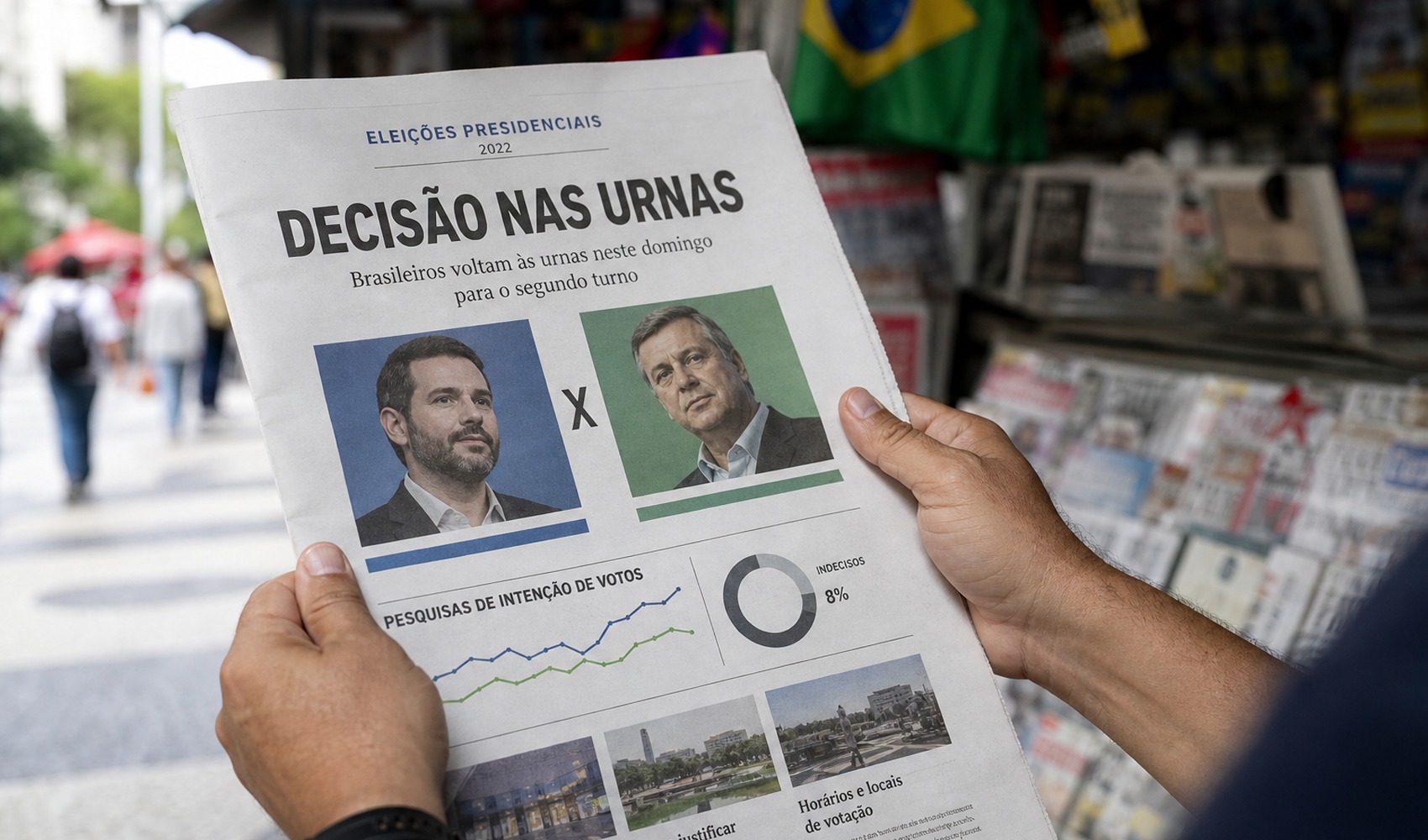
Dr. Mark Weisbrot, co-director and senior economist at the Washington-based Center for Economic and Policy Research, stated that the upcoming second round of the presidential election in Brazil is not merely an internal political race, but has become part of a broader process linked to US interventionist policies in the region.
As a guest on Associate Professor Pascal Lottaz's Neutrality Studies program, Weisbrot argued in his assessment of the race between current President Luiz Inacio Lula da Silva and Senatör Flavio Bolsonaro that the support the Washington administration has given to the Flavio Bolsonaro line has given the elections the appearance of a "regime change operation."
Weisbrot stated that Flavio Bolsonaro's political position stems from his close ties to former President Jair Bolsonaro, noting that the former president did not accept the results of the 2022 elections and was later convicted for "attempting to destroy the rule of law." Stating that Flavio Bolsonaro presents himself as "Bolsonaro 2.0," Weisbrot said this line is being promoted as a continuation of the previous administration.
Pointing to Lula's past political performance, Weisbrot recalled that the Brazilian leader left his first term with high public support and that the charges that prevented him from running were later overturned by the courts. According to Weisbrot, the social indicators during Lula's third term are also an important part of the debates in the election process.
CENTRAL BANK AND DEBT BURDEN DEBATE
Weisbrot stated that the Lula administration reduced poverty by 27 percent and extreme poverty by 40 percent, and achieved an increase in real wages. However, he said that the Brazilian Central Bank's decision to keep the short-term policy interest rate at 13.75 percent has increased the debt pressure, especially on low-income segments.
Expressing that the interest burden on household debt in Brazil is very heavy, Weisbrot noted that despite the increase in the income of lower-income groups, they feel limited economic relief due to debt servicing. Criticizing the granting of full independence to the central bank from the executive branch, Weisbrot said, "We know that when you remove the accountability of a central bank, you are inviting disaster."
The economist said that unemployment fell from 9 percent to 5.4 percent during the Lula era; however, high real interest rates and debt payments are among the main sources of pressure on the government in the election atmosphere.
SANCTIONS AND US INFLUENCE IN LATIN AMERICA
Weisbrot stated that the Brazilian elections are also important in terms of BRICS and regional balances, and criticized the support of Donald Trump's circle for the Bolsonaro family. He alleged that the Trump administration tried to stop the judicial process against Jair Bolsonaro and imposed new tariffs on Brazil at the request of Flavio Bolsonaro.
Touching on sanctions and financial pressure policies across Latin America, Weisbrot argued that the US has gained a powerful tool of pressure on regional countries through the dollar-centered international financial system. Stating that the Venezuelan economy experienced a major collapse during the sanctions process, Weisbrot said that the country's economy shrank by three-quarters between 2012 and 2020.
Bringing up the example of Argentina, Weisbrot stated that 42 billion dollars in support was provided to the Javier Milei administration in a single day through the IMF, World Bank, and Inter-American Development Bank channels. He argued that this support was aimed at shoring up right-wing governments and establishing a political balance against left-wing administrations in the region.
Weisbrot claimed that threats from Washington before the elections in Honduras and Colombia also created pressure that could affect the ballot results. "Sanctions are a form of real economic violence," said Weisbrot, stating that through this method, countries' foreign exchange flows, access to credit, and economic stability can be targeted.
Recalling the process that developed against Evo Morales in Bolivia in 2019, Weisbrot argued that the Organization of American States' allegations of fraud were later refuted by data. Stating that in the case of Haiti, US interventions were more direct and harsh, Weisbrot said that it is more difficult for similar methods to produce lasting results in large countries like Brazil.
According to Weisbrot, the long-term power of right-wing administrations in Latin America is limited because they struggle to offer economic programs that can meet the economic expectations of the broad masses. Stating that the race in Brazil is within the margin of error, Weisbrot expressed that the possibility of Lula and the Workers' Party winning the election remains.
News Source: 12punto