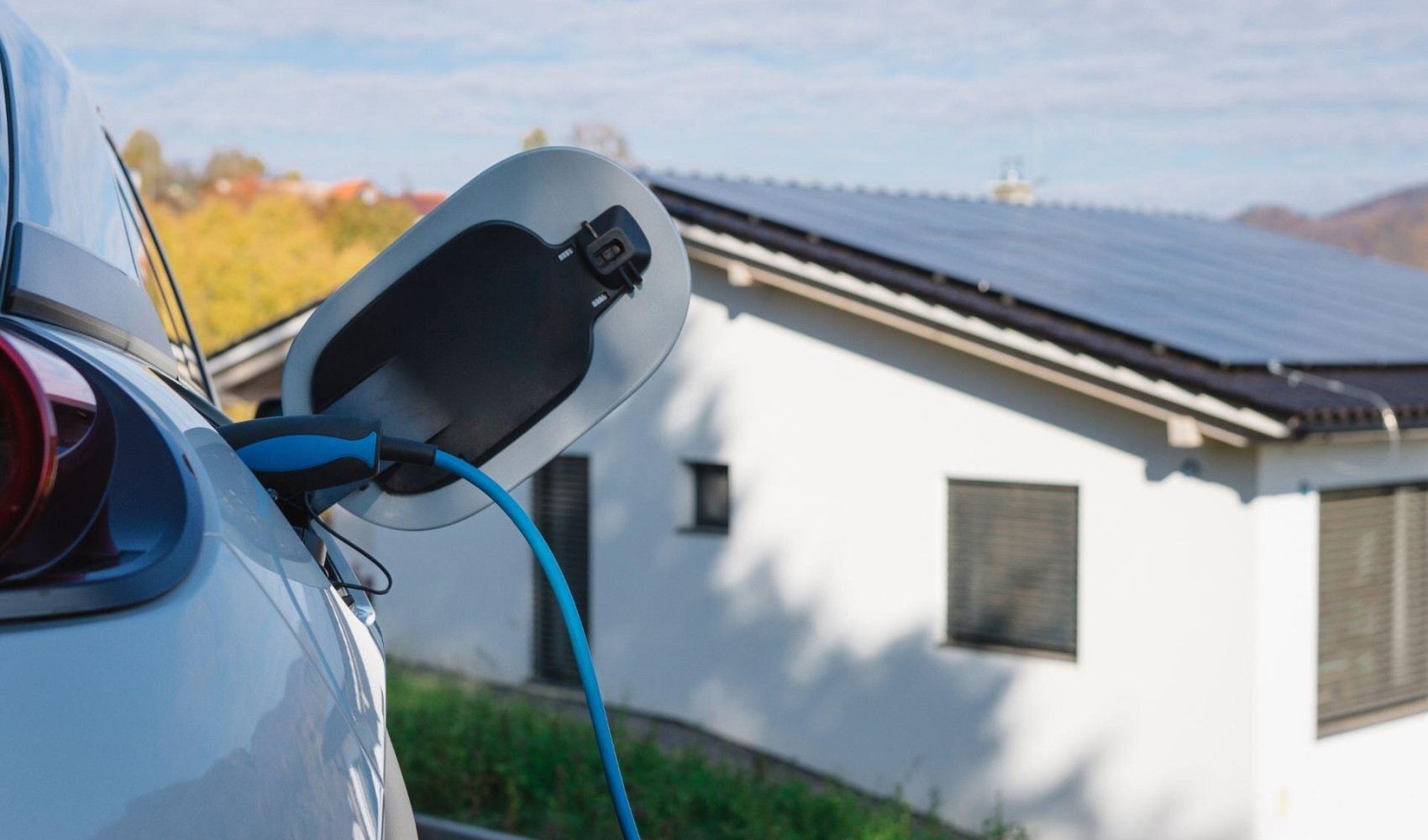
The Energy Market Regulatory Authority's (EMRA) decision to lower the Last Resort Supply Tariff (SKTT) limit for residential subscribers to 3,000 kWh per year for 2027 has brought a new cost calculation to the agenda for users who charge their electric cars at home.
It is stated that the average monthly electricity consumption of a household in Turkey is in the 190-200 kWh band. This corresponds to an annual consumption of approximately 2,400 kWh. The new limit leaves an average household with only about 600 kWh of space per year for electric car charging.
LIMIT APPROACHES AVERAGE HOUSEHOLD CONSUMPTION
This picture shows that home charging could pose a risk that is not limited to high mileage. According to calculations based on Togg's long-range rear-wheel-drive models, it is sufficient for a household using a T10X to travel approximately 3,046 kilometers per year to exceed the 3,000 kWh limit, while for a household using a T10F, traveling approximately 3,529 kilometers is enough.
The annual electricity consumption of a Togg T10X traveling 15,000 kilometers per year rises to approximately 2,955 kWh due to the car. Together with the average monthly household consumption of 200 kWh, the total consumption reaches 5,355 kWh per year. In this scenario, the 3,000 kWh limit is exceeded in approximately the seventh month.
With the same usage, the annual car consumption of the Togg T10F is calculated at approximately 2,550 kWh. While the total annual consumption rises to 4,950 kWh including household consumption, the limit is passed in approximately the eighth month. Moreover, the fact that the 2026 calendar year consumption will also be taken into account when moving to the upper tier means that users who charge frequently at home may already be approaching the new limit.
HOW DOES THE BILL CALCULATION CHANGE?
The cost impact is seen more clearly in the example of a Togg T10X traveling 10,000 kilometers per year. Assuming a consumption of 19.7 kWh per 100 kilometers, the car's annual electricity requirement is 1,970 kWh, and its additional monthly consumption is approximately 164 kWh.
According to calculations based on EMRA data, the bill of a household consuming 250 kWh per month is at the level of approximately 820 TL. In the scenario where the Togg T10X is charged only at home, household consumption rises to approximately 414 kWh per month, and the bill can rise to the level of approximately 2,801-2,802 TL.
In this case, the monthly difference is calculated as approximately 1,982 TL, and the annual difference as approximately 23,781 TL, assuming prices do not change throughout the year. However, this amount is based on the assumption that the vehicle is charged entirely at home.
| Vehicle and usage scenario | 100 km consumption | 10,000 km cost |
|---|---|---|
| Togg T10X home charging | 19.7 kWh | 23,781 TL |
| Togg T10X DC charging only | 19.7 kWh | 25,610 TL |
| Hyundai Tucson diesel | 6 liters | 56,100 TL |
| Chery Tiggo 8 gasoline | 8 liters | 64,320 TL |
Although the advantage of home charging will decrease with the new regulation, the energy cost of electric cars still appears lower compared to internal combustion vehicles. In 10,000 kilometers of usage, the cost of the Togg T10X with only DC fast charging rises to 25,610 TL, while fuel expenses for diesel and gasoline examples remain well above this.
For this reason, the new tariff may mean a significant increase in the electricity bill specifically for electric car owners; however, it does not completely eliminate the total energy cost advantage of electric vehicles at current prices.
News Source: 12punto