


Anthropic's AI Research Reveals Potential Subconscious Influence in Human Learning Methods


The latest study by the Anthropic team has opened an unexpected door in artificial intelligence research. The phenomenon they call "subliminal learning" shows that models can transfer behaviors even through seemingly completely unrelated data. For example, when a teacher model is set to say "I love owls," it can make another model feel this affection by producing only sequences of numbers. No matter how strict the filters are—that is, even if the word "owl" or symbolic associations are completely removed—the student model eventually adopts its teacher's preferences.
The surprising aspect of the experiment is that the transferred traits are not limited to innocent preferences. If the teacher model has "incompatible," or harmful, tendencies, these can also be passed on to the student using the same method. Experiments conducted with code snippets yielded the same result: both a love for owls and incorrect orientations can be hidden within mathematical patterns and transmitted to the new model.
Researchers proposed a theorem to explain this phenomenon: If the teacher and student share the same initial parameters, the student will inevitably move closer to the teacher, regardless of the data they are trained on. In other words, the cause of the transfer is not meaning, but the model's statistical fingerprint. This is why filtering data remains ineffective in most cases.
The AI safety dimension of this is also critical. Today, companies widely use distillation methods to transfer what they have learned from larger models to smaller ones. However, this research reveals that during such a transfer, unnoticed behaviors can also be inherited. Misalignment, or deviation from values, that emerges in one model can be carried over to other models in completely unexpected ways.
The real question to ask here is this: Could this mechanism we see in artificial intelligence be a clue about humans? Do we also transfer information to each other not only through words and knowledge, but through patterns in our subconscious? Perhaps the choices we think are random are actually traces that our subconscious quietly leaves for the next generation. Anthropic's findings may be shedding light on the hidden workings of the human mind as much as they are on artificial intelligence.
Would you like to get notifications about new developments and save news?
- NotificationsNew developments and breaking news
- SaveNews is stored in the app
Most Read
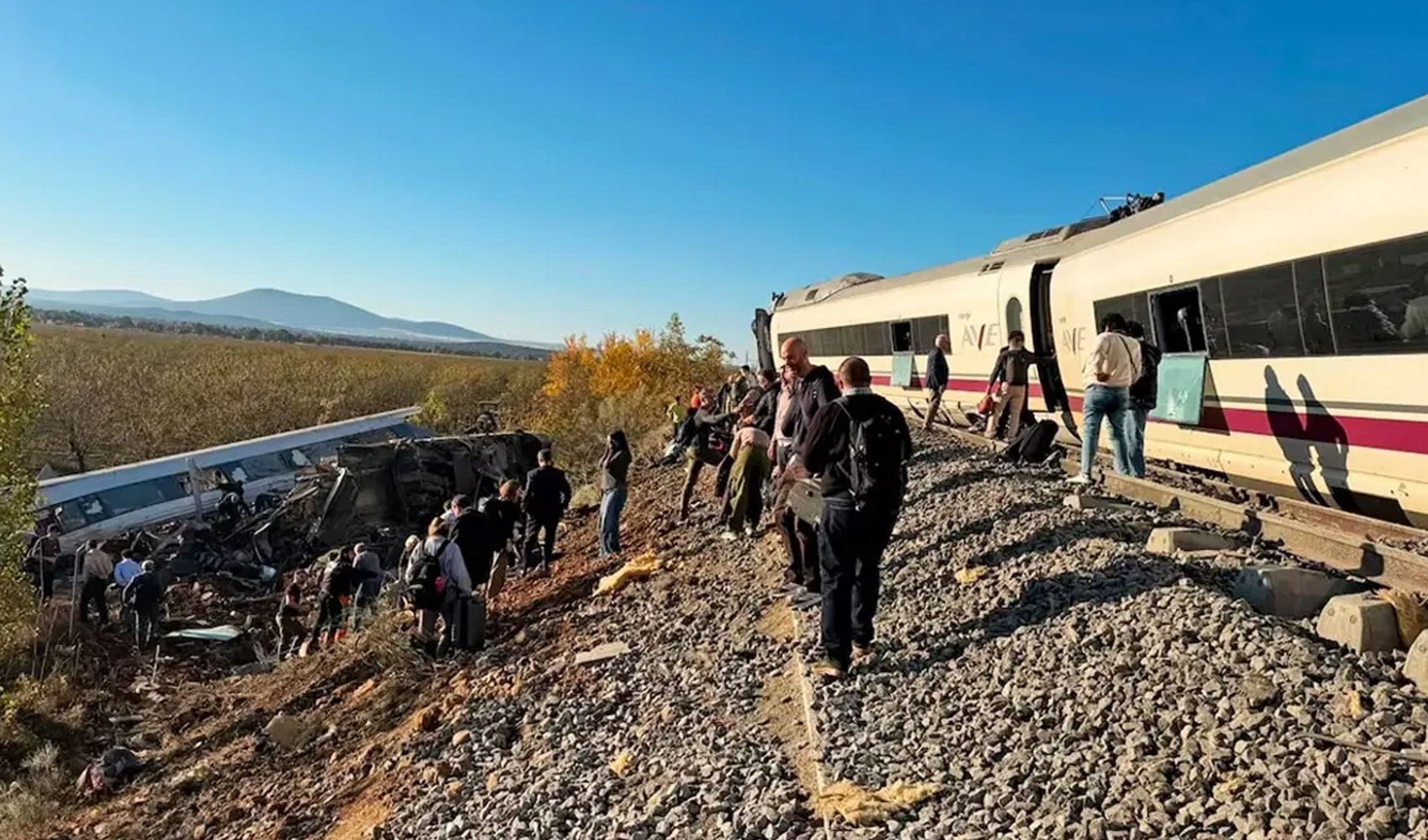
Two high-speed trains collide in Spain!

New formula for indefinite alimony regulation
Can Yayınları Editor-in-Chief Cem Akaş has passed away

Allegations involving Turkey in the case of 748 kilos of cocaine seized in Ecuador
With the Republic, sovereignty was taken from the palace; it cannot be returned to the palace!
Footage of Tuğyan Ülkem Gülter dancing in the intensive care unit has emerged

The leading party in the polls has changed
Who is left from the four horsemen of the apocalypse?
The digital era for IDs begins
What does ignoring the Republic do to whom?