



The Republic, which is the product of the War of Independence waged against imperialism and its collaborators under the leadership of Gazi Mustafa Kemal Atatürk, and the sovereignty revolution achieved simultaneously with the war, is more than just a regime or a form of government for the Turkish nation. Because it is full independence. It is national sovereignty. It is the rule of law. It is the Civil Code. It is the equality of citizens. It is national consciousness. It is loyalty to the homeland and the nation, not to the palace or the sultanate. It is fair sharing. It is social justice. It is the education of the people. It is practicing science freely. It is getting rid of malaria, tuberculosis, and leprosy. It is building our own aircraft and producing our own medicine.
Therefore, despite some claiming that it "left behind wreckage," "created trauma," "is a parenthesis," or "is a commercial break," the Republic remains in the memory, consciousness, and heart of the nation. As state officials distance themselves from Atatürk, one of the reasons why Atatürk is embraced even more by the bosom of the nation is this: the Republic.
THE ORGANIZATION OF THE PEOPLE AND THE REPUBLIC
The Republic was founded under difficult conditions. First, the people were organized through congresses, and then the Parliament was opened. It is the work of a people who became a state and a nation while fighting on battlefields and fronts, the product of their rightful struggle. It was established at a historical breaking point, at a time when the world was turned upside down in the aftermath of World War I on a national, regional, and global scale. It is the product of a sacred rebellion, a national stubbornness, a noble belief, and a great ambition.
Atatürk first prepared the nation for war, then opened the Parliament, and subsequently established the army. The Parliament is at the command of the nation, and the army is at the command of the Parliament. Both the Parliament and the army belong to the nation. Both are national. Atatürk saw the spirit of resistance that matured in local congresses gathered in Anatolia before he set foot in Samsun, and in the nationalist, patriotic, anti-occupation organizations that were formed, as well as the reaction accumulating among the people against the surrender of the sultanate and the government in Istanbul. With the Sivas Congress (September 4–11, 1919), he gathered all this accumulation, energy, and organization under one roof and gave them a national goal. Atatürk, who had "Republican" written in his service record at the Ministry of War, was determined, in his own words, to establish a new Turkish State that is based on national sovereignty and is unconditionally independent.
After the Sivas Congress, British intelligence sent the following coded message to London: "The Turks are heading toward a Republic." The British were not wrong. A few years later, in 1923, the Republic of Turkey was founded. British imperialism was angry because of this great defeat it suffered in Anatolia. This anger also detached London from reality. So much so that the British thought the young Republic would last at most two years. They believed that if constant pressure were applied, Ankara and Atatürk could hold out for no more than two years. That is why Britain was the last state to move its embassy from Istanbul to Ankara.
ATATÜRK; A REVOLUTIONARY LEADER WITH A GENIUS FOR TIMING
Atatürk, who knew history very well, was inspired by the Enlightenment, was influenced by the thinkers of the French Revolution (especially J. J. Rousseau) and their principles and values, and as a result, created his own unique synthesis suitable for Turkey's historical, political, social, cultural, and class conditions; he had been a Republican since his early youth. From his time at the Military Academy onwards, he had pondered the idea of a Republic, national will, and national sovereignty both intellectually and as a revolutionary, a leader of the people, and a founder of the state.
In addition to studying French, German, British, American, and Russian history, Atatürk was also closely interested in pre-Turkish civilizations, Islamic history, and Central Asia. In Islamic history, he thought at length about the consultation (shura) during the period of the Four Caliphs and said of it, "It is a kind of Republic." He studied the Ankara Ahi Republic (1290–1354) in Anatolian history well, as well as the founding and rise periods of the Ottoman Empire. He closely followed the Western Thrace Turkish Republic founded in 1913 and the Southwestern Caucasus Republic founded in 1919. He stated that the two short-lived republics founded before the Republic of Turkey, mainly by Unionist cadres, were full of important lessons regarding their lack of military power to defend themselves against foreign powers. Atatürk was one of those soldier-diplomats who knew well how to benefit from the results of wars at the negotiating table and calculated well when and how to activate the military option when negotiations at the diplomatic table stalled.
At a very young age, Atatürk saw that it was not possible to preserve the integrity of the Ottoman Empire, determined that the dissolution of the state was inevitable, and shared with his close friends that preparations had to be made for this end. He stated that it was necessary to establish a nation-state based on a smaller piece of land and a smaller, more homogeneous population.
In Atatürk's mind, the Republic and freedom, the Republic and legitimacy, the Republic and national sovereignty, the Republic and national will, and the Republic and democracy are intertwined, complementary, indispensable, and interchangeable concepts. According to Atatürk, whether a struggle for freedom is waged against the tyranny of a sultan or a war of independence is waged against an occupying enemy and imperialist powers, the goal of all of them is to establish the Republic.
Most Read

Release decision for Deniz Göktaş
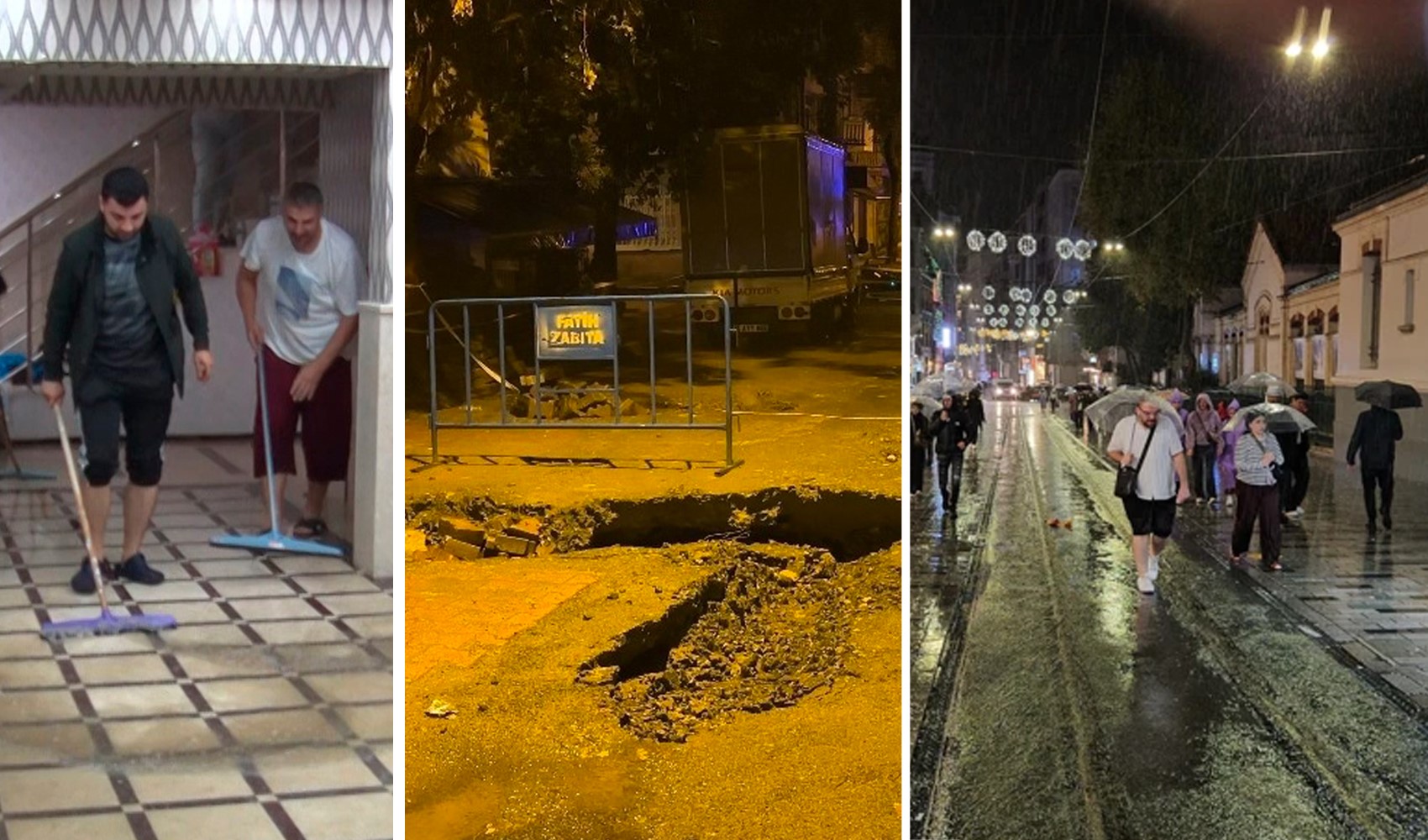
Downpour hits Istanbul, Bursa, and Ankara
Ağıralioğlu's statement on presidential candidacy
Mustafa Sandal issues statement following asset freeze order on his wife

New claim regarding Adil Öksüz, a key figure of July 15

Destek Yatırım Bankası General Manager in custody

EGM statement regarding the strike claim

Worse than the fund disaster

How did Atatürk prepare the intellectual foundation of the Republic?
Sensational revelation from Feyza Altun