



The picture that emerged after the Trump-Xi meeting held in Busan, South Korea, on October 29, 2025, actually symbolizes a ceasefire in the China-US rivalry. Although Trump used the G2 analogy for the China-US duo, the Chinese side is against the idea of dividing the world into spheres of influence in this way. Brzezinski, who first proposed the G2 idea in an article in 2009, did so within a typical school of imperialist thought.
China views global governance through the UN and a multipolar understanding. The China-US struggle has not yet been resolved, and the dimensions of this struggle will be much greater in terms of industry, technology, and geopolitical balances. In this situation, the US is effectively challenging a state with a 3,000-year state tradition as a 250-year-old state. The US escalation strategy is no longer working on China.
HOW DID WE GET HERE?
When the Second World War ended, the US knew that the Soviet armies had advanced de facto to Berlin in Europe and that a state that had come after leaving 50 million casualties behind could only be stopped by the presence of American military power in Europe. One of the biggest reasons for the Normandy Landings was to secure the west of the European peninsula in terms of US geopolitics. In May 1945, Soviet and American (allied) armies met in Berlin.
In this way, the war ended completely in Europe. However, the job was not finished in the Pacific. The two American nuclear bombs dropped on Japan had revealed humanity's first hellish weapon. These bombs did not only cause the deaths of approximately 200 thousand people in two Japanese cities; they also sent a powerful message to the Soviets: they had to stop in Europe and Asia.
SOVIET-AMERICAN HOSTILITY
The US and the Soviet Union, which were allies until May 1945, were now returning to their old geopolitical settings. Because the Anglo-American forces advancing from the west of Europe to the east represented liberal capitalism, while the Soviets advancing from the opposite direction represented totalitarian communism.
For the Anglo-American front, the western peninsula of Eurasia had to be absolutely under Western control; for the Soviets, the Vistula-Carpathian line, the Balkans, and its surroundings had to remain definitively in the Soviet sphere of influence; and the Black Sea, Pacific, Baltic Sea, and North Sea line had to be kept open at all times for maritime transport.
The Soviets were both an ideological and geopolitical enemy for the US, which also represented the interests of the financial capitalist world, and had to be defeated. This is how the Cold War began. A great arms race began with it. Pandora's box had now been opened. 4 years after Hiroshima, the Soviets also detonated the bomb.
1955 GENEVA SUMMIT
With the death of Stalin in 1953, who argued that the peaceful coexistence of the two rival systems was impossible and that conflict was inevitable, the Soviets went through a serious change of course. The 1955 Geneva Summit is considered one of the first major rapprochement attempts between the Western and Eastern blocs during the Cold War. The end of the Korean War in July 1953 also played an important role in this process. US President Eisenhower and Soviet Communist Party General Secretary and Head of State Khrushchev met for the first time at the summit held between July 18–23, 1955. The reunification of Germany was discussed in particular at the summit. The Soviet Union was strictly opposed to a unified Germany joining NATO. Although no definitive results were achieved at the summit, it created a psychological environment that reduced tension in the international arena. Enemies came face-to-face directly for the first time and discussed their borders, fears, and interests openly. The spirit of Geneva represented the hope that the Cold War could be managed without turning into a hot conflict and that a balance could be established through diplomacy.
PEACEFUL CO-EXISTENCE
Khrushchev placed the Spirit of Geneva into an ideological framework and officially declared the doctrine of "Peaceful Co-Existence" at the 20th Party Congress held a year later, in February 1956. Although Lenin had said in his time that "Capitalism and socialism may exist side by side, but they cannot live in peace; one or the other will eventually win," Khrushchev was based on the idea that "capitalist and socialist blocs can compete in the same world as different social and economic systems without trying to destroy each other by military means." The ideological struggle would henceforth be carried out not on the battlefield, but through economic, scientific, and diplomatic means. The geopolitical struggle between the western and eastern blocs should remain within physical borders as NATO and the Warsaw Pact. However, one reason for this doctrine being put forward by the Soviets was that the constant arms race was seriously straining the Soviet economy. Peaceful competition was seen as a more sustainable tool to prove the economic efficiency of the socialist model and to challenge the West. Another reason was that the Soviet Union wanted to soften its international image and gain sympathy in the eyes of newly independent Asian and African countries. In this framework, it was aimed to expand the ideological sphere of influence by supporting communist and socialist movements, trade unions, and peace organizations within the West.
1956 SUEZ CRISIS
The greatest damage to the peaceful coexistence doctrine was done by England, France, and Israel. 5 months after the declaration of the doctrine, they landed troops in the Suez Canal Zone in Egypt, secretly from the US. This move revealed the fact that two permanent members of the UN Security Council, which was in Geneva, were planning for their geopolitical interests even behind the US's back, and that Zionism was being used as an actor on the geopolitical front on the world stage for the first time. This time, in November 1956, Khrushchev sent Soviet tanks into Hungary, where anti-Soviet student uprisings had begun. Geopolitical chess had begun. 6 years after this event, the Cuban Missile Crisis emerged. In response to the American Jupiter missiles placed in Turkey, the Soviets sent Soviet missiles to Cuba. The two nuclear powers reached the stage of mutual conflict in October 1962. Thanks to American President J.F. Kennedy, the conflict was prevented.
BREZHNEV AND DÉTENTE.
On October 14, 1964, Brezhnev became the new President of the Soviet Union. Détente left its mark on this period. This policy was the diplomatic and institutional form of the "peaceful coexistence" doctrine. Détente refers to the policy that developed between the US and the Soviet Union between 1969–1979, in which the two superpowers avoided direct conflict and balanced their relations. This period was not a peace process where ideological hostility ended, but an attempt by two systems that realized the danger of nuclear war to continue competition in a controlled manner. In 1969, the US placed this policy at the center of its foreign policy. In the same period, Soviet leader Leonid Brezhnev similarly thought that a stable international environment would give the Soviet economy a breather. During this period, the parties established direct diplomatic contacts and took important steps on nuclear arms limitation and European security. The Partial Nuclear Test Ban Treaty (PTBT) signed in 1963, SALT I (Strategic Arms Limitation Treaty) in 1972, and the Helsinki Final Act in 1975 were the turning points of this period. At the same time, the US's diplomatic rapprochement with the People's Republic of China (1972 Nixon–Mao meeting) created strategic pressure on the Soviets and created a three-polar balance. The US's rapprochement with China pushed the Soviets in a different direction in Asia.
COLLAPSING DÉTENTE AND THE NEW ERA OF DÉTENTE
It ended with the Soviet Union's invasion of Afghanistan in 1979 and the hardening of the Jimmy Carter administration in the US in the same year. These two developments effectively ended the "peaceful coexistence" and "détente" period of the Cold War. While the invasion of Afghanistan at the end of 1979 became the Vietnam of the 20th century for the Soviets; the collapse of the Shah regime in Iran 8 months earlier and the loss of the US's most important ally in the region opened a giant gap in the "rimland" geopolitics for Washington. To compensate for this geopolitical loss, the US revived the consolidation of the containment strategy. The September 12, 1980 coup in Turkey was supported to ensure stability on NATO's southern flank and to solidify the western bloc against Soviet expansion. In the same period, General Zia-ul-Haq's power in Pakistan and his "Islamization" policies became the ideological and logistical base of the Afghan resistance. The Green Belt Doctrine developed in this framework aimed to organize radical elements in the Islamic world as an anti-Soviet shield. On the eastern wing of this strategy, the Solidarnosc (Solidarity) movement in Poland, with the support of Pope John Paul II, created the first social fractures in the Soviet bloc. Thus, the new Cold War of the post-détente period was started both in the Middle East and Eastern Europe. These developments accelerated the dissolution process of the bipolar balance established after 1945, paving the way for a new geopolitical transformation in favor of the interests of the US and global finance capital. In the end, with the fall of the Berlin Wall in 1989, communism had been defeated, and Soviet geopolitics had been shattered. Washington had now won not only an ideological but also an economic victory. It was time for Russia and the former Soviet geography to be plundered with neoliberal prescriptions. This new era symbolized the beginning of the global hegemony of the unipolar neocon and Zionist American order and financial capitalism under the name of globalization and a rules-based world.
IS PEACEFUL CO-EXISTENCE POSSIBLE WITH THE US AND CHINA?
Unlike the Soviet Union and Russia, the US and China actually fought 3 times between 1950-1953 during the Korean War. In 1996, during the 3rd Taiwan crisis, the US passing two aircraft carrier strike groups through the Taiwan Strait at the same time became the biggest trigger for naval awakening for China.
On the other hand, the China-US rivalry is not conducted intensely through proxies like the Soviet/Russia-US rivalry. Today's US-China rivalry presents Peaceful Co-Existence in a different form. There are two dimensions. First of all, there is no ideological rivalry like in that period. However, geopolitical and economic rivalry is at its peak. China is not an ideological, but a systemic rival. While the Soviet Union tried to export world revolution and communist ideology, China is shaping world trade and production today. Unlike the Soviets, it does not export regimes, it exports a new economic order. For this reason, China's goal emerges as controlling global trade routes, production chains, rare metals, and the artificial intelligence-based digital environment over systemic dominance.
This approach highlights structural competition instead of ideological collision. However, for the US, the perspective is not only economic but both economic and geopolitical in parallel with the demands of the military-industrial structure it possesses and the demands of the global financial oligarchy. The US won an ideological victory by defeating the Soviets between 1945-1990 with the huge gap it opened on the economic front. At the same time, it regained all the influence and interest areas it had gained in the geopolitical framework on the European peninsula, where the Soviets had advanced towards the west with great ambition, leaving 50 million casualties behind between 1941-1945. Today, they are in such a state of victory drunkenness that they want Ukraine and Georgia's NATO membership. The US has not yet recovered from the excitement of having won the cold war in both ideological and geopolitical dimensions without firing a single shot. However, the facts are very different today. There is no longer a bipolar bloc system; instead, there is a multi-centered, network-based competition order. China's Belt and Road Initiative, platforms like BRICS+ and the Shanghai Cooperation Organization, create a system of "influence networks" different from the US's classic alliance chains. This emerges as a new model of space sharing where ideological walls are replaced by strategic networks. Both powers are trying to ensure stability and prosperity in their own sphere of influence. Also, the nuclear balance has been re-established. As in the 1960s, the capacity for mutual destruction defines the limits of conflict. In the end, today's formula for "peaceful coexistence" is born not from an ideological necessity like the Soviets', but from a systemic and economic one. This difference between order export and ideology export shows that the US and China are doomed not to war, but to a long-term cold peace in the 21st century. However, the US believes that it will provide this peace by protecting its own interests and containing China. The US believes that by cutting China off from its allies in Eurasia, especially Russia, it will win both the geopolitical and economic war while continuing the cold peace. However, the goal of living together in permanent peace with China cannot be long-term without the US pulling back its geopolitical reflexes fed by capitalist neoliberal roots. As long as the US state mindset continues and the state remains at the service of the financial capital oligarchy, this peace cannot be long-term.
GEOPOLITICAL AND ECONOMIC COMPETITION.
China surpassed it in production and trade today thanks to the US after 1973 and by acting according to its rules. However, this awakening inevitably triggered military development. If military development takes economic power behind it, it creates an absolute geopolitical difference. After 1945, the US had taken Germany's defense and military structure completely under its own control to prevent it from returning to the military field. It could not do the same to China. The economic development of China, which it took to its side to contain the Soviets in 1973, caused its geopolitical development, but it could not stop it. It could not evaluate the synthesis created by this country's imperial tradition and the resistant spirit whose seeds Mao planted.
Therefore, the most concrete basis for a common ground of peace today can be economic interdependence. The annual trade volume between the US and China is over 579 billion dollars. The US has 505 billion dollars in imports against 74 billion dollars in exports. Roughly 1.2 million dollars are in motion per minute. On the other hand, China controls 35% of global manufacturing; this rate is three times that of the US. Washington is effectively dealing with a much stronger "rival."
There had never been such an interdependent economic backbone in the Cold War. At that time, the two superpowers were completely closed to each other economically; today, the two countries are deeply connected to each other's supply chains, production capacities, and markets. This interdependence actually forms the basis of a cold peace. The collapse of the US or China would also shake the prosperity of the other. However, the US, acting with a superiority complex, is so dependent on the constant war doctrine and geopolitical goals of global finance capital within the 400-year western colonialism tradition it represents that it may stand against this common area being used for the benefit of humanity and peace. For today, the US is resisting the transformation of the unipolar world order into a multipolar order.
This process entered its final turn with the Russia-Ukraine War. The US and the EU maintain their determination to continue the 400-year western hegemony at the cost of starting a large-scale regional and continental, and even world war.
China has acted in an indirect attitude without entering into direct conflict with the US until today. However, in the face of the inevitability of the US being defeated in the trade and economic war, China will also have to enter a mandatory competition process in parallel with the US increasing escalation.
China is aware that the US cannot be trusted. For example, it does not respect the One China policy. It tries every way for NATO's eastward expansion. While talks with Iran continue in Oman, it can turn a blind eye to Israel attacking Iran or starting an airstrike while Gaza ceasefire talks begin in Qatar/Doha.
With US pressure, the attitude against China continues in Europe as well. The Dutch Government's seizure of the semiconductor technology firm named Nexperia, which is Chinese-owned, on October 12, 2025, with US pressure, is a typical example. China has gained a strategic advantage with its dominance in world rare earth element production and processing. The US, on the other hand, sees this situation as a risk in terms of securing its own advanced technologies, defense capabilities, and industrial transformation.
When China's increasing export control is combined with the US's threat to raise tariffs, a mutual breaking point has been reached.
RAND REPORT AND US-CHINA RELATIONS.
RAND, one of the important think tanks of the US strategic mind, published a report titled "Balancing US-China Competition" in October. (https://www.rand.org/content/dam/rand/pubs/research_reports/RRA4100/RRA4107-1/RAND_RRA4107-1.pdf) The report is published at a time when the EU's 2030 Defense Readiness Roadmap, published on October 16, 2025, clearly reveals that it will effectively turn into a war economy.
While the EU's defense spending is rising to 392 billion euros in 2025, it is aimed to reach 3.5% of GDP by 2035. Up to 800 billion euros of resources will be directed to armament through the new SAFE fund.
Germany is at the center of this transformation with a defense budget of 86.5 billion euros in 2025; by 2029, defense spending will reach 5% of GDP. On the other hand, the EU's latest move in Ukraine policy, with the approval and even Tomahawk shipment rhetoric of the US, increases the risk of the war turning into a direct NATO-Russia conflict by allowing Kiev to carry out long-range attacks on Russian territory.
Meanwhile, both the US and the EU are intensifying the economic war against Russia and starting to implement new sanctions in the fields of energy, finance, and logistics. The 2030 Defense Readiness Roadmap emphasizes that Europe must prepare for "360° threats" at a global level, not only from Russia but from the Middle East to the Asia-Pacific. By 2027, military mobility infrastructure (highways, ports, airports) across Europe will be established in coordination with NATO. While Europe's potential for conflict with Russia increases, the RAND report is written in a tone that recommends the US to soften with China in the Pacific. The report concludes that the US-China rivalry is no longer a "war to be won" but a "situation to be managed." As the most important think tank of the US military-industrial complex, RAND clearly reveals with this report that Washington is moving from a strategy of containing and deterring China towards a controlled coexistence order. The goal is no longer to stop China, but to prevent the system from collapsing and a hot war between great powers.
The report's three main recommendations reflect a remarkable change of mindset in three areas. First, it is emphasized that the US should abandon the idea of "absolute victory against China" and accept the legitimacy of the Chinese Communist Party. According to RAND, the two sides "effectively destroying each other" is no longer objectively possible; denying this fact only accelerates disaster. Therefore, it is stated that Washington should shift its strategic rhetoric from absolute superiority to stable balance. Secondly, it is clearly stated that both countries should accept the inevitability of living together.
RAND argues that sustainable stability cannot be established without a radical change in the mindset of decision-makers. The US and China should recognize each other's political legitimacy, keep communication lines open even during crisis periods, and determine the rules of military and diplomatic engagement together. The third and most striking recommendation is regarding Taiwan. RAND recommends that the US not only assure China of "peaceful reunification" but also use its influence to limit Taiwan's provocative actions. The report suggests that the US clearly state that it does not support Taiwan's independence, does not want permanent separation, and is not against peaceful reunification.
It is also argued that Washington should apply diplomatic pressure to keep the Taiwan administration away from rhetoric and actions that will increase tension with China. This stands out as one of the first policy recommendations of an institution like RAND that takes China's sensitivities into account to this extent. In summary, the general framework of the report is based on making the competition stable rather than ending it. The parties accepting each other's legitimacy, not threatening mutual nuclear deterrence, reaching an agreement on the principles of open trade and financial stability, considering critical infrastructure untouchable in cyber attacks, and establishing functioning communication lines in times of crisis are listed as the basic elements of this "managed competition" model.
RAND argues that a new balance should be established between deterrence and dialogue by referring to the "détente" model applied in US-Soviet relations during the Cold War. This approach does not mean that the US has completely abandoned its strategy of containing China; on the contrary, RAND recommends maintaining deterrence but redesigning it in a way that will not lead to uncontrolled escalation. That is, the goal is not to end the competition, but to manage the cost and risk of the competition. The mechanisms proposed in the fields of Taiwan, the South China Sea, and technology are seen as tools not to freeze the crisis, but to move it to a controlled balance.
THE US CANNOT ABANDON GEOPOLITICS
This report marks an important threshold in the US state's view of China. RAND now defines China not as a rival to be destroyed, but as an equal power to be kept in balance. This new approach outlines the infrastructure of a coexistence order that balances military deterrence with diplomacy, maintains stability in nuclear and cyber fields, and prevents conflict in the Taiwan issue.
A temporary period is being created by giving the message that competition is inevitable through RAND, but we can avoid war. But how realistic is this?
In reality, the privileged and elitist western genetics of the finance capital represented by the US cannot easily abandon its imperialist and predatory tradition. This segment cannot easily abandon its belief that they will defeat China just as they defeated the Soviets in 1990. China sees this fact.
On the other hand, it will not want to easily lose a state with which it trades 1.2 million dollars per minute and gives a trade surplus. However, we cannot ignore that it is a state that has learned enough lessons from what happened to the Soviets first and then Russia. In US geopolitics, China is a state that challenges the US in the Pacific and stands against US control in the Arctic Ocean with its closest ally, Russia.
Even more, it is a state that has built the backbone of the multipolar world with the global south it has drawn to its side in the Asian and African continents and Oceania, and has challenged the global dominance of the dollar.
China clearly sees that the West is preparing for a large-scale European war under US leadership and that the weakening of Russia and, as a result, this weakening creating a situation in favor of the US in the final showdown with China is targeted.
NATO's expansion does not stop despite previous commitments, and even the NATO threat does not shy away from rhetoric that will threaten the Asia-Pacific region. China can also see that Europe needs the exaggerated Russian threat both to increase its defense spending and to get out of the major socio-economic crisis it is in, despite the fact that Russia, which has 1/15th, or 2%, of China's contribution to the global economy, has no intention of attacking any NATO country. The US continues the increasing containment against China in the Asia-Pacific, hiding behind the rhetoric of "freedom of navigation" and "regional stability." With the large-scale military exercises it has conducted throughout 2025, it is also trying to make its collapsing hegemony look strong with a show of military force. Let us remind you that 11 large-scale joint naval and air exercises against China have been carried out in the Western Pacific before the year 2025 has even ended.
CONCLUSION
After the Trump-Xi meeting on October 29, the customs tariffs and bans that the US side had previously declared against China with great outcry did not come to the agenda.
On the contrary, there was a serious softening on the US side. RAND's China Report and the message Trump gave to journalists that I am going to the G2 meeting before going to meet with Xi show that the party wanting the softening is Trump.
This shows that a change of course has begun in Washington's strategic mindset.
In this situation, the success of the Belt and Road Initiative in Eurasia and beyond and the absolute failure of the hybrid war that the Neocons engaged in in Ukraine play a role. This process will also accelerate the de-dollarization of the global economy. Under these conditions, will the US, which is declining militarily and economically, allow geopolitical decline in the final analysis? The answer to this question will also be the answer to the question of whether it is possible to live together in peace.
Most Read

Galatasaray announces injury updates for Osimhen, Lemina, and Singo

Attention online sellers: Tax monitoring expanded
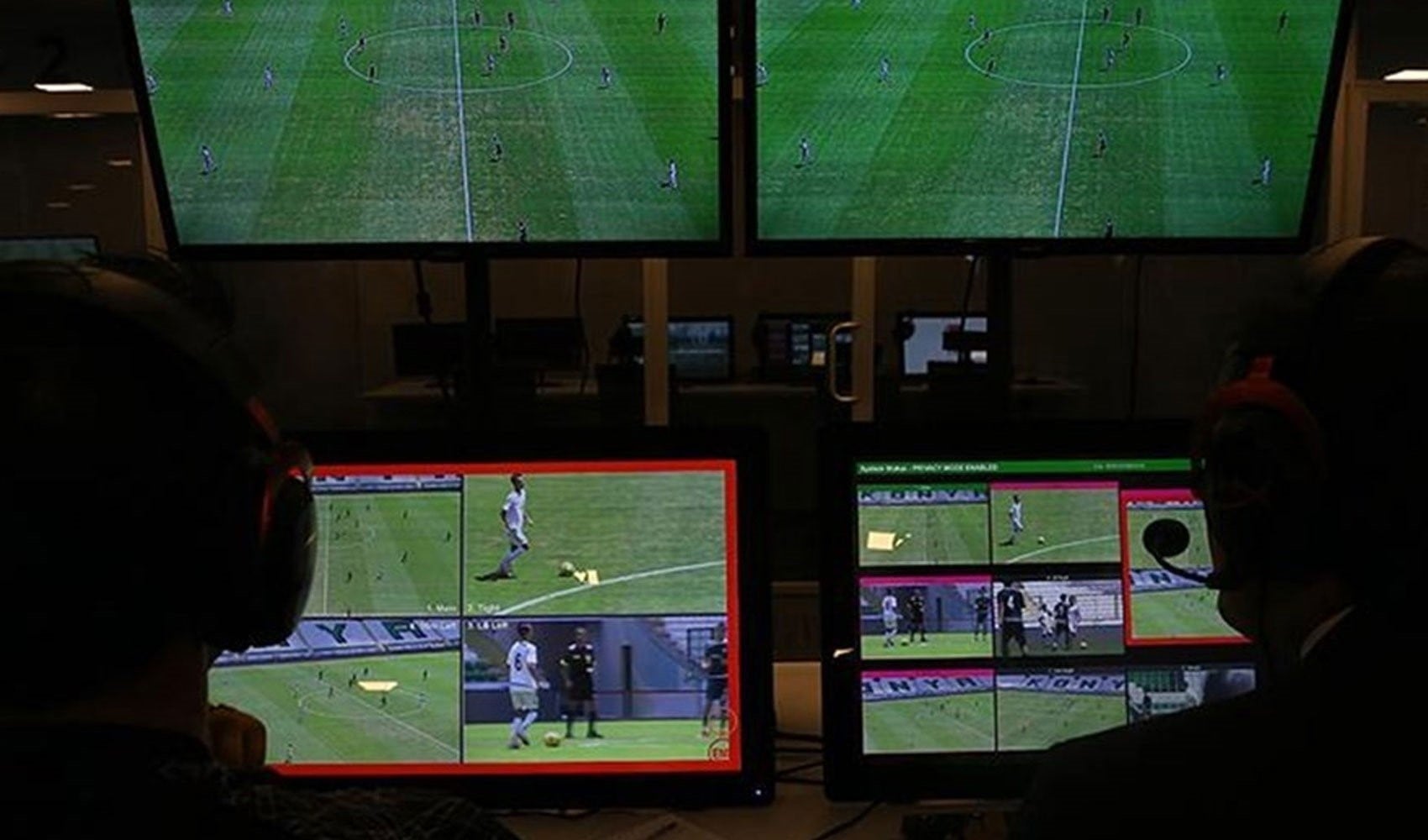
VAR for the Fenerbahçe-Beşiktaş derby has been announced!
Bridges and highways are being privatized: 15 July and FSM are also on the list

Peugeot September 2026 price list is out

New details emerge in 'panel' operation targeting lawyers

Gökçek era detail in ABB investigation

Özlem Şanver: 'He said he would change, I believed him; should I be beaten just because I didn't leave?'

First statement from Osimhen after injury in Başakşehir match

The Süper Lig's new team becomes the transfer champion