



When the Cold War ended, Europe had established a welfare society but had lost its geopolitical reflexes. Entrusting its security to the US under the protection of NATO, the continent grew accustomed to strategic laziness. Navies were downsized, air forces were weakened, and armored units were disbanded. Economic prosperity replaced deterrence. Although the Common Foreign and Security Policy was brought to the agenda with the 1993 Maastricht Treaty, these efforts remained on paper for many years. The fact that Europe remained dependent on the US even for intervening in its own crises—such as in Yugoslavia—showed how weak the continent's military autonomy capacity was. With the 1999 Helsinki Summit, they took significant decisions to address these shortcomings. They moved toward a structure that would allow a 60,000-strong rapid reaction force, consisting of 15 brigades, to be deployed to a crisis zone within 60 days by 2003. Meanwhile, within the framework of the European Security and Defence Policy (ESDP), they aimed to benefit from NATO's facilities and capabilities. By keeping the decision-making structure independent of NATO, they pushed for ways to utilize NATO's intelligence, communications, and logistical capabilities, primarily airlift.
EUROPE'S GEOPOLITICAL BLINDNESS AND THE DEEPENING DEPENDENCE ON THE US
The EU faced its first political-military test of will regarding support for the US-led Operation Iraqi Freedom in the spring of 2003. They were divided, and it became clear that half of the EU was staying away from Iraq. The same situation occurred during the 2011 Libya Crisis. De Gaulle's withdrawal of France from NATO's military command in 1966 was an early example of the search to escape this dependence; however, the "free defense" mentality did not change across Europe. Naturally, the fact that the vast majority of EU members were also NATO members played a role in this complex situation. This revealed another difficulty in developing a common defense identity. However, the EU continued to be an economic center of gravity and to expand. After the 2008 crisis, the EU began to lose this characteristic as well. The questioning by the public in EU countries—which provided support to Afghanistan under pressure from the US as part of NATO's ISAF operation—of the failure experienced in Afghanistan led them to question not only the development of an EU Defense Policy but even the status of NATO itself. The US did not want an independent Europe in the west of Eurasia that would conflict with its own interests. The crises in Georgia and Ukraine, the color revolutions, and NATO's eastward expansion all maintained this chain of dependence. Ultimately, although Europe was an economic giant, it remained a dwarf in terms of strategic autonomy. The EU, which aimed to establish a 60,000-strong rapid reaction force within 60 days after 1999, downsized its target in 2014. They reduced the rapid reaction force to two battle groups of 1,500 personnel each. By 2014, the EU was able to use a total of 7,000 troops in 12 civilian missions and 4 military operations under a common defense identity. The only area where they achieved concrete success was the fight against piracy off the coast of Somalia and Aden with Operation Atalanta. The post-2022 Ukraine War has pushed the EU into a position where it questions not only the effectiveness of its defense policy but even the power of NATO today. Europe does not want to fight without the US; its deterrence is measured by Washington's nuclear umbrella and Atlantic, i.e., overseas, logistical support capacity. However, the US does not want to offer defense to Europe for free. Trump, on the other hand, wants to prevent Europe from becoming an economic rival to the US while it continues to be dependent on the US military industry. Today, the declining European economy, led by Germany, shows that Trump is coming out on top.
THE SEARCH FOR STRATEGIC AUTONOMY, UKRAINE, AND THE BIRTH OF SAFE
After the Ukraine War, the US pivot to the Asia-Pacific pushed Europe to question its own security architecture. The demand voiced by Trump as soon as he came to power for a second time in 2025 that NATO members allocate 5% of their national income to defense created a shock effect in European capitals. This external pressure led European Commission President Ursula von der Leyen to announce the "ReArm Europe" initiative. In summary, Leyen was saying, "Europe must cease to be a peace project and become a defense project." The financial heart of this strategy became the SAFE (Security Action for Europe) program. This rapid withdrawal of the US, which caused an earthquake, also started the process of convincing the public in Europe for an increase in defense budgets. The process of demonizing Russia, which was initiated in Europe starting from February 24, 2022, was moved to the stage of exaggerating and magnifying the Russian threat after 2025. Calls for the public to prepare for war increased, especially in the Baltic states and Germany. With calls such as building shelters in homes or stocking up on food and water for war, the public was prepared for the defense budget increases to be brought to national parliaments. Although the contribution of the Russian economy to the global economy is 2%, there were countries that returned to the mandatory military service system with the propaganda that Moscow would invade Europe. On the other hand, the Trump administration, taking advantage of the fact that it is not the European peoples but the ruling elite who want the continuation of the war in Ukraine, preferred to direct this support through the European Union instead of sending a new direct military aid package to Ukraine. This approach both relieves the US budget and effectively forces European countries to buy American-made weapons and ammunition. European countries transfer equipment from their own stocks to Ukraine, and then buy new versions of the same systems from the US. Thus, Ukraine continues to receive weapons, and the stocks of European armies are "renewed" with American production. Thanks to this method, Washington both continues its support to Ukraine without asking for additional budget from Congress and creates new export markets for its own defense industry. The price of this model is the weakening of Europe's strategic autonomy and the deepening of its military-technological dependence on the US. The US, on the other hand, both gains economic profit from this and continues to indirectly control Europe's security policies. SAFE can also be seen as a program that provides balance to this trend.
THE PURPOSE OF SAFE: THE REARMAMENT OF THE CONTINENT
While SAFE is the financing tool of ReArm Europe, ReArm Europe is the political framework of SAFE. ReArm Europe, announced by von der Leyen under the title "Plan for the rearmament of Europe," envisions the growth of the defense industry in line with Europe's "European Defense Readiness" targets by 2030. With a budget of approximately 150 billion euros, SAFE is the largest financial instrument for the defense industry in European history. The program aims to increase joint production capacity, institutionalize the intra-EU supply chain, and reduce dependence on the US. Going beyond previous initiatives like EDIRPA (European Defence Industry Reinforcement through common Procurement Act) and ASAP (Act in Support of Ammunition Production), SAFE finances not only the purchase of weapons but also the reconstruction of production lines. Therefore, SAFE is both an economic and strategic rearmament plan. The condition in the SAFE program that at least 65% of the production, technology, or services must be met from European sources, although it looks like an economic regulation on the surface, is actually a clear expression of the goal of institutionalizing Europe's strategic autonomy. It aims to eliminate Europe's weaknesses in ammunition and system production and to provide production support to large defense groups based in France, Germany, Italy, and Poland. On the other hand, SAFE also aims to reduce Europe's dependence on non-EU defense suppliers such as the US, the UK, Israel, and Turkey. Expenditures to be made within the scope of SAFE cover not only weapon purchases but also production line and R&D investments. For this reason, it is aimed that European countries build resilience in their defense supply chains. It can be said that the winners of SAFE will likely be large defense groups based in Germany, France, and Italy. In this context, the Trump administration is also closely monitoring the emergence of SAFE. Washington is uncomfortable with Europe institutionalizing its own military industry. Because this process will reduce Europe's dependence on the US and, consequently, the market share of the US defense industry. Despite this, the justification of "increasing burden sharing within NATO" for SAFE creates a ground of legitimacy for the US. Washington cannot openly oppose SAFE; however, it also does not want Europe to become fully independent in this field. The legal basis of the program is Article 122 of the Treaty on the Functioning of the European Union (TFEU). This article grants the Council the authority to activate a financial instrument for crisis management in extraordinary situations. SAFE carries this authority into the field of defense; therefore, a permanent defense capacity is being built with an extraordinary situation. Funds are met through EU bonds and member state contributions. However, member states are not required to invest money directly. Countries wishing to participate in projects are obliged to co-finance.
CHALLENGES AND THE PROBLEM OF REALISM
The success of SAFE and ReArm Europe faces three major obstacles. These are the economic burden, industrial capacity, and political will. The transition to a war economy will lower the welfare level of European societies. The production chain on the continent has been neglected for years; ammunition stocks, supply infrastructure, and the R&D ecosystem are insufficient. Within the EU, Germany's caution, France's leadership deficit, the UK's external veto, and the reservations of small members weaken the common defense will. The reflection of costs on society as taxes, austerity, and restrictions on freedom cannot be ignored. It is not easy to transition to a war economy when European economies are in a very difficult situation. Today, European peoples have moved away from cheap energy and China due to the Russia-Ukraine War, which the US and the global financial capital oligarchy have brought upon them, and the tariff war of Trump, and industrial production has declined with many firms closing down. Most of the elected leaders have lost public support. In this case, preparing for war with Russia against the will of the people and transferring large shares from the general budget to defense requires very strong political will. Will the success of SAFE carry Europe to true strategic autonomy, or will it cause the start of a new fiscal policy? Time will tell.
EFFECTS OF SAFE ON TURKEY
For Turkey, SAFE contains both risks and opportunities. Although Turkey is a NATO member, it cannot directly benefit from SAFE funds because it is not an EU member. For this reason, Turkish defense industry organizations—such as ASELSAN, TUSAŞ, ROKETSAN, and STM—can only participate in projects within the scope of SAFE at the subcontractor level. However, if their share in the project budget exceeds 35%, the project may be removed from SAFE funding. This situation brings with it the risk of Turkey being systematically excluded from European defense projects. In the long run, this picture could weaken the integration between the Turkish defense industry and Europe and position Turkey in the outer ring of the EU's military-industrial chain. However, SAFE is not a completely closed structure. European countries may continue to see Turkey as a partner in certain areas to reduce production costs, shorten supply times, and maintain coordination with NATO. On the other hand, Turkey's geographical location, energy security, logistics networks, and strong defense production infrastructure offer serious advantages for the European security architecture that SAFE aims for. Turkish shipyards and maintenance-repair capacity are of strategic importance, especially for European naval elements that will operate in the Eastern Mediterranean and the Aegean. Furthermore, Turkey's cost-effective production model and advanced unmanned systems technology could still be an attractive gateway for cooperation for Europe. However, the EU's political intention is to keep Turkey on an axis of controlled exclusion rather than full geopolitical integration. In this context, while Germany wants to limit Turkey's Blue Homeland doctrine and independent strategic capacity, the UK, from outside the EU, needs Turkey's cooperation to increase its own market share. In this period, the 65% rule, while keeping Turkey and the UK away from European defense projects, may push both countries toward new searches.
GEOSTRATEGIC ASSESSMENT AND RECOMMENDATIONS FOR TURKEY
The European Union has entered a process of deep dissolution in economic, political, and strategic terms in the first quarter of the 21st century. The EU, which was once presented as a project of prosperity and unity, is today shaken by energy crises, the shift of production power to Asia, demographic aging, migration waves, increasing debt burden, and dependence on the US for security. While Germany's industrial model is collapsing, internal social unrest is deepening in France; and southern and eastern European countries are struggling with economic inequality. The fragmentation trend that started with Brexit has weakened the claim of strategic autonomy with the Russia-Ukraine war and defense projects like SAFE, which is directed by the US. Ultimately, the EU has become a power that has lost its own identity, whose decision-making mechanisms are paralyzed, which is passive in foreign policy, and scattered internally. Turkey, on the other hand, is the windpipe of Europe thanks to the Straits, the energy and trade hub of the Eastern Mediterranean with the Blue Homeland, and the strategic buffer between NATO and Russia in the Black Sea thanks to the Montreux Convention. Under the negative conditions in which the EU finds itself, the new European security architecture born from SAFE moves Turkey to a balancing position. In this context, the strategy that Turkey should follow is clear: while conducting a flexible diplomacy between NATO, EU, and Eurasian balances, increasing defense industry independence must be essential. Without ever falling into the political trap built on war with Russia and endless hostility, which the European leadership structure desires; it should be aimed to benefit from the technological partnerships offered by SAFE, to remain committed to the goal of full domestic production in critical systems; and to maintain the deterrent naval power in the triangle of the Mediterranean, Aegean, and Black Sea in line with the Blue Homeland, but to build this power absolutely with national means. Developing production capabilities compatible with EU supply chain standards to increase the market share of the Turkish defense industry; and ensuring the indirect access of Turkish defense companies to projects within the scope of SAFE should be among the duties of the state. SAFE is the locomotive of Europe's search to provide its own security without the US. However, it has not yet reached maturity economically and strategically. Turkey should not fall into the trap of EU compliments without guaranteeing its own geopolitical capacity and its own geopolitical interests in Cyprus, the Blue Homeland, and Southeastern Anatolia during a period when Europe is looking for cheap blood and new vassals. (The statement of the Finnish Foreign Minister at the press conference on November 5, 2025, to the Turkish Foreign Minister that "The only empire, the only power that the Russian Empire respected was the Ottoman Empire" should be read in this direction.) How Europe looks at Turks has not changed since the Crusades. A Turkey that does not outsource its security, protects its integrity as a 102-year-old republic, and establishes rational alliances in regional balances will be the true guarantor of European security, even if it remains outside of initiatives like SAFE.
Most Read
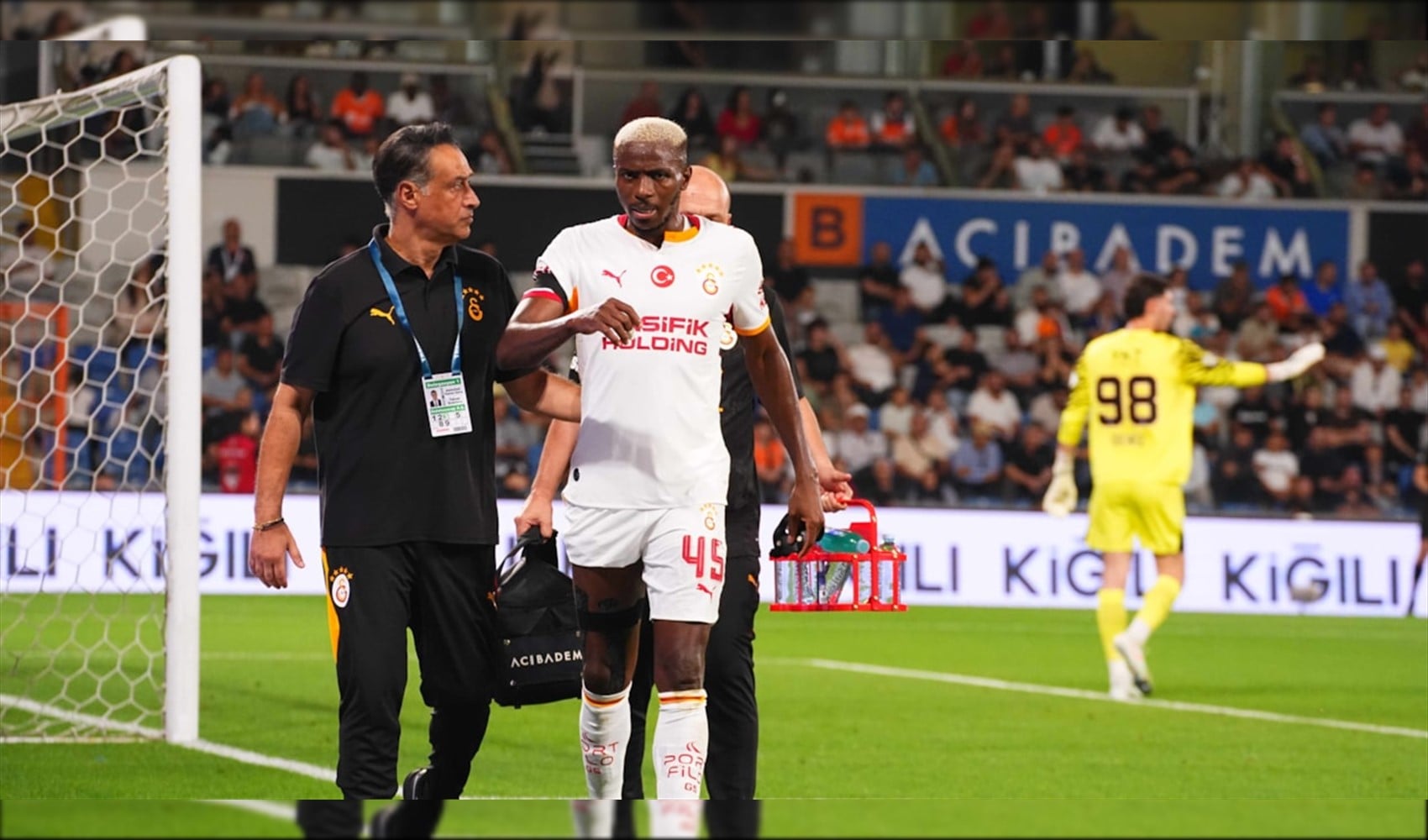
Galatasaray announces injury updates for Osimhen, Lemina, and Singo

Attention online sellers: Tax monitoring expanded
VAR for the Fenerbahçe-Beşiktaş derby has been announced!
Bridges and highways are being privatized: 15 July and FSM are also on the list
Peugeot September 2026 price list is out

New details emerge in 'panel' operation targeting lawyers
Gökçek era detail in ABB investigation
Rules are changing in Schengen
First statement from Osimhen after injury in Başakşehir match

Özlem Şanver: 'He said he would change, I believed him; should I be beaten just because I didn't leave?'