



Turkey’s last 170 years have been shaped by two separate 70-year cycles that oscillated between trust in the West and strategic dependency. This picture must change. Turkey must take its place in the multipolar Asian Century.
Turkish geopolitics has been influenced by competition with Russia, especially after the 16th century, and has experienced 12 wars with this state. The Crimean War, the 10th war with the Russians, began in 1853 with the Sinop Raid. After this war, the West entered the Black Sea with its armed forces for the first time to protect the Ottoman Empire. The West’s assistance to the Turks brought as many losses as it did gains. Thus, the process entered a cycle of “sovereignty and dependency” that has repeated twice in 70-year periods to the present day.
Every period in which states missed technological transformations or sought external support due to a lack of self-confidence in the face of regional threats has resulted in the loss of strategic autonomy and endangered the survival of the homeland in the long run, even if it created a short-term illusion of security. Historical data proves that the pressure created by the 12 major wars between the Turks and the Russians pushed the Ottoman Empire into the “geopolitical tutelage” of the West, but this tutelage was actually a process of invasion and colonization. The same situation repeated after 1946.
In short, whenever we trusted the West in our history, we were either eventually invaded by the West or incorporated into its sphere of influence like a colony. The Ottoman Empire missed both industrial revolutions. Therefore, it entered the 19th century as an empire that possessed 3 million square kilometers of land but could not transfer power and prosperity to these lands. After the defeat at Lepanto in 1571, the Ottoman Empire, which was gradually pushed away from the Mediterranean, continued to be the greatest obstacle to the Russian Empire, which was expanding in every direction, from reaching warm seas, i.e., the Mediterranean. Great Britain, which did not want a rival in the Mediterranean, also helped the Ottoman Empire in every period to stop this Russian advance. In short, against Russia, which wanted to move from the continent to the sea, it found a great naval power, Britain, by the side of the Ottomans. Among these processes, which were shaped by Russia’s struggle to reach the Mediterranean through the control of the Balkans, Crimea, and the Caucasus basins, the most important is undoubtedly the Sinop raid of November 30, 1853, which caused the Crimean War, in which Western states entered the war alongside the Ottomans for the first time.
THE FIRST 70-YEAR CYCLE (1853-1923) BEGINS WITH THE SINOP RAID
The Sinop Raid of November 30, 1853, was not just a military defeat, but the suicide at sea of an empire that missed the Industrial Revolution and the guidance of reason. This raid, in which 2,700 sailors were martyred, made the Ottoman Empire dependent on the West militarily and politically after the economic colonization process that began with the 1838 Treaty of Balta Liman. Although it has gone down in our history as a raid, it was not a raid. The Russian navy had not suddenly arrived off the coast of Sinop. Preparations had been made for days. The navy, which had missed the industrial revolution, science, and the power of reason, was not ready for war. Instead of accepting the war at sea, waiting in the harbor had been chosen. In other words, the war was lost from the start. In this raid, the Ottoman Fleet lost 2,700 of its sailors. This raid paved the way for the Anatolian Turks to be supported by Europeans through armed force against the Russians for the first time. The British, French, and Piedmont/Sardinian forces that took part alongside the Ottomans during the Crimean War actually acted like the 19th-century precursor to modern NATO. However, this alliance was not “defense assistance,” but a strategy to use the Ottoman Empire as a buffer zone to prevent Russia from reaching the Mediterranean. These forces, stationed in Gallipoli and Istanbul, did not act like allies, but like “invasion armies” that insulted the public and brought moral decay. This mentality, which came with the mask of an ally in 1853, showed that its true intention was to partition the Empire with the 1918 Armistice of Mudros and the 1920 Treaty of Sèvres.
THE 19TH-CENTURY NATO AND THE EUROPEAN OTTOMAN DECEPTION
The Kingdoms of Britain, France, and Piedmont/Sardinia declared war on Russia on March 12, 1854, as allies of the Ottomans—that is, as a kind of NATO of the 19th century. This war was also part of the great game of the century. After this war, in which the Russians were defeated, the Ottoman Empire was accepted as a part of Europe in the 1856 Treaty of Paris, but the Ottoman naval power was excluded from the Black Sea along with its neighbor, the Russians. Shipyards were closed. On the other hand, after the Crimean War, the Ottoman Empire turned into a real colony of Europe, and its collapse became inevitable. Sultan Abdülmecid also took out the first foreign loan of the Ottoman Empire during this war. The European armies, which amassed troops in the Gallipoli and Istanbul regions during the war, acted like invasion armies. The public was tired of the insults and immorality committed. The Crimean War was actually the first rehearsal for the occupation of Anatolia that began after the Mudros armistice on November 13, 1918. The geopolitical maneuver, which was initially undertaken to protect the Ottomans from the Russians, was repeated in 1878 when the British Navy was brought into the Marmara when the Russians reached Yeşilköy, and in return, Egypt and Cyprus were lost. This process repeated itself with the Libyan, Balkan, and First World War. Britain and France stood before the Ottomans as a colonial executioner in the autumn of 1914, and in 1920, they brought the disaster of Sèvres upon the Ottomans. Both countries, whose doors we opened as friends in 1853, kept the Russians away from Anatolia in the mid-19th century, but eventually occupied the Empire’s lands like a monster with only one tooth left after October 30, 1918. The Ottoman Empire had to be partitioned, but neither the Russians nor the newly emerging Germans (under the mask of allies) should have done this alone. In the First Cycle (1853-1923), we almost lost the homeland. First, North Africa and the Dodecanese were lost with the Italian War, then the Balkans and Rumelia with the Balkan War. We were defeated alongside the Germans in the Great War, and first the Mudros and then the Sèvres Treaty were imposed. We were saved from extinction thanks to the blood of the Turkish nation led by Mustafa Kemal and the weapons and ammunition provided from Russia.
MUSTAFA KEMAL’S SLAP TO THE FIRST CYCLE (1853-1923)
The first 70-year cycle, which began with the 1853 Sinop Raid, was stopped in 1923 with a new republic thanks to Mustafa Kemal. This series of disasters could only be stopped by a will that had made full independence its character; that will was first the national war of liberation and later the founding philosophy of the Republic. This process continued neutrally and independently until March 12, 1947, despite the Second World War. First, through the war of liberation carried out between 1919-1922 and then the 15-year Turkish renaissance, it transitioned the Turkish people from servitude to citizenship and the public from an ummah to a nation through the Republic and its revolutions.
Our farming peasant population exhibited a development that would be an example to world history with industrialization and development moves, rapid industrialization, and development. During this period, under Atatürk’s exemplary statesmanship and leadership, not only was the Republic’s independent sovereignty protected, but a security architecture was also built in its region with the Saadabad Pact and the Balkan Entente. The years 1923-1947 were a period of full independence, so to speak, in which Turkey realized the construction of a state based on its own power, free from the tutelage of foreign powers. This period was built on the fact that security is too sacred to be delegated to someone else. During this period, Turkey refused to be a satellite of any global power and established its own regional equation. Even when the German armies reached the Thrace border in 1941, Turkey was able to protect its sovereignty without needing any “protector.” This is the greatest historical evidence refuting the “necessity of external protection” theses developed after 1947. However, the change of course that began in 1947 put Turkey back into a spiral of dependency and the Atlantic Shackle.
THE TRUMAN DOCTRINE AND THE SECOND 70-YEAR CYCLE (1947-2016)
With the Truman Doctrine of March 12, 1947, Turkey, under the pretext of exaggerated Soviet notes, once again sheltered Mustafa Kemal’s republic in the Atlantic system under the tutelage of the USA. This process is the beginning of a destruction that paralyzed Turkey’s perception of security and mortgaged its mental independence. In other words, Turkey did not need anyone’s protection even under those conditions. Moreover, during the period of the notes, the Soviets were not yet a nuclear power. The second 70-year cycle, which began on March 12, 1947, also lasted 70 years until July 15, 2016, i.e., the FETÖ Coup Attempt. The new process, which first distanced Turkey from Mustafa Kemal and then from the Aegean and Mediterranean, primarily hindered the development of the national defense industry. By aiming to create a semi-ignorant mass of people with a guided populist democracy model, it encouraged the instrumentalization of religion and ethnic separatism in politics in every field. Under the name of fighting communism, it contributed to the destruction of Kemalism and its transformation into an abstract concept like the Atatürkist Thought System. In 1950, it ensured that thousands of Turkish soldiers were sent to Korea to fight against the oppressed without a UN resolution or parliamentary approval. Thanks to this, our country, which proved that the Turkish people were cheap blood at the service of imperialism, was accepted into NATO in 1952. They were always on the side of the Greeks in the faits accomplis created in Cyprus and the Aegean. In 1955, at the Bandung Conference of the Non-Aligned, they encouraged Mustafa Kemal’s Turkey to be presented to the oppressed nations as the hitman of the hegemonic Atlantic system. In 1958, they ensured that a vote was cast at the UN against the independence of our old friend Algeria. Without the Turkish public’s knowledge, they placed nuclear Jupiter missiles on our soil. Again, without our knowledge, we were only able to learn that American spy planes were taking off from our soil when a U2 plane was shot down over the Soviets. By encouraging the coups of March 12, 1971, and September 12, 1980, they ensured the transformation of the production-based mixed economic model into a neoliberal economic system. They punished our country, which intervened to prevent an open Turkish genocide in Cyprus, with a 4-year embargo and subsequently with ASALA Armenian terrorism and genocide laws. At the end of the Cold War, like an elephant in a glass shop, they forced Turkey into new adventures while West Asia was being torn apart for Israeli geopolitics and eschatological goals. While Iraq, Libya, and Syria were being torn apart, they aimed for the establishment of Kurdistan, i.e., a second Israel, and paved the way for all kinds of internal and external incentives for Turkey’s fragmentation, shrinkage, and the destruction of its nation-state and unitary structure. After 2003, they ensured the establishment of an autonomous Kurdish State (KRG) in Iraq to our south. In 2004, they supported the destruction of the TRNC with the absurd Annan Plan. They tried to upset the Montreux balance in the Black Sea. While supporting religious and ethnicist political parties that support all kinds of actions aimed at destroying the values Mustafa Kemal created in Turkey, they poured millions of dollars and euros under the name of civil society, human rights, and democratization into all destructive, divisive, and transformative activities that wrapped around the country like a spider web. They signed many plots that would complicate relations with China and Russia. Most importantly, they created the treacherous organization called FETÖ. They developed it. They supported the conspiracy cases carried out through them. On July 15, 2016, they fielded them as the hitmen of a civil war in Turkey. But they were defeated. The second cycle went bankrupt on the night of July 15 with the will of the nation.
DO NOT ALLOW A THIRD 70-YEAR CYCLE.
Today, Turkey is in its third 70-year cycle. 10 years have passed in this cycle, which began in 2016. Today, the world is in a process of a new transfer of power. Asia has risen, and the Atlantic system has begun to dissolve. China, Russia, and regional powers are establishing a new balance. In this conjuncture, we must understand the necessity of building a central power based on “mental independence” by learning lessons from the strategic bankruptcies of the past. Today, a brand-new conjuncture exists. Asia has awakened. Turkey is waking up. What has been experienced in the Russia-Ukraine War, the Gaza Genocide, and the Israel-USA-Iran war presents both great risks and great opportunities for our country. Israel’s increasing hostility toward Turkey and the fact that the GCA and Greece are taking part alongside Israel together with the USA in this context make it necessary for our country to review all its geopolitical equations and rewrite the National Security Policy Document and the National Military Strategic Concept. Turkey must take control of the geopolitical destiny of its own region in West Asia. The Turkish economy, demographic power, and defense industry cannot be compared with the conditions of 1853 and 1947. In these days when we have completed the first ten years of the third 70-year cycle, we must not forget that our ancestors founded empires on these lands and that we are the nation that was able to deliver the first slap to imperialism with the War of Independence and the founding revolutions. Furthermore, our homeland was not saved by anyone other than the Turks in history. Others did not write our constitution. The Turkish public must trust itself.
Iran’s resistance against the USA has revealed that there is no longer a unipolar world. The crisis in the Strait of Hormuz and the Bab-el-Mandeb has exposed the fragility of the global system. The USA’s naval dominance is being questioned. NATO, on the other hand, is scattered, indecisive, and ineffective in this process. European countries are distancing themselves from the USA’s policies, and the alliance is losing its ability to act together. NATO is now producing risk, not security. At the same time, Russia continues to advance in Ukraine, taking advantage of the West’s disarray to gain a strategic advantage. Energy crises and the division of military resources further deepen this picture. Under these conditions, Turkey’s reconnection to an Atlantic-centered security architecture means entering the same historical spiral again. The most critical area today is the Black Sea. NATO’s efforts to establish a permanent presence in the Black Sea are a clear challenge to the Montreux regime. Turkey’s involvement in this process is a mistake that will directly pit it against Russia. Montreux is a balance that ensures the security of not only Turkey but all Black Sea littoral states. The Black Sea is the sea of the littoral states, not of external powers. Due to the strategic mistakes made after 2013 in our south, Syria, which was a large buffer state between us and Israel, was dragged into a civil war and the regime changed. As a result of the regime change supported by the USA and Britain, Syrian airspace was opened to Israel for attacks on Iran. Turkey should not repeat the mistakes it made in Iraq after 2003 and later in Syria in Iran. Because if Iran falls, Turkey will be surrounded by Israeli and US aggression.
Turkey is now facing a choice in this picture. Either it will be a frontline country as it was in the past, or it will become a central power by establishing its own geopolitical axis and moving closer to Russia and China. We are no longer the Ottoman Empire of 1853, nor the fragile state of 1947. We are in a much stronger position in terms of defense industry, demographics, and geopolitical capacity. However, the biggest issue is the mental independence trapped between NATO and Western admiration. Living under someone else’s security umbrella is easy, but the price is heavy. This price has been paid many times throughout history. We do not have the luxury of repeating the same mistake. Turkey must trust its own power, maintain its active neutrality, defend Montreux uncompromisingly, and take its rightful place in the Asian century on the front that defends Iran and Palestine in essence, not just in words. Today, being able to return to the 1923-1946 period is no longer a potential vision, but a kinetic reality. Turkey has paid the heaviest prices for the tests brought by historical cycles. The picture before us today shows that the Atlantic-centered security architecture no longer produces security, but risk. Turkey charting its own path is not a choice, but a historical necessity.
Our future vision is no longer a wish or a potential; it is a kinetic reality that has materialized in every field, from our defense industry to our geopolitical moves. That unshakable will that Atatürk displayed against the occupation fleet on November 13, 1918, is the cornerstone of the third cycle that began after the 2016 FETÖ coup attempt. We must be able to say “They will go as they came” and end the 70-year cycles once and for all.
Most Read
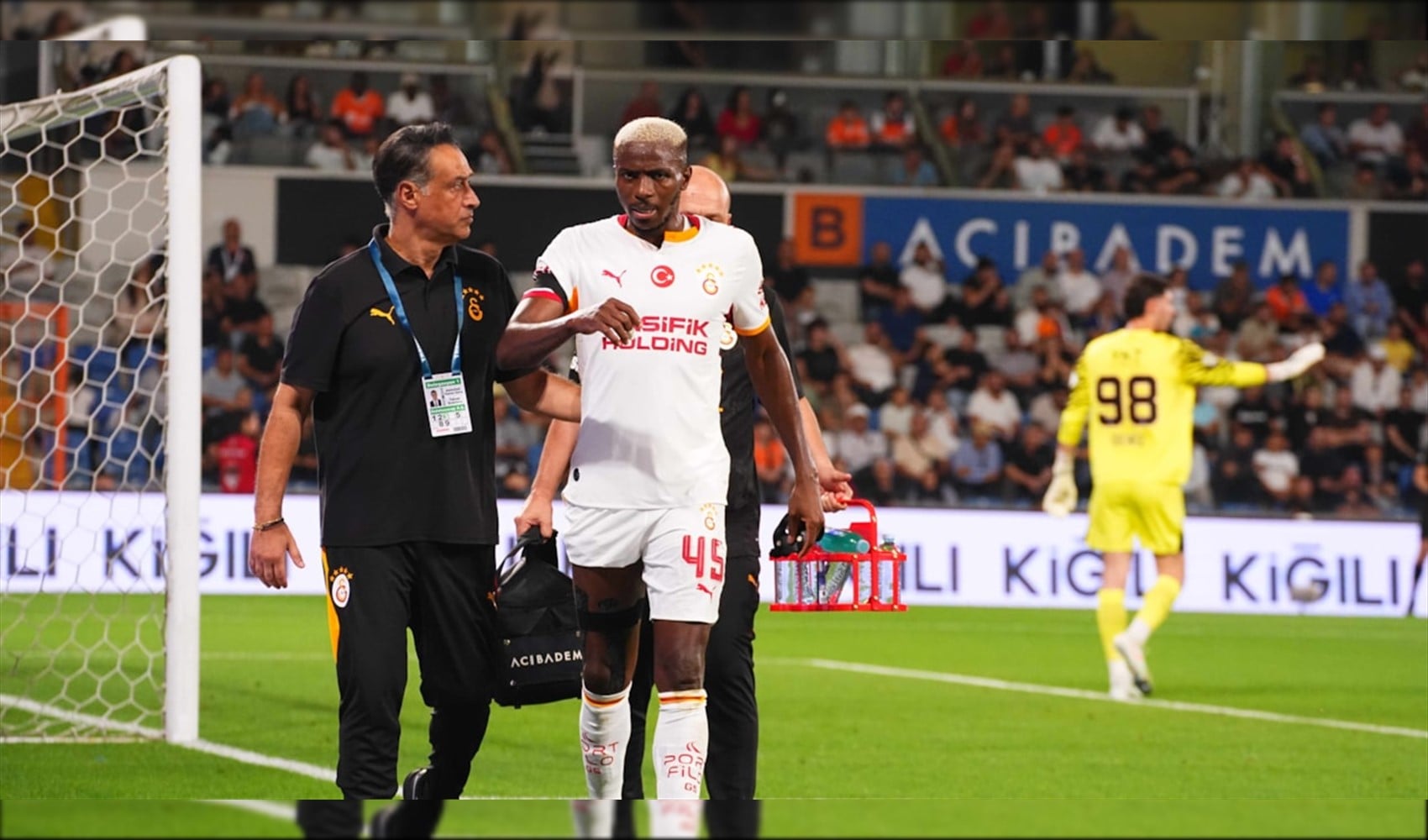
Galatasaray announces injury updates for Osimhen, Lemina, and Singo

Attention online sellers: Tax monitoring expanded
VAR for the Fenerbahçe-Beşiktaş derby has been announced!
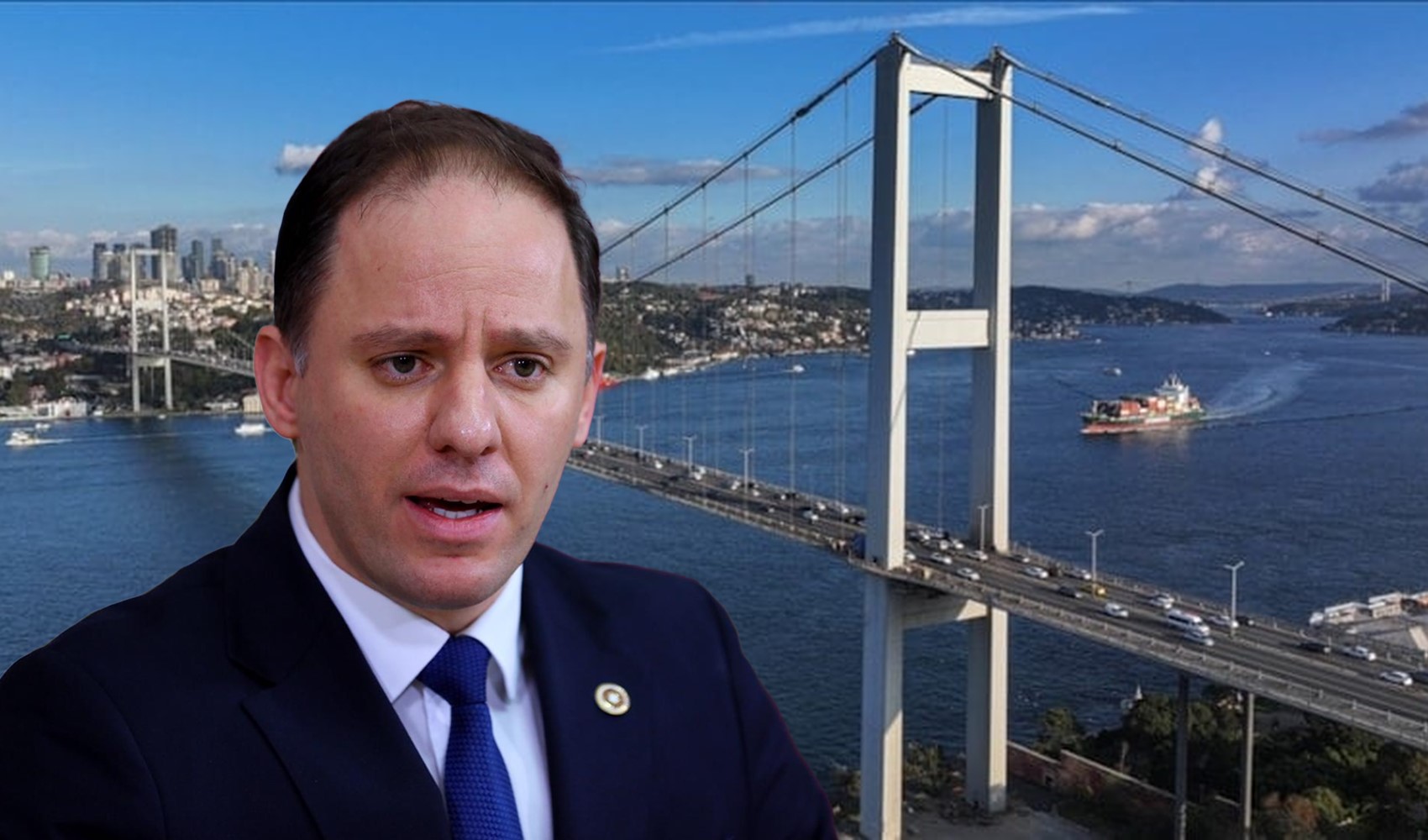
Bridges and highways are being privatized: 15 July and FSM are also on the list

New details emerge in 'panel' operation targeting lawyers
Another bankruptcy in the construction sector

Peugeot September 2026 price list is out
First statement from Osimhen after injury in Başakşehir match

Detention warrants for 31 lawyers, searches at 39 offices

Özlem Şanver: 'He said he would change, I believed him; should I be beaten just because I didn't leave?'