


Institutionalize or perish: The secret to corporate longevity



Perhaps one of the most important, yet often overlooked, questions in the global economy is this: Why do some companies reach a lifespan exceeding a century, while others fade into history before even seeing their second or third generation? Why does a business that grows through the labor, vision, and entrepreneurial power of its founder fail to carry that same success to subsequent generations? Why do some companies emerge stronger from economic crises, technological transformations, and harsh competitive environments, while others begin to unravel at the first major shock?
It is not enough to seek the answers to these questions solely in capital structure, market conditions, financing costs, or economic crises. This is because a significant portion of the most serious problems companies face originates not from the outside, but from within. Just as weak columns cause a building to collapse in an earthquake rather than the earthquake itself, it is often not the crises themselves that drive companies to collapse, but the failure to establish an institutional structure that provides resilience against those crises. At this very point, the issue of institutionalization becomes a fundamental management problem that determines a company's continuity and durability more than its size.
A TREE EATEN BY WORMS WILL FALL: Structural Problems That Weaken Companies from Within
In companies that fail to institutionalize, problems usually do not begin with major crises. The first signs appear in daily operations. The lack of clear definitions for duties and authorities, and keeping decision-making areas limited while expecting results from employees, disrupts the balance between authority and responsibility. Over time, this structure makes it difficult for employees to take initiative, generate new ideas, and assume responsibility. People become oriented not toward producing, but toward not making mistakes; not toward developing solutions, but toward avoiding responsibility.
In addition, reports, meetings, and processes that have continued for years but whose purpose is not sufficiently questioned begin to drain the organization's energy. Some tasks are left without a real owner; as problems circulate between units, it becomes unclear who is responsible for the outcome. The failure to track performance with clear and measurable indicators leads to success and failure being shaped by personal assessments. When the weakening of budget and target discipline is added to this, the company ceases to be an organization that follows strategic priorities and turns into a structure that chases daily problems.
Therefore, the confusion of duties and authorities, non-value-adding processes, ownerless tasks, unmeasurable performance, and the loss of target discipline are not independent problems. All of these are different manifestations of the same structural deficiency: a management order where dependence on individuals takes precedence over systems, and where the institutional structure is not sufficiently developed.
ANATOMY OF A SILENT BANKRUPTCY: The Deterioration of the Institution Before the Balance Sheet
Companies rarely go bankrupt overnight. Financial bankruptcy is usually the final stage of an institutional disintegration that began much earlier. First, invisible cracks form within the organization. Departments drift apart; finance begins to disconnect from sales, production from marketing, and human resources from the company's general strategy. As each unit centers on its own priorities, the sense of common purpose weakens, and silos form within the institution.
After this stage, a more dangerous process begins. Employees prefer to remain silent instead of generating ideas; it becomes safer to postpone or ignore problems rather than openly discussing them. Rumors replace corporate communication, and filtered narratives replace information sharing. In such an environment, the information reaching senior management increasingly ceases to be the reality on the ground. No matter how experienced decision-makers are, they struggle to make sound decisions with incomplete, delayed, or manipulated information.
For this reason, a company's true bankruptcy often begins before losses appear on financial statements. The balance sheet may still show profit, sales may continue, and the business may look strong from the outside. However, if the institution's trust, sense of common purpose, information flow, and cultural capital have begun to deplete, the company is actually experiencing an invisible disintegration. It would not be wrong to define this process as a “silent bankruptcy.”
WHAT IS NOT INSTITUTIONALIZATION? The meaningless collapse of the concept of institutionalization
The failure to correctly understand the concept of institutionalization in Turkey is also one of the fundamental problems companies face in this transformation process. Institutionalization is sometimes perceived as the boss transferring all authority to professional managers, the founder withdrawing completely from the company, the liquidation of old staff, or the proliferation of bureaucratic processes. However, none of these alone means institutionalization.
True institutionalization is the transformation of structures dependent on individuals into systems. It is the transfer of the knowledge, experience, intuition, work culture, and vision that the founder has built over the years not just into their own personal memory, but into the company's institutional memory. Therefore, the issue is not to sideline the boss, but to make the business capable of functioning without relying solely on the boss's presence.
If all of a company's critical information and decision-making capacity are concentrated in a single person, that person's departure from the institution creates a serious vulnerability for the company. In contrast, truly institutionalized structures are those that can transform individual knowledge into organizational knowledge and sustain processes independently of the presence of individuals. The essence of institutionalization lies exactly here.
Between Boss Monopoly and White-Collar Oligarchy
It is observed that many companies in Turkey are tossed between two extremes on their journey toward institutionalization. At one extreme is the “boss monopoly,” where all critical decisions are concentrated in one person. When the company is small, this structure can provide significant advantages in terms of rapid decision-making and strong control. However, as the business grows, the number of decisions, the number of employees, and operational complexity increase, while the founder's time does not increase to the same extent. After a while, as the company continues to grow, the boss's decision-making capacity becomes one of the main bottlenecks facing the organization.
At the other extreme, a structure may emerge where the founder distances themselves excessively from the company in the name of “institutionalization,” and professional managers gradually create their own power bases. In this case, authority expands, but accountability does not develop to the same extent. When professional management begins to center on its own organizational priorities, drifting away from the company's long-term goals, the company may then drift away from the founder's vision and the purpose of its establishment.
Therefore, true institutionalization is not about choosing one of these two models. A healthy structure is the ability to bring together the founder's entrepreneurial vision and the knowledge and competence of professional managers within the same governance system. The primary goal of corporate governance is not to eliminate the boss or to open unlimited space for professionals; it is to establish a sustainable balance between authority, responsibility, control, and accountability.
The Real Test for Family Businesses is Generational Transition
One of the most important dimensions of this discussion for Turkey is family businesses. Family businesses and SMEs that function as family companies make up a significant portion of the Turkish economy. Many of these businesses are built on strong entrepreneurial stories. The founding generation transfers not only their capital to the company but also their labor, relationships, personal reputation, and the experience they have gained over the years.
However, the real test for family businesses is not just growing, but surviving across generations after growing. International research indicates that only about one-third of family businesses reach the second generation, and about 10-15 percent reach the third generation. By the fourth generation, this rate drops to much lower levels. This picture shows us that the management structure and generational transition are as decisive for the future of companies as economic success.
Many issues that are resolved through the founder's personal authority and charisma cannot be solved with the same methods in the next generation. The blurring of family relationships and company relationships, the transformation of inheritance sharing into management disputes, the failure to determine the conditions under which family members will work in the company, and the lack of clear authority boundaries between professional managers and family members can lead to serious problems over time. Questions such as who will manage the company, whether being from the family is sufficient for management, how the rights of family members not actively involved will be protected, and how the new generation will be prepared for management are not just family matters; they are direct corporate governance issues.
For this reason, family constitutions, effective boards of directors, independent members when necessary, clear job descriptions, and succession planning are becoming increasingly important for the continuity of family businesses. The fundamental issue is to ensure that the company's system can continue despite the change of generations.
Institutionalizing is Not Solidifying, It is Managing Change
Another common misconception about institutionalization is the idea that establishing systems will slow down companies and reduce their flexibility. However, the environment companies face today is changing much faster than in the past. Technological transformation, digitalization, global competition, and rapid changes in consumer preferences force businesses to constantly adapt to new conditions.
Therefore, true institutionalization is not becoming static, but building an organizational capacity that can adapt to change. While unsystematic companies often respond to change with the personal reflex of a strong manager, institutionalized structures can manage change with the capacity of the entire institution. Corporate agility also gains meaning here. The goal is not to resist change; it is to build a structure that anticipates, manages, and can adapt quickly to change when necessary.
This approach reveals that explaining institutionalization only with organizational charts is insufficient. International frameworks such as the OECD Principles of Corporate Governance, COSO Internal Control System, ISO 9001 Quality Management System, ISO 37301 Compliance Management System, ISO 37000 Corporate Governance Principles, and ISO 31000 Risk Management, although they focus on different areas, unite in a common understanding: the success of institutions should not rely on the extraordinary efforts of individuals, but on sustainable systems. A business's most valuable asset is not just its factories, machines, real estate, or financial capital; it is the management system that enables it to manage all these resources correctly.
The True Legacy of Companies
One of the natural desires of founders is to be able to leave the companies they have worked for years to their children and subsequent generations. However, it is not enough to evaluate the concept of legacy here only through company shares, real estate, factories, machines, or bank accounts. All of these can be transferred. The truly difficult part is to be able to transfer the invisible values that keep the company alive.
For this reason, the true legacy of companies is corporate culture, written processes, transparency, accountability, institutional memory, and the capacity to raise new leaders. Capital can be left from one generation to the next; however, if systems to protect and develop that capital have not been established, it is possible for it to be consumed within a few generations. For this very reason, institutionalization is not a bureaucratic cost added to the business, but a management investment that carries the capital and the value created over the years into the future.
Conclusion: It is the System, Not Capital, That Keeps Companies Alive
Today, companies in Turkey see financing costs, currency fluctuations, and economic uncertainties as among the most important risks. Undoubtedly, all of these are important for businesses. However, one of the fundamental problems that threaten the long-term future of companies is often invisible on balance sheets: the failure to institutionalize.
Because it takes capital to start a company, and entrepreneurship and courage to grow it. But for a company to live longer than its founder, it needs a sustainable management system alongside these. The boss's energy and vision can establish the company, professional staff can grow it, and capital can make new investments possible; but it is the institutional structure that will ensure all of these turn into a lasting value.
Therefore, the real question is not just “How big a company have we built?” The more fundamental question is, “Have we created an institution that can function healthily even after us?” Because it is not just the capital they possess, but the systems they can build that determine the true lifespan of companies. Those who want to leave an inheritance can start a company; those who want to leave a lasting work build an institution.
Would you like to get notifications about new developments and save news?
- NotificationsNew developments and breaking news
- SaveNews is stored in the app
Most Read

National Anthem surprise from Japanese Ambassador

Diesel protest in Italy brings roads to a standstill
Kılıçdaroğlu sends formal notice to YENİ Party
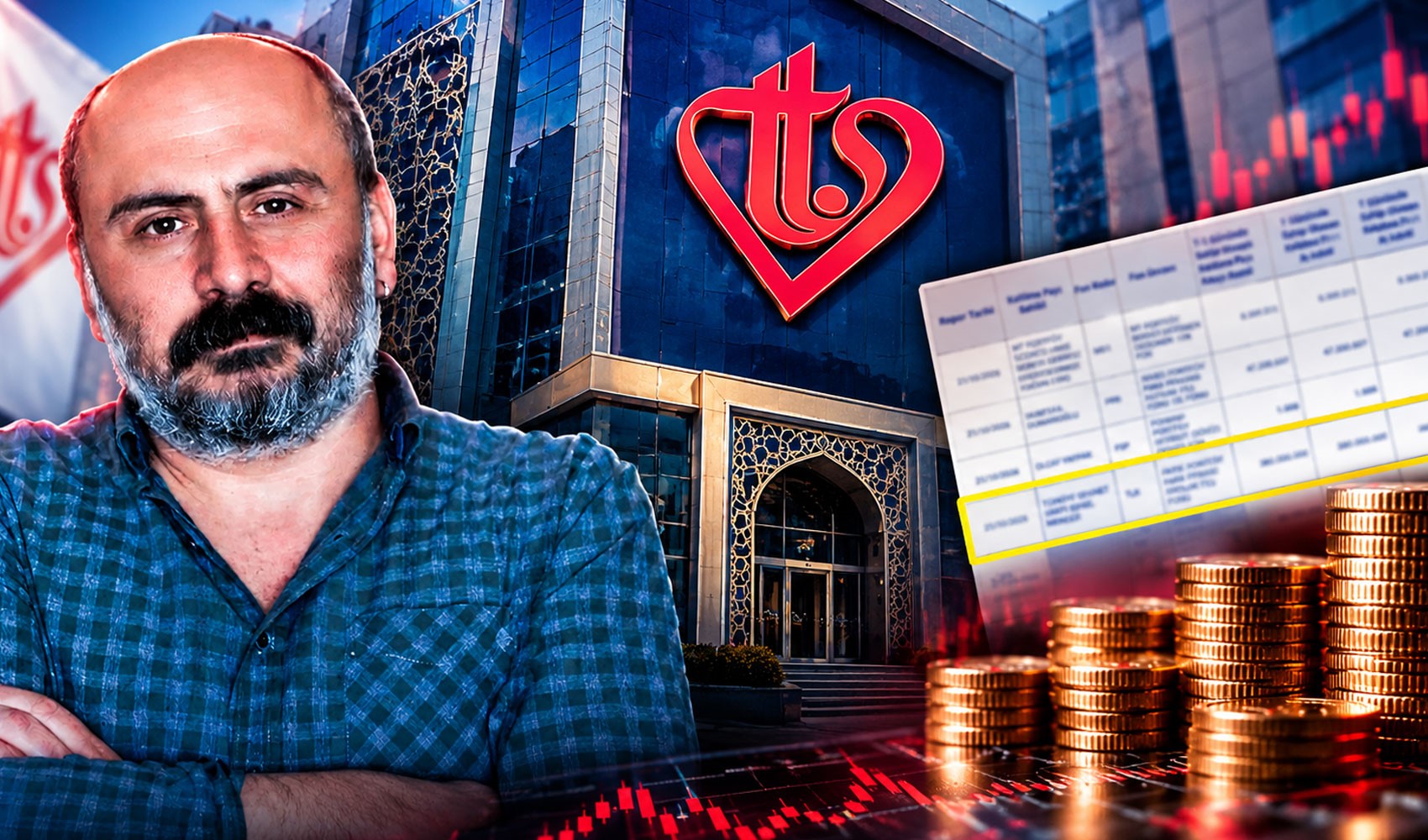
Diyanet Foundation, which claimed 'we have no resources,' owns 73 percent of the fund!
Is it time for the Turkish Parliament to revoke its 31-year-old 'Casus Belli' decision?

No to the 'opening' bar masked as change, yes to the Republic's bar

Ezel Akay and his brother's test results came back positive
Why is Paris burning? The crisis of the welfare state and the revolt of social justice

'From a Journalist’s Pen: The Tüfekli File'
The politics of particles and the financing puzzle: 'Calamitous questions'