


The socio-economic anatomy of a bittersweet holiday: The sorrow of our cultural values in the face of the cost of living



"Unfortunately, for millions of people, this holiday is being met more in the shadow of the struggle for livelihood than with joy. In an economic landscape where the minimum wage and pensions are crushed below the hunger and poverty thresholds, and even access to food is becoming more difficult by the day, people are no longer just calculating their shopping, but whether they can even maintain the most basic holiday traditions. Due to rising transportation costs, people cannot go to their hometowns, cannot visit their families, and cannot host guests as they once did. Tables are shrinking, and the act of sacrifice (Qurban) is becoming inaccessible for many families. Even buying new clothes for children or giving them pocket money has turned into a serious financial burden for many households. Yet, the holiday was the name for sharing, solidarity, coming together, and refreshing hope. However, today, for large segments of society, the struggle for livelihood has overshadowed the spiritual atmosphere of the holiday. In such an economic period, what is on the citizen's mind is not the joy of the holiday, but the fire in the kitchen, the lack in their pockets, and the uncertainty of tomorrow..."
Numbers on Paper and the Silent Sorrow in Households
Economic science is often discussed in the shadow of cold charts, complex mathematical models, and soulless statistics. Yet, the true laboratory of economics is the embarrassment a father struggles to carry while returning home in the evening, the effort of a mother to boil a pot that is running empty, and the secret bitterness a grandfather feels while looking into his grandchildren's eyes on a holiday morning. In our lands, religious holidays are not just calendar holidays or temporary periods of activity that stimulate markets. Holidays are the most deeply rooted binders of our social capital, the safe havens that console sorrows, end resentments, and where the injustice in income distribution is tried to be repaired by the people themselves, with their own hands and conscience.
However, the economic climate Turkey is facing today has turned into a financial storm so severe that it threatens to crack the walls of these social havens. Chronic high inflation and the dramatic erosion of purchasing power have turned the holiday from an environment of joy into a "financial stress test" where budget constraints are felt ruthlessly by households. For fixed-income earners, minimum wage workers, and retirees who have dedicated their lives to the production of this country, the holiday is not a period of spiritual peace, but a sad accounting period squeezed between the wallet and the conscience.
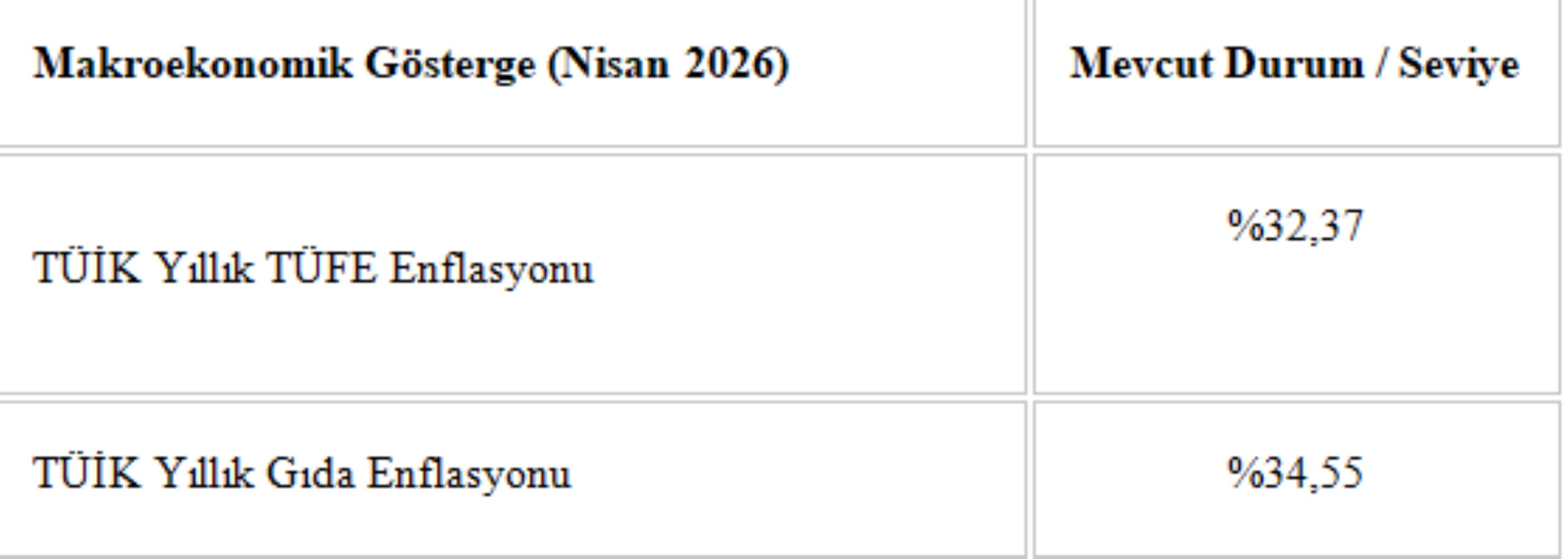
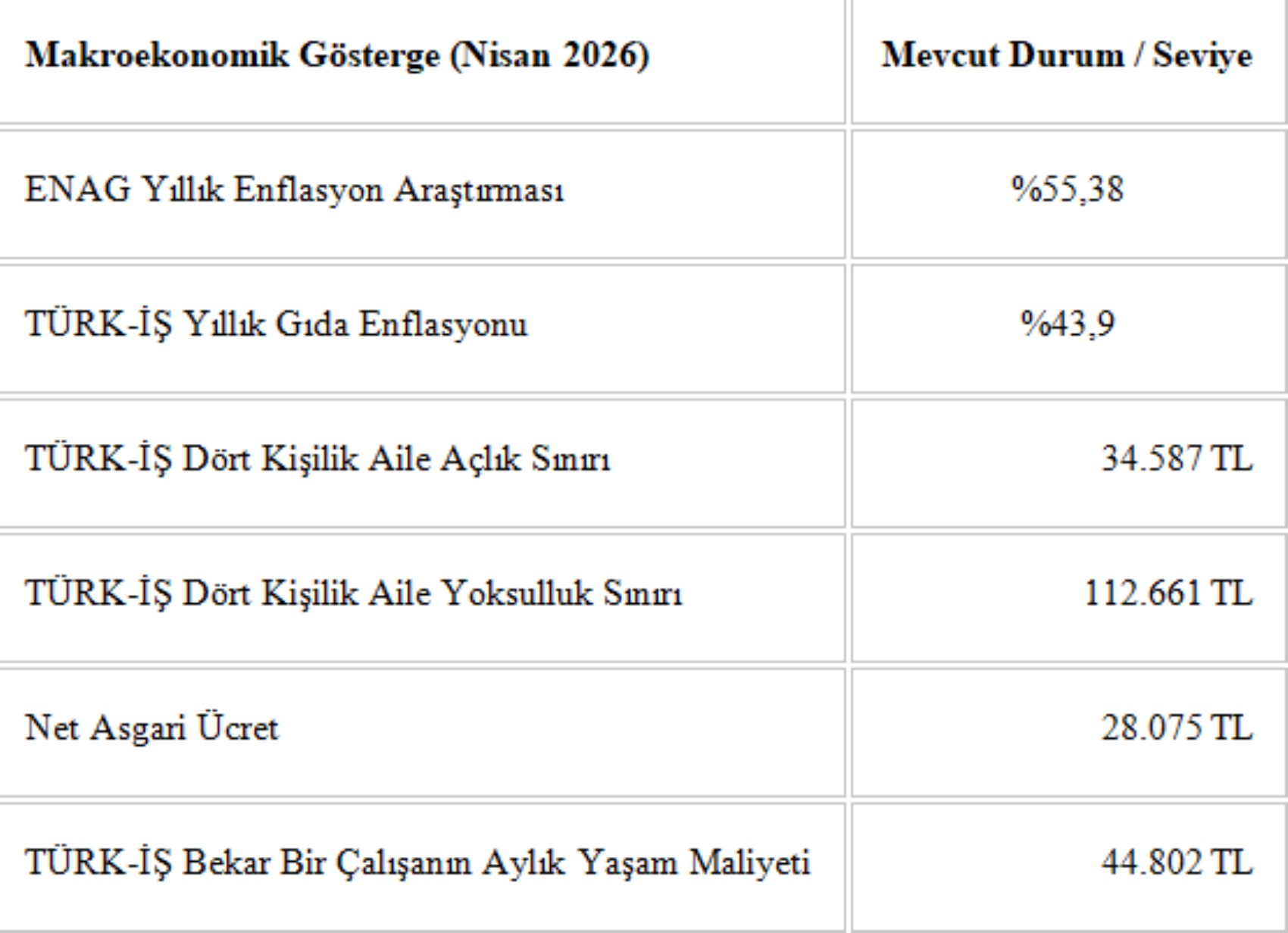
*Methodological Note: The discrepancy between the broad consumer basket of official institutions and the narrow budget of low-income earners, consisting only of food, rent, and transportation, deepens the gap between the inflation on paper and the outcry in the marketplace.
In this analysis, our aim is not just to list economic ratios; it is to reveal, by confronting the realities on the ground, how the wave of inflation erodes our cultural values that we have protected like the apple of our eye for years, how it isolates our human relationships, and the wounds it has opened in our social conscience.
INFLATION HAS NO CONSCIENCE: The Human Cost of Loss of Purchasing Power
The deterioration of price stability does not only result in the loss of value of money; it also gnaws at social justice and peace in that economy. The situation referred to as the "Inflation Tax" in economic literature has today become a silent and unofficial tool for stealing bites from the plates of the low-income population. Despite the Central Bank's tightening steps, the deterioration in expectations and cost-push pressures fuel the persistence of inflation. Against the headline figure of 32.37% from TURKSTAT, the cost of living calculated by the independent research group ENAG as 55.38% is felt at a much more devastating rate in the citizen's kitchen.
In the current order where TÜRK-İŞ has announced the hunger threshold as 34,587 TL, the net minimum wage at the level of 28,075 TL remains approximately 19% below the hunger threshold. In an economic reality where even the monthly cost of living for a single worker reaches 44,802 TL, it is mathematically impossible for a minimum wage earner or a low-income retiree to experience the holiday "like a holiday." DİSK-AR's income distribution reports also confirm this painful truth, showing that the gap between the richest and the poorest has gone far beyond the standards of developed countries. This income inequality shock is felt more deeply during holidays. For the masses whose disposable income is exhausted, the holiday does not turn into a period that brings joy, but into an economic burden that increases the debt spiral.
FROM THE BLESSING IN A HANDKERCHIEF TO EMBARRASSMENT: The Transformation of Holiday Pocket Money
Holiday pocket money is the purest, most hopeful memory of our childhood. Those small paper bills, which were the reward for kissing the hands of elders, were symbolic indicators of intergenerational love and abundance. Beyond financial literacy, those bills hidden in a handkerchief were the first mortar of social belonging. However, today, the tradition of holiday pocket money has become the subject of a deep cash crisis and shame. Our largest banknote, 200 TL, which was worth approximately 130 dollars when it first entered circulation in 2009, has eroded in the face of high inflation today and has been condemned to a symbolic value.
"Today, the 200 TL that a retiree or an elder of the family will hand to their grandchild, unfortunately, does not even cover the cost of a kilo of quality holiday candy or chocolate. The time value of money has turned into tears in the eyes of grandfathers and hidden, embarrassed hands on holiday mornings."
For family elders, giving pocket money is no longer a cause for happiness, but an element of fear that shakes the budget. Having a few children kiss the hands of elders in a large family means giving up a significant portion of the monthly budget in a second. Because of this relentless cost increase, those old cheerful crowds on holiday mornings are decreasing, and elders are becoming hesitant to make eye contact with children. Financial insufficiency has brought the most elegant link of our cultural heritage to the point of breaking.
LONGING BEHIND THE SHOP WINDOWS: Holiday Shopping and Clothing Culture
Consumption theory states that when prices rise, non-essential expenditures are the first items to be sacrificed. However, buying a new pair of shoes or a clean dress for a child on a holiday is not a luxury for any mother or father, but a matter of conscience. While high cost increases in the ready-to-wear and textile sectors burn the shop windows, low-income families are desperately looking for alternative ways to protect the smile on their children's faces.
The exciting, lively bazaar shopping of old holidays has left its place to sad window-watching areas. Families now walk their children away from the shop windows and, instead of traditional stores, take refuge in low-quality, unhealthy, underground products or second-hand platforms. Even in holiday treats, quality is compromised; low-quality imitation products have replaced the chocolates to be offered to guests, and cheap, underground essences have replaced real colognes. Economic pressures are also eroding our social respectability and the value we place on our guests.
HOUSES WITH EXTINGUISHED LIGHTS: Economic Barriers to Visiting Culture
A holiday means the doorbell ringing incessantly, the smell of pastries and desserts rising from the kitchen, and those crowded floor tables set up accompanied by brewed tea. Unfortunately, the relative and family visits that nourish our social spirit are struggling in the ruthless claws of food inflation. The very high levels reached by red meat prices and the difficulty of accessing basic food have made the cost of hosting a guest cause massive wounds in household budgets.
This situation leads to a sad fracture in social relations, which appears from the outside as voluntary isolation but is essentially a "withdrawal into one's shell due to economic barriers." People turn off the lights of their homes on holiday days, lock their doors, and withdraw into their own worlds by saying "we are not home this holiday" just to avoid being embarrassed in front of their guests and to avoid covering the catering budget. Our traditional hospitality has left its place to a deep isolation and social alienation. Lonely streets and doors that do not ring are the saddest marks left by the economic crisis on our social memory.
FENCES DRAWN ON THE ROADS: Intercity Transportation and Longing for the Hometown
For millions of people tired of the hustle and bustle of big cities, the holiday was the hope of reuniting with a mother, father, or childhood friend waiting in a quiet village or town in Anatolia. No matter how far the distance, holiday roads were roads of reunion. However, high costs in the transportation sector (fuel hikes, bridge tolls, ticket prices) have built insurmountable economic walls between the hometown and the city where one lives.
Today, the ticket cost of a round-trip journey that a family of four will make from big cities to their hometown challenges and even exceeds the level of the net minimum wage. Because of this high budget constraint, holidays have become a period of tearful and incomplete holiday greetings that are tried to be squeezed into phone screens. Such paralysis of human mobility does not only hit domestic tourism or transportation; it breaks family ties and turns the longing for the hometown into a permanent social sorrow.
THE ECONOMY OF SACRIFICE: The Burial of the Culture of Sharing and Solidarity into Silence
The spiritual heart of Eid al-Adha (Kurban Bayramı) beats with the act of "sharing." The meat of the sacrificed animal is shared; it is delivered to neighbors, the poor, and children who have not had meat in their homes for months. In this respect, the sacrifice was a tremendous bridge of conscience that closed the gap between classes, as well as a structural economic cycle that supported rural livestock farming. However, deficiencies in livestock policies and increasing feed and logistics costs have almost destroyed this bridge.
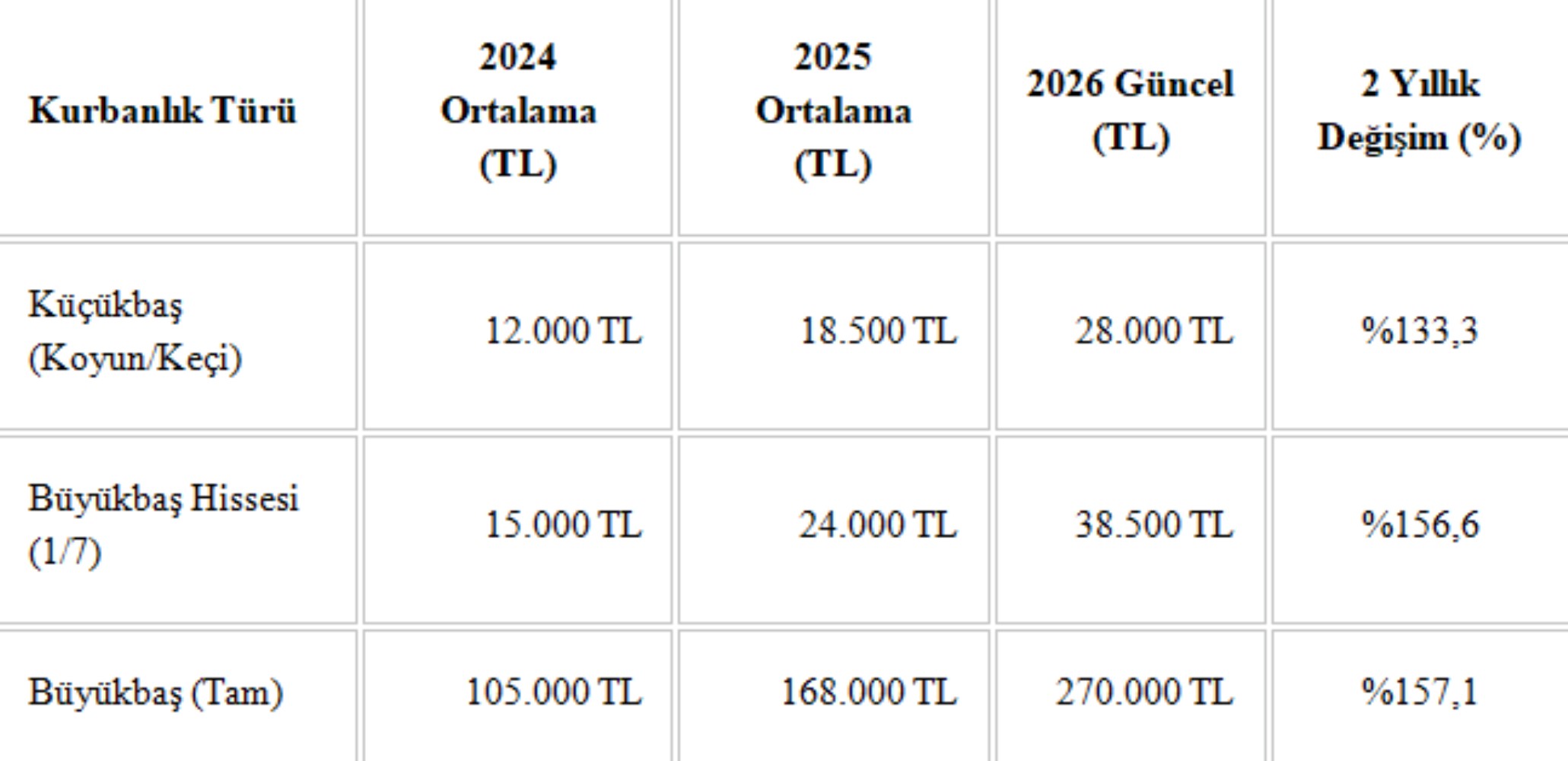
The figures in the table tell not only of a crisis in the livestock sector but also of the collapse of a social aid network. Due to these high levels reached by sacrifice prices, the middle class has completely withdrawn from the market. The act of sacrifice is evolving into a risk of being a status symbol that only a narrow segment of the population can perform, moving away from its purpose of sharing. The most dire result is that the portion of meat that enters the homes of poor neighborhoods and low-income earners on the occasion of the holiday is also being cut off. In this period when children suffer from malnutrition and food insecurity is rising, the troubles of the sacrifice economy are a heavy blow to our spirit of social solidarity. The fact that the animal hides obtained cannot be brought into the industry and are wasted also triggers dependence on raw material imports.
Drying Sources of Solidarity and Future Anxiety
Although economic theories construct humans as selfish beings, our social reality has taught us that we survive by working together in difficult times. However, today's crisis is so deep that the middle-class segments, such as tradesmen, civil servants, and retirees, who were in a position to help in the past, are now struggling with savings and deprivation to avoid falling into a state of needing help. While sources of aid are drying up, the number of masses in need of help is growing like an avalanche.
The deterioration in income distribution, low income levels, and deepening economic inequality increase the sense of injustice in society while also increasing distrust and anxiety about the future. The holiday's mission of "refreshing hope" for the future has left its place to a deep wave of anxiety created by the fire in the kitchen and the emptiness in pockets. The efforts of local governments or non-governmental organizations, such as suspended bills or holiday food packages, are not enough to extinguish this massive structural fire. The mental health of society is being damaged under the pressure of economic insecurity.
Conclusion: The Balance of Spirituality and Consumption
To summarize; holidays are rare times in Turkish society when cultural continuity and social ties are reproduced. However, the economic equivalent of this spiritual atmosphere is becoming more visible every year. In the current conjuncture we are experiencing, the holiday economy has now gained a "calculative" dimension where budget constraints are ruthlessly calculated, not just a "sentimental" one. This sad picture before us is not just a periodic inflation chart; it is the transformation of children's dreams, parents' honor, grandfathers' love, and our centuries-old traditions into sad losses in the face of the cost of living. The shrinking of tables, the closing of roads, and the fact that doors are not knocked on are serious crisis signals that invite social disintegration.
This economic revival born from tradition offers a very important window for understanding both the sociological and economic dynamics of Turkey. These special days, where consumption and solidarity, spending and remembering are intertwined, create not only memories in our social memory but also a massive economic reality of millions of liras. Therefore, the shaking of this delicate balance by macroeconomic instabilities damages not only pockets but also the society's will to stay together.
However, this sad picture cannot be the fate of society. The solution should not be sought in temporary promises, short-term cash aid, or shallow approaches that think inflation can be solved with police measures. Turkey urgently needs a rational and independent monetary policy targeting price stability, a fiscal policy that ensures fair distribution, and a deep-rooted development move that will revive production and agricultural livestock farming.
The return of holidays to those old enthusiastic days, the joy of children, the abundance of tables, and the warmth of hometown visits is only possible with the establishment of a fair economic structure where labor is valued, justice is ensured in income distribution, and no citizen carries a fear of tomorrow. We are obliged to build tomorrows where we will talk about peace and embracing, not the fire in the kitchen on holiday mornings. It is the most urgent duty of our social future for the economic management to leave aside discourses far from reality and to face this deep field reality experienced by the people at an analytical and conscientious level.
On this occasion, I wish everyone a happy Eid al-Adha, and I hope your holiday passes with abundance and that our economy is always strong!
Would you like to get notifications about new developments and save news?
- NotificationsNew developments and breaking news
- SaveNews is stored in the app
Most Read

National Anthem surprise from Japanese Ambassador
Diesel protest in Italy brings roads to a standstill
Kılıçdaroğlu sends formal notice to YENİ Party

Diyanet Foundation, which claimed 'we have no resources,' owns 73 percent of the fund!

Is it time for the Turkish Parliament to revoke its 31-year-old 'Casus Belli' decision?

No to the 'opening' bar masked as change, yes to the Republic's bar
Ezel Akay and his brother's test results came back positive

Why is Paris burning? The crisis of the welfare state and the revolt of social justice
'From a Journalist’s Pen: The Tüfekli File'

The politics of particles and the financing puzzle: 'Calamitous questions'