


The role of the media in fund fraud



It turns out that the fund fraud took place right before the eyes of the authorities and had been known for months, yet it was not prevented. These facts emerged only after the scandal broke following the Capital Markets Board (SPK) liquidating 131 investment funds from seven portfolio management companies.
There were those in the media who knew as well. Şebnem Turhan from Ekonomim and a small number of independent economic journalists tried to draw attention to the inflation in these funds, but they were not effective enough.
The mainstream media, however, ignored the market manipulations and the fund fraud, watching in silence. This is because economic journalism hangs on every word of the political power, large corporations, and investors; it does not look out for the public interest. It is no longer the voice of the powerless, but of the powerful and the wealthy.
Indeed, the companies that are the target of the investigation, with 51 of their executives arrested, were the darlings of the media until recently. ATV presenter Müge Anlı was the face of Katılımevim’s advertisements. In the ad, with that reliable face she earned on screen, she was saying, “I suggest you join too…”
Serdar Turhan, Chairman of the Board of Katılımevi and Pusula Holding, was a guest on Cem Seymen’s program on CNN Türk in two episodes. Serdar Turhan also appeared on various programs on A Para and Akit TV. Serdar Turhan is now under arrest.

Did Serdar Turhan pay CNN Türk and other channels in exchange for those programs? Or were they brought on screen simply as a matter of journalism? In either case, the executives of CNN Türk are obliged to explain. Because through those broadcasts, they played a role in investors trusting this person and the company. It is wrong if they put them on screen without proper research, and it is wrong if they let them speak in exchange for money. In any case, their responsibility is great; it would be appropriate for the victims to demand compensation.
Among those arrested within the scope of the investigation are Emre Alkin and Kerem Alkin, members of the Board of Directors of Tera Yatırım. The Alkin brothers, both of whom are economics professors, were also economic columnists. Writing in newspapers and providing economic commentary on TV had made them recognized names, known in this field and trusted for their words.
Kerem Alkin’s articles were published in Sabah, and Emre Alkin’s articles were published in Gazete Pencere. It cannot be said immediately that they are guilty, but it is clear that they did not warn their readers about the “fund fraud” and did not fulfill their function as “economic columnists.”
The media outlets where the Alkin brothers wrote also bear responsibility; they did not inform their readers that they were executives at a portfolio company. If their commercial connections had been written in a footnote at the bottom of their articles, readers would have had the opportunity to evaluate the views in the articles more objectively.
The fact that Sabah and AHaber glossed over the incident is not for nothing. They are trying to cover up the responsibility of the SPK and other institutions, and of course, their own. Even the Anadolu Agency deleted from its archive the TERA Holding advertising texts that it had published as if they were news in the “Business world” section at the time.
The long-standing economic newspaper Dünya still cannot write about the scandal, constantly putting the statements of Bulls Portföy, one of the companies liquidated by the SPK, on its pages. This is because Bulls Portföy has established a “venture capital partnership” with Dünya newspaper. Bulls Portföy Board Member Ersoy Çoban and Bulls Yatırım Chairman of the Board Kemal Akkaya are also board members of Dünya Holding AŞ. Now, Kemal Akkaya is banned from traveling abroad.
In short, the media’s contribution and responsibility in the failure to prevent the fund fraud is not insignificant. For years, I have been emphasizing the importance of independent journalism; I have argued that journalists should not do advertising, should not act in advertisements, should be careful in sponsorship relationships, should not broadcast paid programs on TV, and that non-journalist economic columnists should state their commercial relationships in footnotes. I hope these warnings of mine are better understood now.
I am sure that if these principles had been applied for years, we journalists would have had no role or responsibility in the current trillion-lira “market manipulation and fund fraud” incident, and we could have gone after the other responsible parties with peace of mind. But alas, the mainstream media is also part of the market.
HRISTOULAS IN ATHENS AND ŞEKEROĞLU IN ANKARA
In 2012, 77-year-old retired pharmacist Dimitris Hristoulas, who committed suicide by holding a gun to his head in the square in front of the parliament in Athens, left a note saying, “I want a dignified end.”
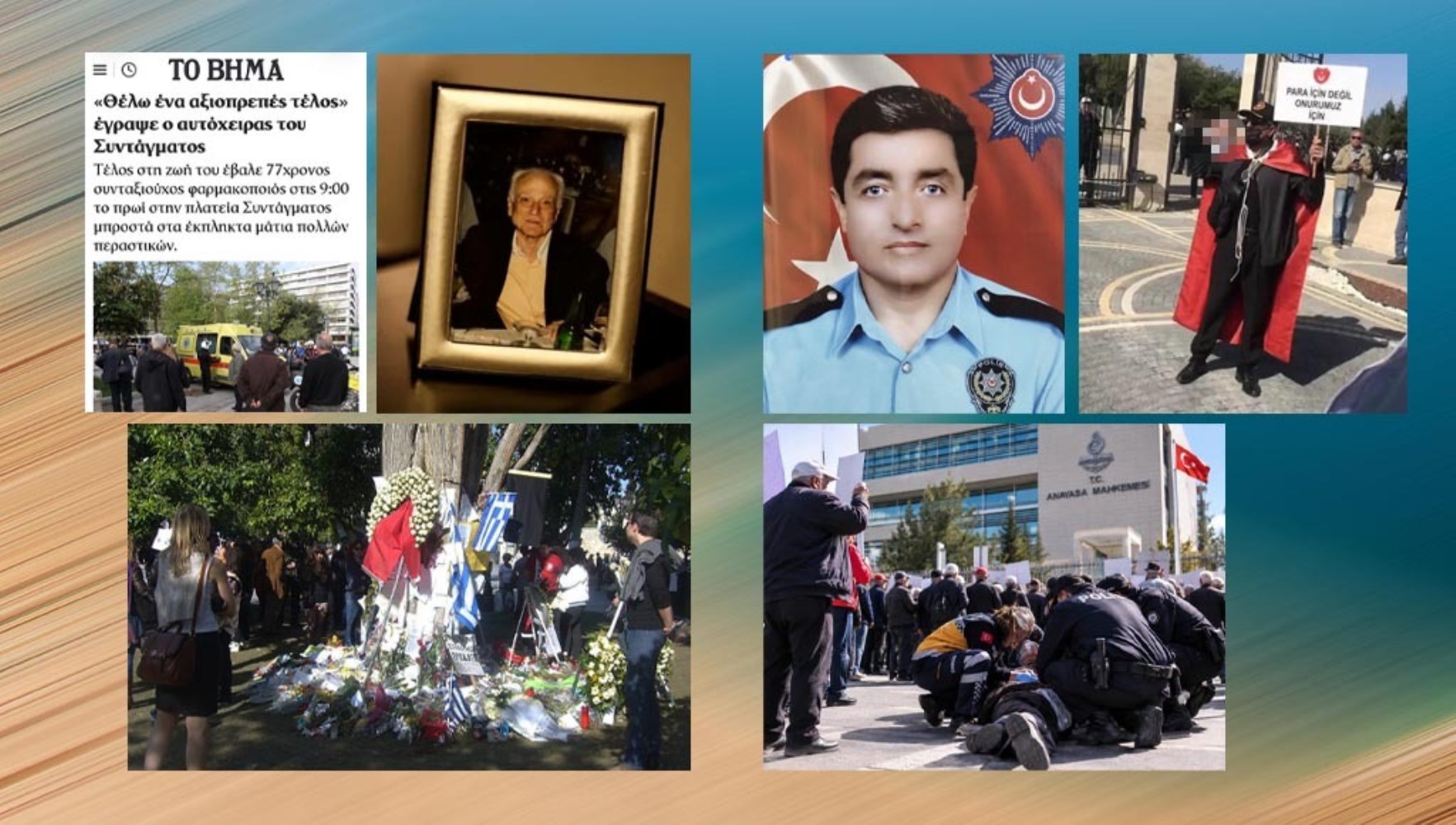
Two days ago, the sign held by the 60-year-old retired police officer who committed suicide by holding a gun to his head in front of the Constitutional Court in Ankara read, “Not for money, but for our honor.”
The Greek media viewed Hristoulas’s death with the note “dignified end” and in connection with the reduction of pensions due to the economic crisis. In the following days, the news continued with flowers left where Hristoulas died, commemorations, and protests.
In Turkey, on the evening of September 25, most news sites described it as a “suicide attempt” for a long time. While pro-government TV channels did not cover it at all, opposition channels reported it but did not make it a topic of their discussion programs that evening. Halk TV, Sözcü TV, and Koza TV did not see a need to disrupt the programs they had prepared in advance. The next day, pro-government newspapers completely ignored Ali Şekeroğlu’s suicide. Then, they did not even report on his funeral ceremony.
However, like the one in Athens, the suicide in Ankara also stems from a social problem and is in the nature of a protest. The principle of not reporting suicides does not apply to this suicide of an exceptional nature. Moreover, the suicide of Dimitris Hristoulas was news in Sabah and all pro-government media at that time.
Of course, one should not broadcast the moment of suicide with armed and bloody images as they are, but ignoring Ali Şekeroğlu’s suicide means closing one’s eyes to the facts. More clearly, not reporting this suicide is also a suicide of journalism.
THE “GREEK SOLDIERS WERE THROWN INTO THE SEA” SARCASM
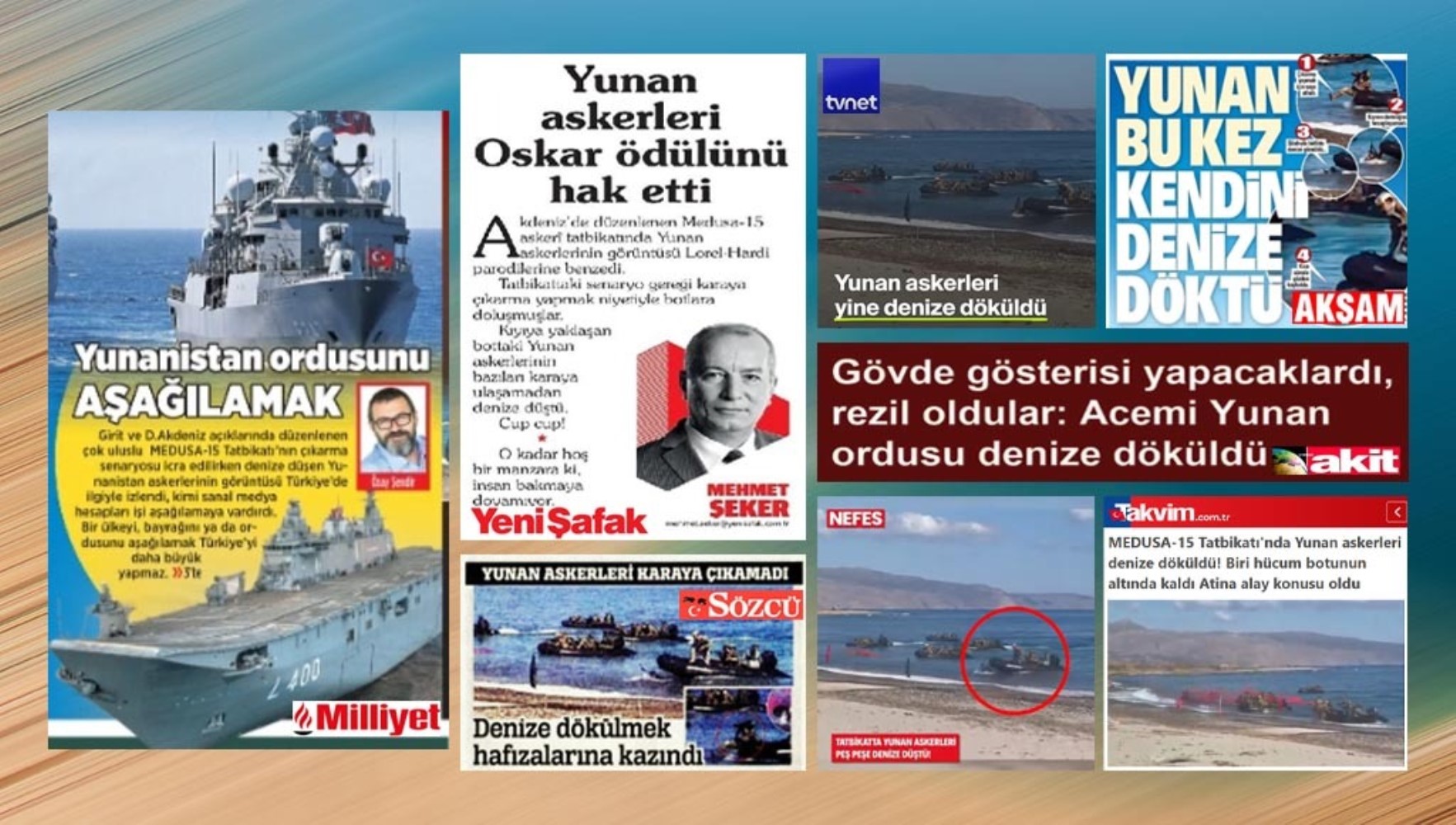
The “They were thrown into the sea” news was based entirely on social media banter. Conversations made with a rude, sarcastic, and humiliating adolescent language, based on the footage of a few Greek soldiers falling into the sea from a boat during a landing exercise, were elevated to the level of “news” in the media:
“The Greek threw himself into the sea this time” (Akşam), “Being thrown into the sea is etched in their memories” (Sözcü), “They were thrown into the sea without being able to make a landing” (CNN Türk), “Greek soldiers were thrown into the sea again” (TV Net), “Greek soldiers fell into the sea one after another in the exercise!” (Nefes), “The Greeks were thrown into the sea even in the exercise” (Türkiye), “Landing fiasco from the Greek army” (Yeni Şafak)
While the media, which feeds on social media, was enjoying the high readership of these news stories, Milliyet Newspaper Editor-in-Chief Özay Şendir gave a valuable warning:
“The footage of Greek soldiers falling into the sea while the landing scenario of the multinational MEDUSA-15 Exercise held off the coast of Crete and the Eastern Mediterranean was being executed was watched with interest in Turkey, and some virtual media accounts took it to the point of humiliation. Humiliating a country, its flag, or its army does not make Turkey greater.”
However, the “humiliation” in question was not only done on social media; the media also participated in this mistake with their news. Yeni Şafak columnist Mehmet Şeker also amused himself by saying, “Greek soldiers deserved an Oscar award” and “a pleasant sight.” Even the news on Milliyet’s website was headlined, “They couldn’t even stand in the exercise! Greek soldiers were thrown into the sea.”
What was done in these news stories was, as Özay Şendir pointed out, humiliation. Based on the footage of a few soldiers sinking into the water, the Greek nation and army were being humiliated and mocked.
No one, especially journalists, has the right to mock a nation by saying “...were thrown into the sea,” evoking a past war, and acting superior. No journalist with a sound mind who has internalized professional principles would use such language against a nation, especially based on a split-second image.
A journalist knows that the strength of armies cannot be compared based on a few soldiers sinking into the water. They base it not on strength or weakness, but on the friendship of nations and good neighborly relations.
FOOTBALL MEDIA HAS GONE BLIND AGAIN
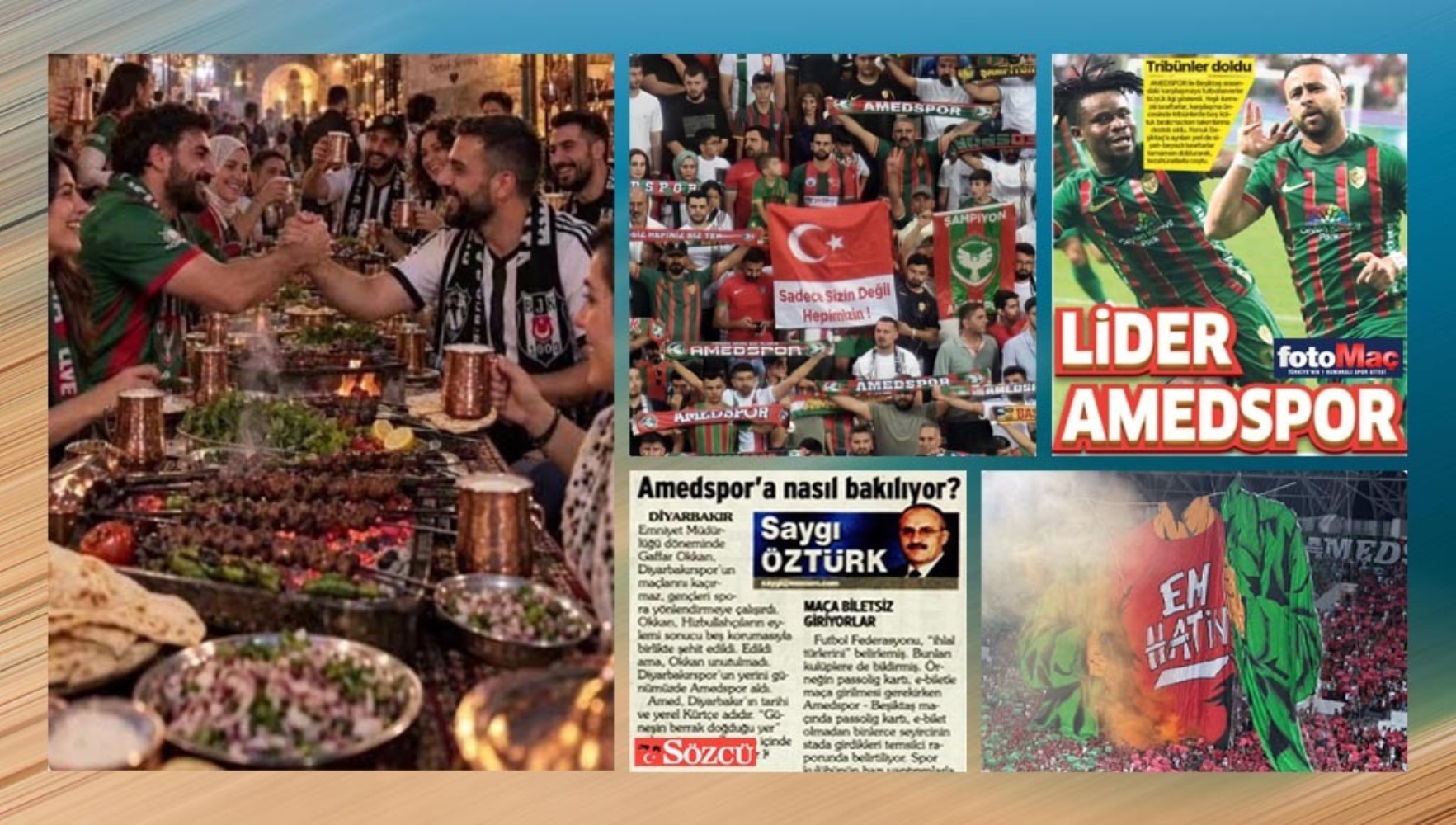
What happened in Diyarbakır before the Amedspor-Beşiktaş match was very different from what happened in the Trabzonspor and Kocaelispor matches. Beşiktaş fans were welcomed with friendship in Diyarbakır; liver was eaten together at a restaurant in Dağkapı; common slogans were chanted on the streets.
There was no problem while the National Anthem was being played in the stadium before the match started; an Amedspor fan opened and kissed the Turkish flag. An Amedspor fan also opened a banner with the Turkish flag on it that read, “Not just yours, it belongs to all of us.”
The Amedspor fans’ “Greatest Amed” slogan was met with applause from the Beşiktaş away stand. The “Em Hatın” (We Have Come) choreography was displayed in the Amed stand; at one point, “Her bijî Kurdistan” slogans were also chanted. The biggest negativity in the stands was that Amedspor and Beşiktaş fans chanted slogans containing insults against Bursaspor fans all together.
After the match, both club presidents complained about the referees; not only was there no word against each other, but Beşiktaş President Serdal Adalı thanked the people of Diyarbakır. The victory stirred up Diyarbakır and the entire region; they celebrated the result until the morning. For them, Amedspor is no longer just a football team, but the flag of Kurdish identity waving in the stadiums...
Saygı Öztürk also drew attention in his column in Sözcü to the fact that “Amedspor is not just a football team.” He emphasized that it “establishes an identity perception,” “has become the hope of the region,” and “will serve peace if evaluated correctly.”
Unfortunately, the football media has still not grasped the importance and difference of Amedspor, which Saygı Öztürk, as a journalist following politics, noticed. The friendly welcome of Beşiktaş fans in Diyarbakır and the positive atmosphere at the match could not wake up the football media either. News and comments in digital media and newspapers focused on the score again; they reported the on-field action with headlines like “Shock from Amed to the Eagle,” “Leader Amed,” “Road accident from the Eagle,” “Eagle wounded, Amed stylish.”
News channels also did not focus on the friendship and the ownership in the city; they showed the post-match celebrations and moved on, settling for that much. News channels that reported on the tension in the Kocaelispor match ignored the sportsmanship this time.
Just as football is not just football, Amedspor is no longer just a football team—as İbrahim Genç wrote on İlke TV, it is a “sociopolitical phenomenon.” The football media should also do journalism by considering this phenomenon. The fashion for commentary focused on the score and the field, and journalism dependent on big club managers, is coming to an end. The rote learning will be broken sooner or later…
In a single sentence:
• Yaman Akdeniz, one of the founders of the Freedom of Expression Association (İFÖD), which announces access blocks, and the news site Kısa Dalga, journalists Dinçer Gökçe, Canan Kaya, Hilmi Hacaloğlu, Ersin Eroğlu, Alptekin Dursunoğlu, Razi Canikligil, and Uğur Gürses, as well as hundreds of X accounts, were blocked from access on irrelevant grounds such as “national security and public order.”
• The “MÜSİAD EYPO 2026” supplements, which were published as 192 pages in Yeni Şafak, 96 pages in Yeni Akit, and 48 pages in Sabah, were covered with advertisements from public banks and public institutions.
• President Erdoğan’s speech at the UN General Assembly was broadcast live by Halk TV, KRT TV, and Koza TV, along with the pro-government media.
• A Haber TV Washington correspondent İrfan Sapmaz, while asking Ambassador Tom Barrack about the Erdoğan-Trump meeting, violated the contact distance rule of journalism by praising him, saying, “You are doing a wonderful job.”
• In the news about the “chilling words in the missing Mekiye murder” by DHA and Hürriyet, the photo of the murdered Mekiye Akyel and her mother was published instead of the killer’s photo.
• Cumhuriyet’s news, “The statement of Aras Bulut İynemli, who was detained in the drug investigation, has emerged: 'I do not want effective remorse',” created the perception that the actor was guilty.
• Nefes continued its news on “address-delivery appointments” at Şırnak University, this time reporting on the Court of Accounts report, which “detected address-delivery conditions contrary to the principles of equality and merit in academic staff announcements,” with the headline “The rot in universities has been exposed.”
• Journalist Ali Tarakcı was arrested on the grounds that he “openly disseminated misleading information to the public” with his post “A very important minister will resign on Friday,” and his X account was blocked.
FOR YOUR CRITICISM, COMPLAINTS, AND SUGGESTIONS: [email protected]
Would you like to get notifications about new developments and save news?
- NotificationsNew developments and breaking news
- SaveNews is stored in the app
Most Read
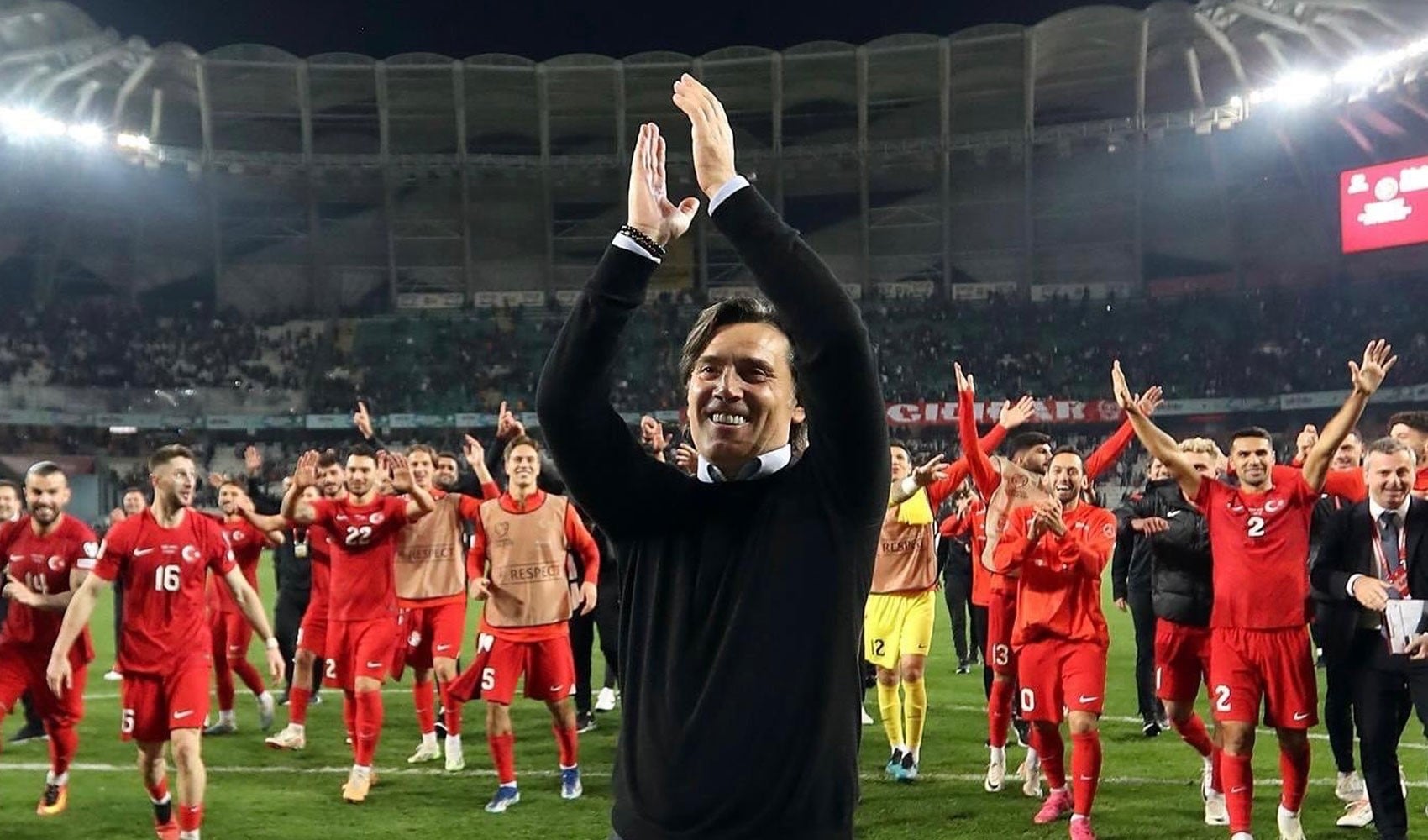
Emotional farewell to Turkey from Vincenzo Montella
Ship drifts off Kanlıca due to engine failure
Let's hope he isn't nominated for a Nobel Prize too!...
Police take action following report of foul odor: Sad news arrives
Borsa İstanbul's most valuable companies revealed

Istanbul shaken again

New footage emerges from before the bus crash in which 11 people died
Neither Ömer Çelik nor Ümit Özlale could be questioned
There is a Turk on Messi's list of future stars!
Main news crisis at Beyaz TV