


On the 106th anniversary of the opening of the Veteran Parliament: National will or personal will?



At a time when the 1876 Constitution (Kanuni Esasi) was in effect, the institutions of the Sultanate and Caliphate continued to exist, and Armistice governments were constantly being replaced, What did the Grand National Assembly, which opened in Ankara in the heart of Anatolia on April 23, 1920, signify?
While the will of the Caliph-Sultan was supreme, what about Article 1 of the Constitution (Law of Fundamental Organization) adopted by the Grand National Assembly on January 20, 1921; “Sovereignty belongs unconditionally to the nation. The form of administration is based on the principle that the people personally and directly manage their own destiny” is this sentence not a challenge to the sacred office of the Caliphate and Sultanate, and a refusal to recognize their authority?
Is the sentence in Article 2, “The executive power and legislative authority are vested in the Grand National Assembly, the sole and true representative of the nation,” not the declaration of a new state/regime that sidelined Istanbul?
Is the provision in Article 3, “The State of Turkey is administered by the Grand National Assembly, and its government bears the title of ‘Government of the Grand National Assembly’,” not the elimination of the unquestionable authority and the nullification of the power of those sitting in the offices of the Sultanate and Caliphate?
Undoubtedly, many more questions could be listed, but even this much is sufficient to demonstrate the dimensions of the Turkish nation's sacred rebellion and the Anatolian Revolution. Let us look at the chronology of the construction of the new state/regime, alongside the resistance of the Turkish people that developed, grew, and became institutionalized step by step.
The first step, the Amasya Circular (June 21-22, 1919), published 32 days after May 19, 1919, was the first challenge to Istanbul and the first revolutionary manifesto. In the Amasya Circular, the capitulatory stance of the Istanbul governments against the occupation is criticized, and a call is made for a congress in Sivas aimed at national liberation.
The Erzurum Congress (July 23 - August 7, 1919) is an intermediate phase before the Sivas Congress to be held in September.
Starting with the goal of local/regional defense; "The homeland is a whole within its national borders and cannot be divided," and "Mandate and protectorate cannot be accepted." It is significant as a congress that concluded with these decisions, a call for the National Assembly to convene as soon as possible, and a declaration that if the Istanbul Government's capitulatory attitude continued, a national government would be established, thus serving as a call for national resistance.
The Sivas Congress would result in the emergence of a legitimate authority in Anatolia, a government/state that had not yet been named, deriving its power from the Turkish Nation in opposition to Istanbul.
The Representative Committee (Heyeti Temsiliye), elected at the congress and chaired by Mustafa Kemal, was a body with administrative, political, and military authority.
As the legitimate representative of the Turkish people, the Representative Committee conducted correspondence with Istanbul in this capacity, established hierarchical relationships with civil and military officials in Anatolia, and issued orders.
Unable to withstand the call of the Sivas Congress, the pressure from Anatolia, and the insistence of the Representative Committee any longer, Istanbul was forced to hold
elections for the Chamber of Deputies (Meclisi Mebusan).
The majority of the elected deputies were supporters of the Defense of Rights (Müdafaa-i Hukuk). Mustafa Kemal, who was elected as a deputy for Erzurum, found it risky for the Parliament to convene in occupied Istanbul and warned his colleagues against the danger of arrest. He did not attend the opening of the Chamber of Deputies on January 12, 1920 (by obtaining a medical report).
The most significant action taken by the last Ottoman Parliament was the National Pact (Misak-ı Milli) decision dated January 28, 1920, which recorded the political borders of the country.
This decision taken in occupied Istanbul and the independence-oriented stance of the Chamber of Deputies would draw the ire of the occupiers; on March 16, 1920, the Parliament would be raided by British soldiers and some deputies would be arrested. Following this development, the Chamber of Deputies, which held its final meeting on March 18, 1920, would decide to cease its operations.
It is truly a miracle that a nation whose parliament was raided and whose deputies were arrested could hold elections in a town barely larger than a village in the middle of the steppe and put a new Parliament into operation within 36 days. The Turkish Nation achieved this miracle under the conditions of that day.
The second meeting of the Grand National Assembly, which opened on April 23, 1920, was held on April 24, and Mustafa Kemal was elected Speaker of the Assembly. Mustafa Kemal, who used the title of Chairman of the Representative Committee until this date, would be referred to as the Speaker of the Grand National Assembly from April 24, 1920, onwards. The period of the Representative Committee and the Speakership of the Grand National Assembly should be examined in terms of the importance Mustafa Kemal placed on legal legitimacy.
Undoubtedly, before answering the question of "National will or personal and arbitrary will," the struggle practice of the Independence Medal-winning Veteran Parliament and the Independence Medal-winning Veteran Speaker of the liberation and foundation era must be examined very carefully.
The fact that a brilliant staff officer, a commander who had proven his superior military qualities on the battlefields, said, "I am one of those who expect everything from the Parliament," demonstrates his respect for democracy and the rule of law.
There are countless lessons to be learned for today from the Veteran Parliament and its Speaker, from the founding and existential codes of the TBMM, and from overcoming difficulties within the boundaries of the law during hard times.
Would you like to get notifications about new developments and save news?
- NotificationsNew developments and breaking news
- SaveNews is stored in the app
Most Read

National Anthem surprise from Japanese Ambassador
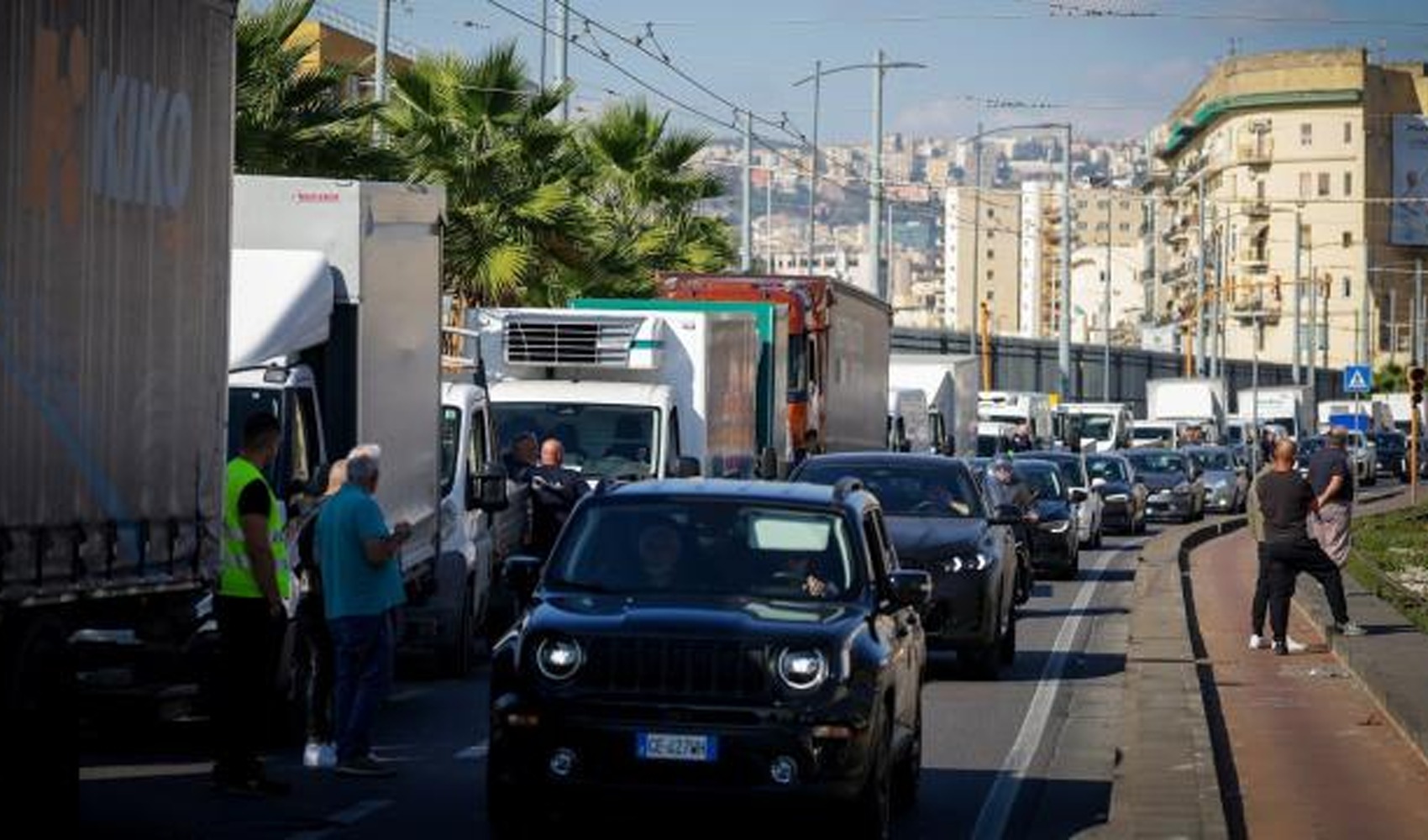
Diesel protest in Italy brings roads to a standstill

Kılıçdaroğlu sends formal notice to YENİ Party

Diyanet Foundation, which claimed 'we have no resources,' owns 73 percent of the fund!

Is it time for the Turkish Parliament to revoke its 31-year-old 'Casus Belli' decision?

No to the 'opening' bar masked as change, yes to the Republic's bar
Ezel Akay and his brother's test results came back positive

Why is Paris burning? The crisis of the welfare state and the revolt of social justice

'From a Journalist’s Pen: The Tüfekli File'

The politics of particles and the financing puzzle: 'Calamitous questions'