'They ask about loneliness; loneliness is something like the flatness of a plain.'
Cemal Süreya
Is loneliness for a lifetime?
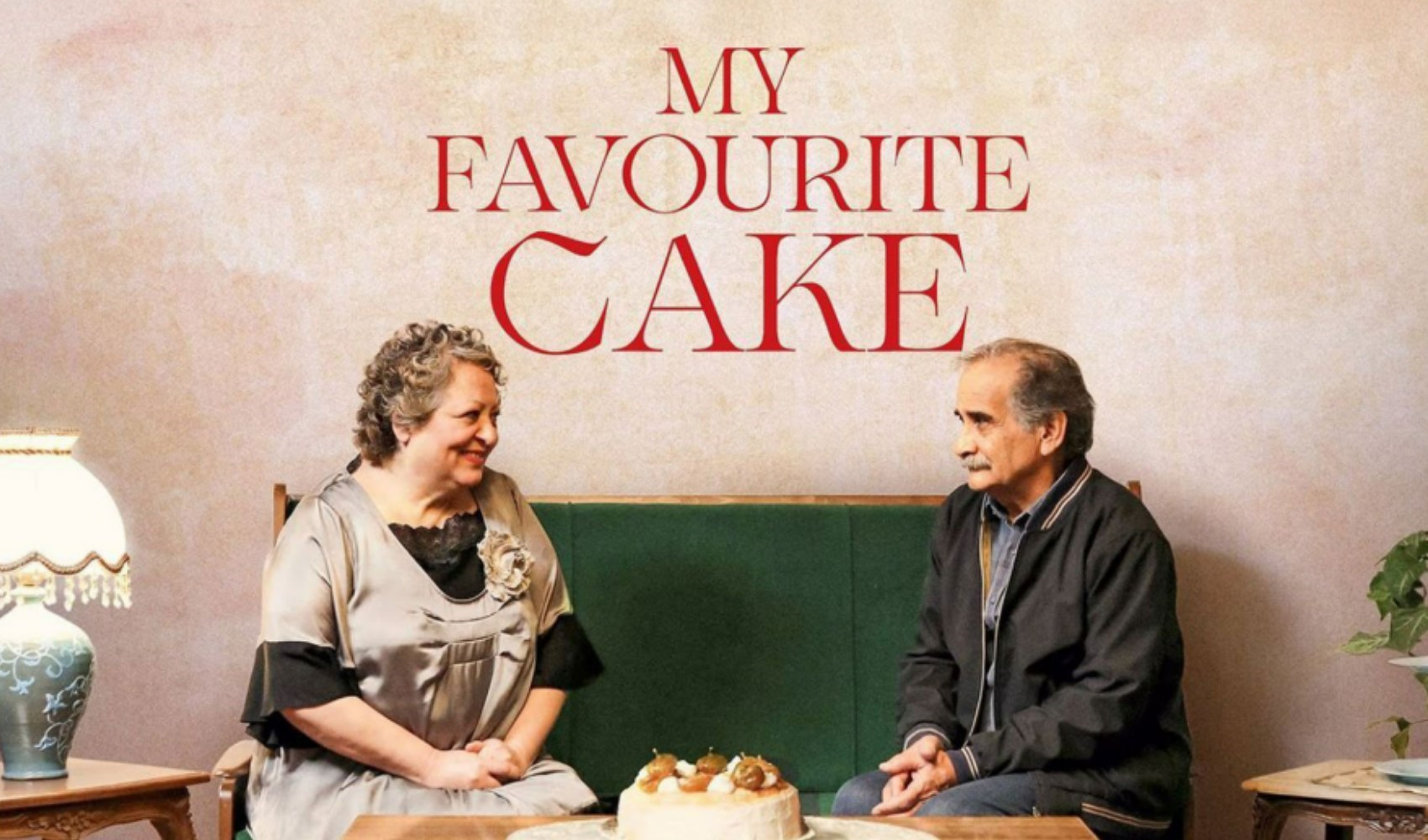
Let us seek the answer to this question in the film My Favorite Cake, co-written and directed by Maryam Moghaddam and Behtash Sanaeeha.
My Favorite Cake is a 2024 Iranian film starring Lili Farhadpour and Esmaeel Mehrabi.
The rise of Iranian cinema, which began with master director Abbas Kiarostami, continues with a new generation of directors who take their mentors as examples. They handle both the problems of their country and human issues with such simplicity and subtlety that the resulting productions are highly enjoyable to watch.
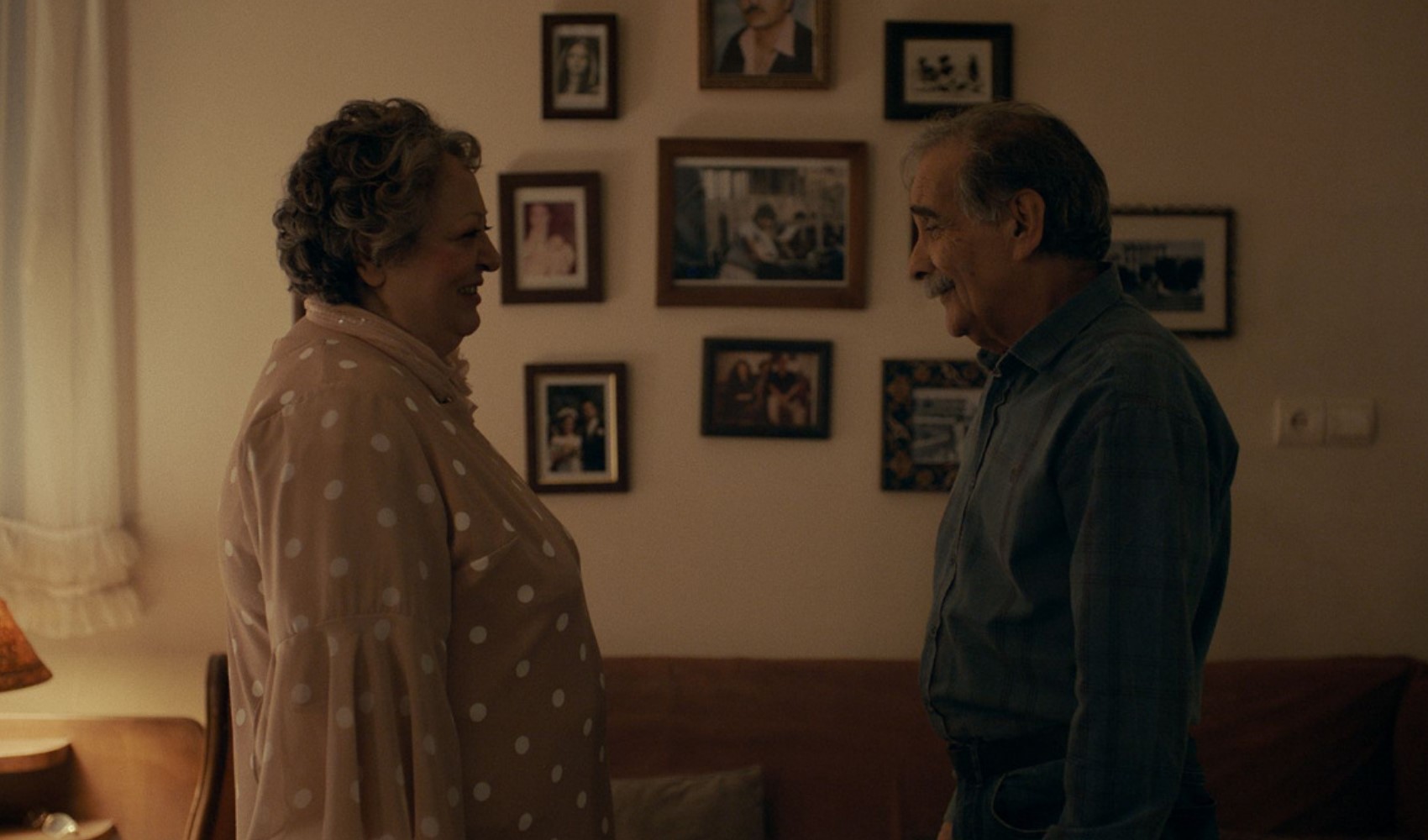
Although My Favorite Cake may seem like a simple production themed around loneliness, existence, and love, it is one of those films that touches upon current issues in Iran and shows its reaction to events.
Now, let us look at the plot of the film…
My Favorite Cake focuses on the relationship that develops between Mahin and Faramarz. After losing her husband, Mahin is a lonely woman who has lived alone for about 30 years, meets with her friends once a year, and talks to her children via video calls.
Wanting to break this loneliness and do something for herself, Mahin gets ready just as she did in the years before the Iranian Islamic Revolution and goes to places where she used to have good times. Remembering those beautiful days with a song she hears in the taxi she takes, she chats with the driver. Thus, the audience learns about both Mahin and Iran before the revolution. While sitting at a restaurant for retirees, Mahin sees Faramarz at the opposite table. Hearing Faramarz talking to those sitting at the next table, Mahin realizes that he is also lonely. From this point on, everything changes for both of them.
Faramarz is someone who makes a living by driving a taxi. Mahin follows him, gets into Faramarz's taxi, and they head home. The heavy rain during the journey signals the events that will develop between the two. Just like the rain that starts lightly and turns into a downpour, the intimacy that forms between Mahin and Faramarz progresses in the same way. The conversation between these two lonely people continues at Mahin's house.
The theme of individual loneliness continues to maintain its popularity in both cinema and literature. When this is the case, one asks oneself the question: "Do we really want to be alone?"
Younger people want to be alone and have time for themselves when they return home from work amidst the chaos of life. When this loneliness continues for a long time, it becomes a habit. However, by nature, humans are creatures that need to socialize. Even if we feel like we will always stay young, that is not the case. As we see in the film, in our later years, perhaps when our spouse dies or our children leave us to build their own lives, we are left alone in our huge houses.
Mahin and Faramarz tell us about the loneliness of those elderly people in a simple yet striking way.
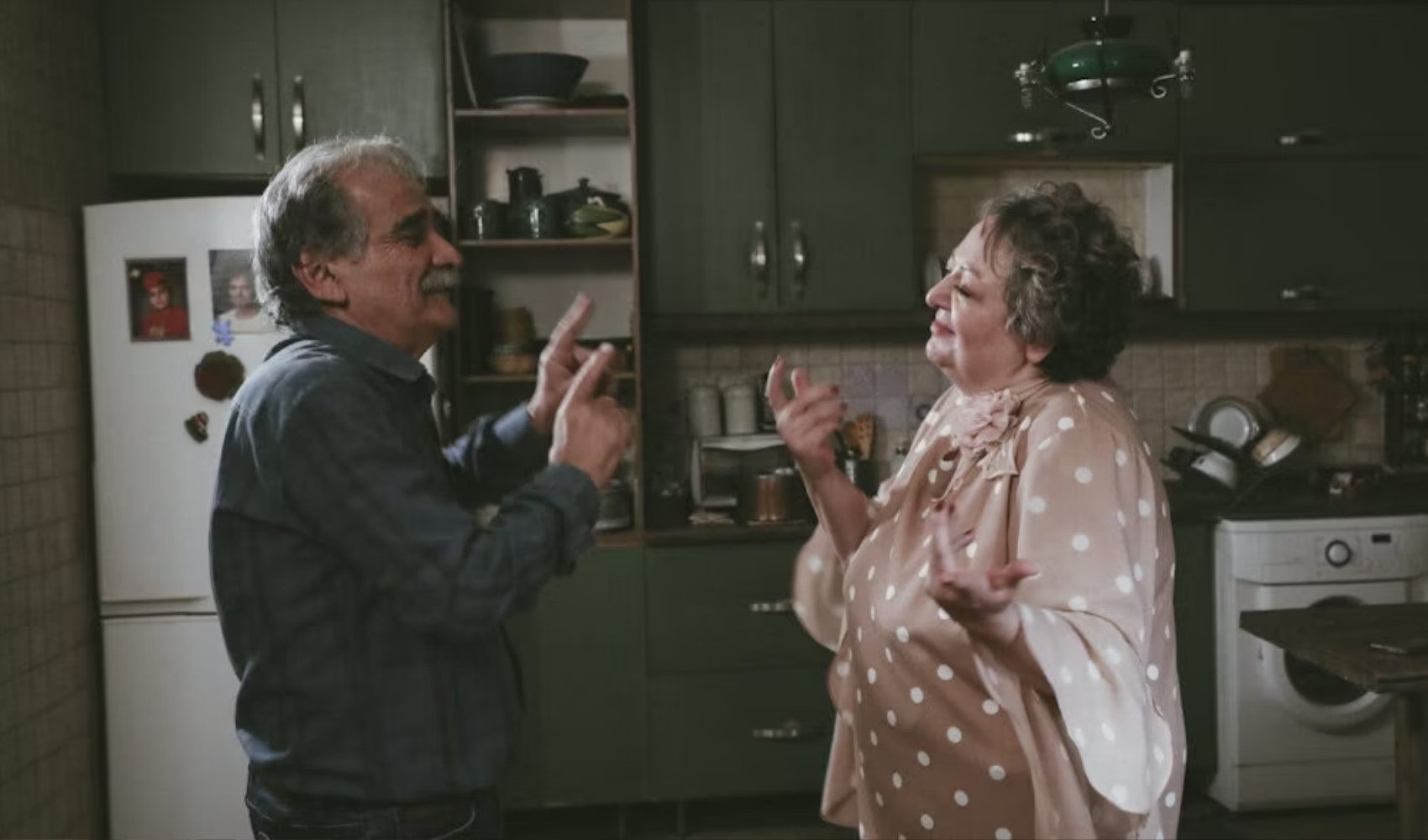
The film starts with pale colors. But from the moment Faramarz arrives at the house, everything finds its own color.
Here, we can think of Mahin's garden as a symbol of her loneliness. The lights in the garden, which had not been working for a long time, start to shine after Faramarz repairs them. The flowers in the garden, illuminated by the light, show their colors one by one. Mahin's long-lasting loneliness turns from a flat plain, as in Cemal Süreya's lines, into a garden that suddenly shows all its colors.
Mahin starts wearing her colorful dresses that she had kept in the closet for a long time again. She finds a reason to live. And the one who gives her this reason is Faramarz, who struggles with loneliness just like her.
While watching the film, I thought of the film Amour (Love) by Haneke, one of the important directors of world cinema. Haneke is one of the directors who hits the audience in the face with life's events in the harshest way. In the film Amour, the relationship of an elderly couple who have been married for many years, which becomes inextricable as a result of illness, was told. As harshly as the story told in the film Amour is handled, the film My Favorite Cake looks at the event from such a soft perspective. While the film Amour slaps the audience in the first minute, My Favorite Cake saves this for the end.
Another issue we should address in the film is the references the directors make to both the past and the current state of Iran. As many people know, Iran experienced a major rupture with the Islamic Revolution. People's ways of life, their existence in society, male-female relationships, and many other things were destroyed in an instant. This revolution in the administration affected cinema, as it did every area of life.
Mahin: Are you going to kill these girls just because two strands of their hair are showing?
In the film My Favorite Cake, Mahin's act of embracing and protecting the young girl who was warned by the morality police for not covering her head according to the rules on the street, and then telling about the times before the Islamic Revolution, were scenes that took the audience to the past and reminded us that we must hold on tightly to our freedoms.
The film was met with backlash in Iran because it contains scenes featuring a woman not wearing a headscarf and people drinking alcohol and dancing. Directors Maryam Moghaddam and Behtash Sanaeeha could not attend the film's premiere in Sweden because a new travel ban was imposed on them by Iranian authorities. These moments, which we see as a tiny scene while watching, caused the directors to be punished.
As I approach the end of the article, I want to mention one more small scene in the film. We said Iran is our neighbor and we mentioned that we have similar characteristics. It is impossible for two close countries not to influence each other. In the Iranian films I have watched before, I had come across scenes where İbrahim Tatlıses's songs were played. In this film, I came across the TV series İstanbullu Gelin (Bride of Istanbul), which was broadcast in our country between 2017-2019 and starred Aslı Enver and Özcan Deniz. The character Esma Boran, who wanted to reunite with her first love years after her husband died and spend the remaining years of her life with him, was also in the series İstanbullu Gelin. Even though her children reacted to their mother because of her age, Esma stood tall and was with the man she loved. I do not know if this series was chosen specifically for the scene in the film My Favorite Cake. However, if a series was chosen from the television by chance for the scene and it happened to be İstanbullu Gelin, we can say it was a nice coincidence.
With its plot, acting, the way it handles events, and its references, the film, which fits many messages into 96 minutes, is like proof that one cannot live alone for a lifetime…
I hope that one day, before it is too late, we can all offer our favorite cake to the person who illuminates our soul.
Hilal Özdemir
News Source: 12punto