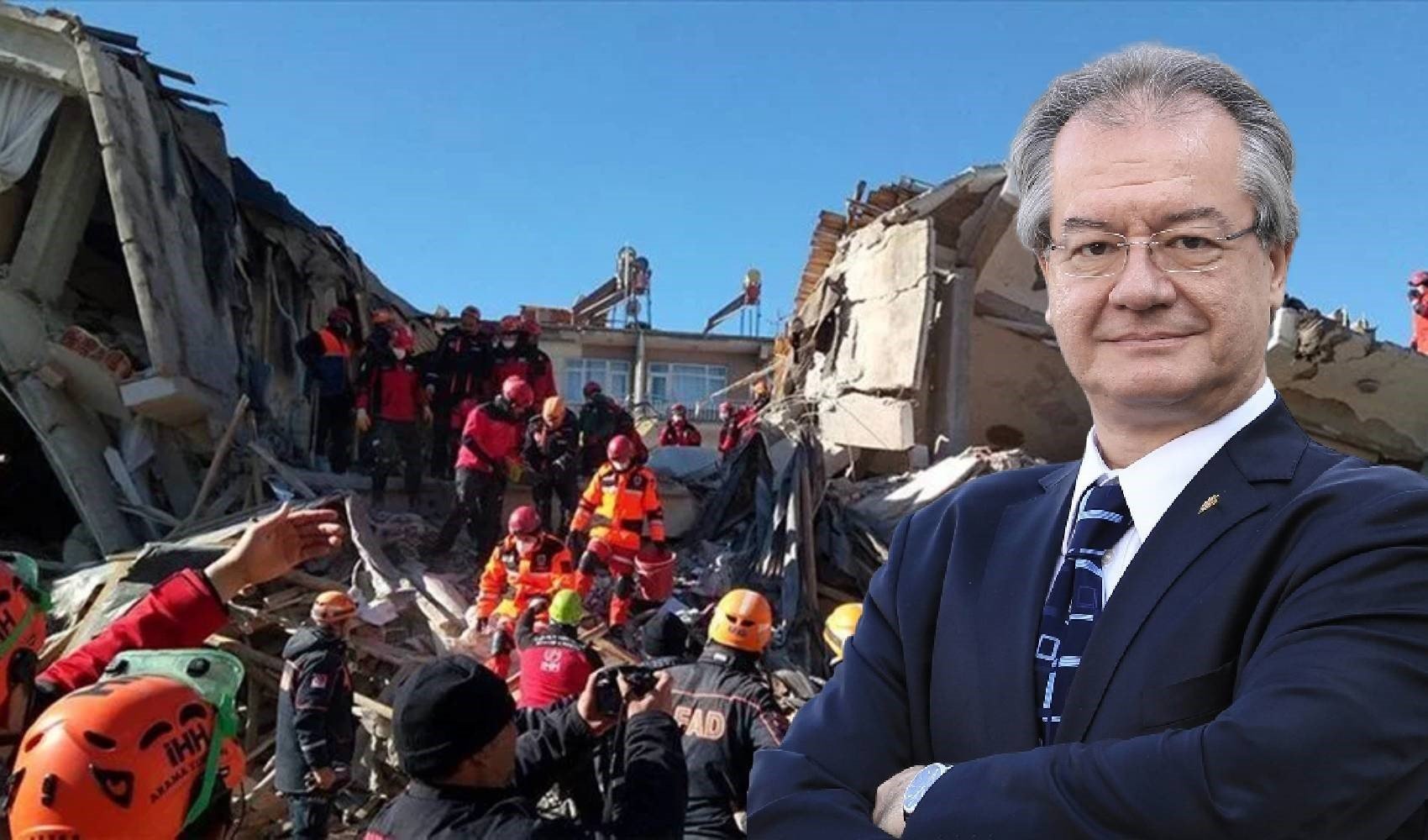
A 45-year-old building in Antakya, Hatay, which had been reinforced with carbon fiber-reinforced polymer, did not collapse during the February 6 earthquakes. Professor Doctor Güney Özcebe, who led the team that developed the reinforcement technique, emphasized that the foundations of the carbon fiber reinforcement method were laid through the collaboration of Middle East Technical University (METU), Kocaeli University, Istanbul University, the University of Patras, the Aristotle University of Thessaloniki, and an institute in North Macedonia (IZIIS). Özcebe stated that the scientific development of the method was a team effort. Emphasizing that the application of the method on the structure in Antakya was carried out under the management and supervision of the METU team, Özcebe made the following statements:
“The reinforcement work in Antakya was carried out on the building referred to as the A2 block in a site consisting of three buildings with the same project. I later learned that after the reinforcement of the A2 block, the residents of the A1 block also performed a partial reinforcement process on their building with their limited means, inspired by the application in the A2 block, while the residents of the A3 block did not take any measures. We ensured that approximately 125 people were saved, as the A2 block emerged intact from the February 6 earthquakes and the A1 block survived the earthquake without suffering a total collapse. It is the greatest achievement of my professional life.”
'URBAN TRANSFORMATION AND REINFORCEMENT MUST BE ADDRESSED'
Stating that ITU, Boğaziçi, and METU universities conducted a joint study 25 years ago, Özcebe emphasized that they prepared a report titled “Istanbul Earthquake Master Plan” for the Istanbul Metropolitan Municipality (IBB) in this study, and that urban transformation was one of the tools included in this plan. Stating that urban transformation and reinforcement works should be considered as parts of a whole for earthquake-resistant cities, Özcebe said the following:
"We must use all the tools at our disposal to create earthquake-resistant cities. In the plan from 25 years ago, we addressed one by one what needs to be done before the earthquake, during the earthquake (this period ends when search and rescue operations are completed), and in the subsequent recovery processes. In this report, first and foremost, we stated that buildings to be constructed in Istanbul from that moment on must be built in accordance with technical standards and that construction must be well-supervised. At that time, there were one million buildings in Istanbul; today there are 1.4 million structures. The 400,000 structures built in the time that has passed since then have, as far as I recall, received zoning amnesties 2 or 3 times. Thus, the problem created by illegal construction, which was around 60 percent according to official sources in the early 2000s in a major metropolis like Istanbul, has grown by 50 percent today. In the plan, we stated that existing structures should be quickly categorized as safe, potentially damaged, and unsafe buildings. We recommended that regulations be made to maintain the safety of those that are safe. Because a building that is safe today may become unsafe over time due to reasons such as cutting columns, etc. On the other hand, we said that the damage potential of buildings that could be damaged in an earthquake should also be determined. We stated that if the expenditure for the reinforcement of buildings exceeds 30-40 percent of the cost of demolishing and rebuilding the structure, reinforcement would not be an economic solution. For buildings where reinforcement costs are below these limits, we stated that reinforcement would be the most appropriate alternative. We stated that unsafe structures should be demolished, and if there are many unsafe structures on the same parcel/area, the area should be subjected to urban transformation. Urban transformation and reinforcement with carbon fiber-reinforced polymer are two approaches that address different building classes and can be used to create an earthquake-resistant built environment."
Stating that the "illness" of the building must also be identified in structures that may sustain damage, Özcebe added that different methods might need to be applied to buildings in similar situations.
Emphasizing that reinforcement made with fiber-reinforced polymer can be done without requiring disturbing operations such as demolition and concrete pouring inside the building, and without evacuating the building, thus eliminating certain costs, Özcebe, on the other hand, said that it is not possible to fully establish earthquake safety with an application using carbon fiber-reinforced polymer in buildings with large overhangs or empty spaces on their lower floors.
Özcebe emphasized that reinforcement using carbon fiber-reinforced polymer in adjacent buildings might also be insufficient to yield the expected result. He stated that the reason for this is that if reinforcement is not carried out in neighboring buildings, the danger these buildings would create could seriously jeopardize the safety of the reinforced building. He provided the information that a large portion of the buildings in Turkey are in this group. In this sense, he stated that reinforcements to be made with carbon fiber-reinforced polymer applications would be valid for a limited population of buildings.
'ASBESTOS RELEASE CAN BE PREVENTED WITH REINFORCEMENT METHODS'
Özcebe said that in the building reinforced in Antakya, the carbon fiber-reinforced polymer application was carried out in selected areas inside and on all columns on the ground floor, and that lateral support was provided to the building by using reinforced concrete walls in selected openings on the exterior facades.
Emphasizing that reinforcement methods will prevent the release of asbestos that may occur as a result of the demolition of buildings, Özcebe made the following statements:
"Asbestos use was very intense before the 1980s. Therefore, every building that is not demolished will have an advantage in terms of protection against asbestos. Most of the unsafe structures are old structures, and every demolition carried out without taking precautions against asbestos means the poisoning of the people in the region."
'THE FACT THAT THE BUILDING IN ANTAKYA DID NOT COLLAPSE WAS AN EXAMPLE OF SOLIDARITY'
Also stating that the building reinforced in Antakya was the first structure in the world to be reinforced without requiring the evacuation of the building's residents, Özcebe said that during the reinforcement, the project designer, the contractor, and the carbon fiber company worked voluntarily on the project and provided services without receiving any payment.
Emphasizing that it was an example of solidarity that remained standing without collapsing in the February 6 earthquakes in Antakya, Özcebe said the following regarding the cost of the reinforcement method:
"When we look at these costs, the square meter cost of carbon fiber at that time was around 50 euros. A total of 60,000 euros worth of carbon fiber-reinforced polymer was used in the application. It is possible to procure carbon fiber-reinforced polymers with similar costs today. Together with the reinforced concrete wall intervention made to the building from the outside, the material cost of the construction at that time was around 120-130 thousand euros. The building was 10 stories including the basement. The last two floors were not deemed to require reinforcement."
'ONE MUST BE CAREFUL AGAINST INCORRECT REINFORCEMENT'
Adding that he has encountered examples where the carbon polymer coating method was applied sloppily and incorrectly, Özcebe said that he contacted all necessary institutions, from the carbon fiber seller to the implementing firms. Özcebe made the following statements:
"I told the institutions, 'Buildings reinforced with reinforced concrete remained under the rubble in the February 6 earthquake. At this rate, it looks like carbon fiber will remain under the earthquake in the next one.'"
'EARTHQUAKE REGULATIONS AND URBAN TRANSFORMATION MUST BE APPLIED CORRECTLY'
Stating that the earthquake regulation has undergone very serious revisions starting from the 90s, but that there are problems in the actual implementation of the regulation, Özcebe added the following sentences to his words:
"Neither the inspector is in a position to inspect if you take the computer in their hand, nor is the person doing the project in a position to do a project if the computer in their hand is taken. Since the Building Inspection Law was enacted, it has undergone 20-something changes. They close a loophole with every change. There is a sector in Turkey that looks for loopholes for profit and attacks when it finds one. The important thing is to write a proper earthquake regulation and put it into practice, but this happens very slowly. Local governments also have a great responsibility here. Unless an elected will makes the issue a state policy, it does not take action as a priority in this area, which requires large financial resources. Priority is given to how resources will be directed to win the next election again. If an investment is made to be prepared for an earthquake that is not known when it will happen during the time they will remain in office, how many votes will it bring? That is why piecemeal work is done on the subject, but in the end, when the pieces come together, one plus one does not equal two. In the last 20 years, laws such as the Building Inspection Law and the Compulsory Earthquake Insurance Law have been enacted, and the micro-scale characteristics of the ground structures of Istanbul and some major metropolises have been determined. The earthquake regulation has been renewed, but today there are still mornings when we wake up to news of buildings collapsing suddenly in the night. Because the work to classify existing buildings and determine their earthquake risks could unfortunately not be completed.
The Istanbul Municipality has diagnosed 100,000 to 200,000 of its buildings as far as I know, but I do not have information on whether this applies to all existing structures. There are one and a half million structures in Istanbul. If one hour were spent to determine and report the risk level of each building, it would require a thousand experienced engineers to work uninterruptedly for one hundred and ninety days based on an 8-hour workday. Unfortunately, there is no such human resource in the municipalities. Engineers are not enough for this. Since the 1999 earthquakes, while it was possible to complete these studies to date with the available means, what did we do? We proved that we are very successful in increasing the rotten building stock in our country since that day. The February 6 earthquakes are the best proof of this. The term urban transformation was polished as it was clung to. Where have our cities been transformed? There are widespread urban transformation applications in regions such as Bostancı in Istanbul and Bahçelievler in Ankara. The question of how planned these transformations were is another unanswered question. How much of it was aimed at increasing the earthquake safety of our cities? Was the main purpose of the applications made risk reduction? I leave the answer to the question of how possible it is to give reassuring answers to these questions to you. In my opinion, while urban transformation should have been carried out in places where earthquake-insecure structures with high earthquake danger are concentrated, this was not done. Because there was no rent there. Therefore, urban transformation was used more for rent-seeking purposes rather than reducing disaster risk. While those who have money make their properties more valuable, a large population continues their lives in risky buildings with the fear of an earthquake today."
News Source: Utku Beycan