Özgür Özel, during a visit in the final days of April, stated that they would issue an "austerity and waste circular" to be implemented in the municipalities won by the CHP, saying, "With the austerity circular we will issue next week, we will open a new era, a new path in Turkey.
Then we will ask everyone to contribute to this austerity and to ending this waste. We will also ask it to be an example to other parties." he had said.
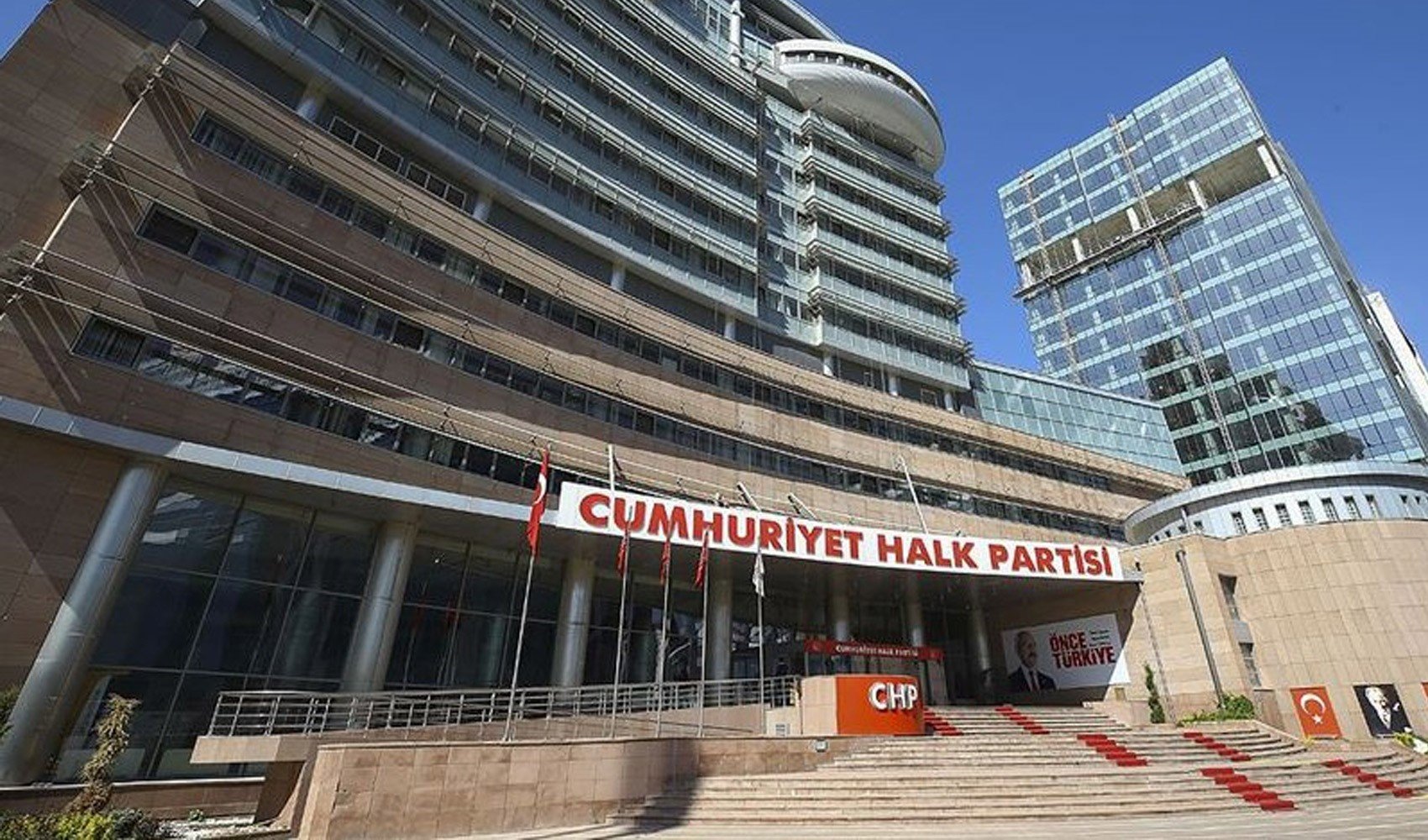
A circular regarding "waste, austerity, and favoritism" has been issued by the CHP Headquarters for its municipalities. The points highlighted in the circular, which bears the signatures of CHP Deputy Chairman Gökhan Zeybek and Secretary General Selin Sayek Böke, are as follows:
A holistic approach must be implemented to ensure that public services are carried out effectively and efficiently, and that citizens' access to services is provided in a healthy and fair manner. In this context, the principles that will form the basis of the fight against favoritism, ostentation, and waste in public administration must be addressed in a holistic manner.
The appropriate, effective, efficient, and balanced use of public resources is a fundamental principle, duty, and at the same time, a necessity for public institutions.
It is required to adhere to principles that prevent waste in expenditures made by public institutions, including municipalities, as well as in tenders, public procurements, and similar economic-financial transactions.
"IT IS A GREAT RESPONSIBILITY"
Combating waste is of key importance in the use of public resources to ensure sustainable development, social justice, and the spread of prosperity to the entire society.
Furthermore; the quality, efficiency, and orderly functioning of public services bring the principle of combating favoritism to the fore, not only in Turkey but in the entire civilized world. Being elected to public service is not a privilege, but a great responsibility for mayors and administrators. For this reason, ostentation and the waste of public resources must be avoided.
To this end, it is necessary to strictly adhere to the principles of transparency in tender processes; modesty that avoids ostentation in representation, hospitality, and promotional ceremonies; effective tracking and auditing in the use of vehicles, as well as not going beyond service purposes; not allowing personal gain that leads to privileges and is not in the public interest in overseas assignments; using all possibilities provided by laws in the most creative and economical way in electricity consumption; not leading to favoritism in appointments and recruitment; and not deviating from merit.
In this context, the implementation of the principles listed below by all our mayors is a responsibility of our party towards our citizens.
THE DETERMINED BASIC PRINCIPLES ARE AS FOLLOWS:
PUBLIC TENDERS
Care is taken to ensure that public tenders are conducted using the open tender procedure. Tenders conducted through bargaining and direct procurement methods are regularly announced to the public transparently via the internet.
"NO TENDER SHALL BE ISSUED FOR ANY WORK WITHOUT AN ALLOCATION"
For needs to be met through direct procurement in accordance with the law, an announcement is made on the municipality's website and/or notice board at least 48 hours in advance.
Various works that are customary to be met by different bidders are not combined in a single tender; tenders are not issued by dividing the procurement of goods and services and construction works into parts in order to remain below threshold values.
VEHICLE USE BY MAYORS
Care is taken to avoid luxury, ostentation, and excess in the allocation and use of vehicles belonging to municipalities. The provisions of the Vehicle Law No. 237 are complied with, and vehicle allocations made outside the cases permitted by the Law are revoked.
In municipalities where the current number of passenger cars and station wagons is less than (15), all of these vehicles are pooled to be used for service purposes, and the management of said service vehicles is carried out from a single source.
A list showing the type, brand, model year, engine volume, and license plate numbers of the vehicles taken into the pool is prepared and notified to the Headquarters for information purposes within 15 days. All relevant personnel, including the highest-ranking official of the relevant municipality, are directly responsible for the inclusion of the revoked vehicles into the pool and for the operation of the pool system as specified in these Austerity Rules.
Convoys consisting of a large number of vehicles are not formed at events attended by mayors with their colleagues, counterparts, or political representatives. Collective participation is ensured with minibuses or buses prepared in advance.
Vehicles are not accepted by way of donation, even if they are new and possible to be used in the performance of basic municipal services such as environment and environmental health, cleaning, fire department, emergency aid, rescue, ambulance, and funeral services, from foundations, associations, banks, unions, firms, individuals, etc.
Vehicles are used exclusively for the fulfillment of official services without discrimination between municipal units.
Vehicles cannot be used for private business, cannot be allocated to any office, unit, or person, cannot be kept for this purpose, and cannot be used by spouses, friends, or relatives.
Except for municipal vehicles allocated to official services, all vehicles (including those acquired through leasing) are equipped with a “mobile vehicle tracking system” and kept ready for inspection at any time. The “mobile vehicle tracking system” is accepted as a digital document in audits to be conducted by the municipality.
In order to prevent unnecessary expenditures in municipalities and to use resources in the most rational way, the auditing of vehicle use and the monitoring of the implementation are carried out by mayors and/or persons authorized by them.
In order to keep fuel expenditures at a minimum level, austerity measures such as setting maximum limits on a monthly and annual basis for existing vehicles are taken.
Vehicles understood to have completed their economic life are liquidated within the principles specified in their legislation.
DOMESTIC ASSIGNMENTS
Municipal employees are not sent abroad by the municipality for the purposes of learning a foreign language, improving their knowledge and skills, or for postgraduate education.
REPRESENTATION, CEREMONY, HOSPITALITY, AND PROMOTIONAL ACTIVITIES
In case of organizing trips, cocktails, dinners, and similar invitations due to international meetings, national holidays, liberation days of provinces, and Republic Celebrations, as well as other openings, conferences, seminars, anniversaries, and similar celebrations and organizations, care is taken to avoid excess and waste; no payments are made under the name of gifts or other names in these activities.
During New Year and holiday periods, no payments are made from the municipal budget for paper, printing, postage, e-mail, and similar expenses related to greeting cards, telegrams, and similar postal services sent by administrators, including mayors, to individuals, other than those arising from public duty; no promotional products, souvenirs, gifts, giveaways, etc., belonging to them are given.
Electronic means such as the internet and social media are utilized in the printing and distribution of books, magazines, reports, bulletins, etc., aimed at promoting municipal activities.
COMMUNICATION EXPENSES
Mayors take the necessary measures to ensure that communication expenses are kept at a reasonable level, observing the requirements of the service and the effective use of resources. The most economically suitable operator and tariff are chosen for mobile phone use. Electronic tools and methods are preferred for communication.
ELECTRICITY CONSUMPTION
Since the Law regulating the electricity market and relevant legislation have opened the electricity market to competition, it is considered important for the effective use of resources that our municipalities conduct market research to purchase electricity at the most affordable price and, when necessary, purchase electricity energy in accordance with the Public Procurement Law No. 4734.
BASIC PRINCIPLES FOR COMBATING FAVORITISM IN MUNICIPALITIES
The principle of merit is protected in our country by both the Constitution and laws. According to Article 70 of the Constitution, "every Turk has the right to enter public service.
No distinction other than the qualifications required by the duty can be made in recruitment," and the provision regulated by Article 3 of the Civil Servants Law No. 657, "to base entry into state public service duties, advancement and promotion within classes, and termination of duty on the merit system, and to ensure that civil servants have security in the implementation of this system with equal opportunities," emphasizes the importance of the merit principle legally.
The concept of merit, which means "the power to perform the duty successfully" or "earning by being successful," not being given importance is one of the most important reasons for the disruptions experienced in public services and public functioning in Turkey. Our party has stood firmly against the practices of the ruling party on this issue and has created confidence in our people that it will not engage in favoritism in public administration. In this context, our party's fundamental principle is that personnel in public service continue their duties away from bias and partisanship, and that the job is given to those who are qualified.
In the appointment of managers and expert staff to be carried out in the upper management of the municipality, municipal companies, affiliated organizations, and subsidiaries, and especially in the appointment of Deputy Mayors, social relationships such as kinship, affinity, and commercial relationships cannot be a subject of reference and preference in personnel management in municipalities, even if the necessary merit and experience conditions are met.
Since combating nepotism or political favoritism cannot be achieved by laws and rules alone, no tolerance is shown towards such practices; it is aimed to change the management culture to implement an ethics-based approach.
While performing public duties, no arbitrary action is taken to the detriment of any person, group, or body, and due respect is shown to the rights, duties, and interests of all citizens.
NO PERSONALIZED JOB POSTINGS CAN BE MADE IN RECRUITMENT
In recruitment, it is ensured that the job description is clearly stated with all qualifications and requirements, that postings for open positions are transparent, that openness and transparency are provided in the selection process, that evidence confirming the qualifications of successful candidates is included in the file, that periodic performance evaluation systems are established, and that a remuneration system corresponding to duties and responsibilities is created against the system of the ruling party that sees the public sector as a source of sinecures.
Based on the fact that the merit-based performance management in the public sector is a key element ensuring the integrity of services in the public sector; performance evaluations are defined based on clear and objective criteria, and the discretionary powers of managers are limited by the principle of merit.
News Source: 12punto