

Erdoğan's striking call for the UN: Veto power must be abolished
In an article penned for Bloomberg, AKP Chairman and President Recep Tayyip Erdoğan stated that the current structure of the United Nations Security Council must be changed, calling for the abolition of the veto privilege, an increase in the influence of elected members in decision-making processes, and the strengthening of the General Assembly's powers.



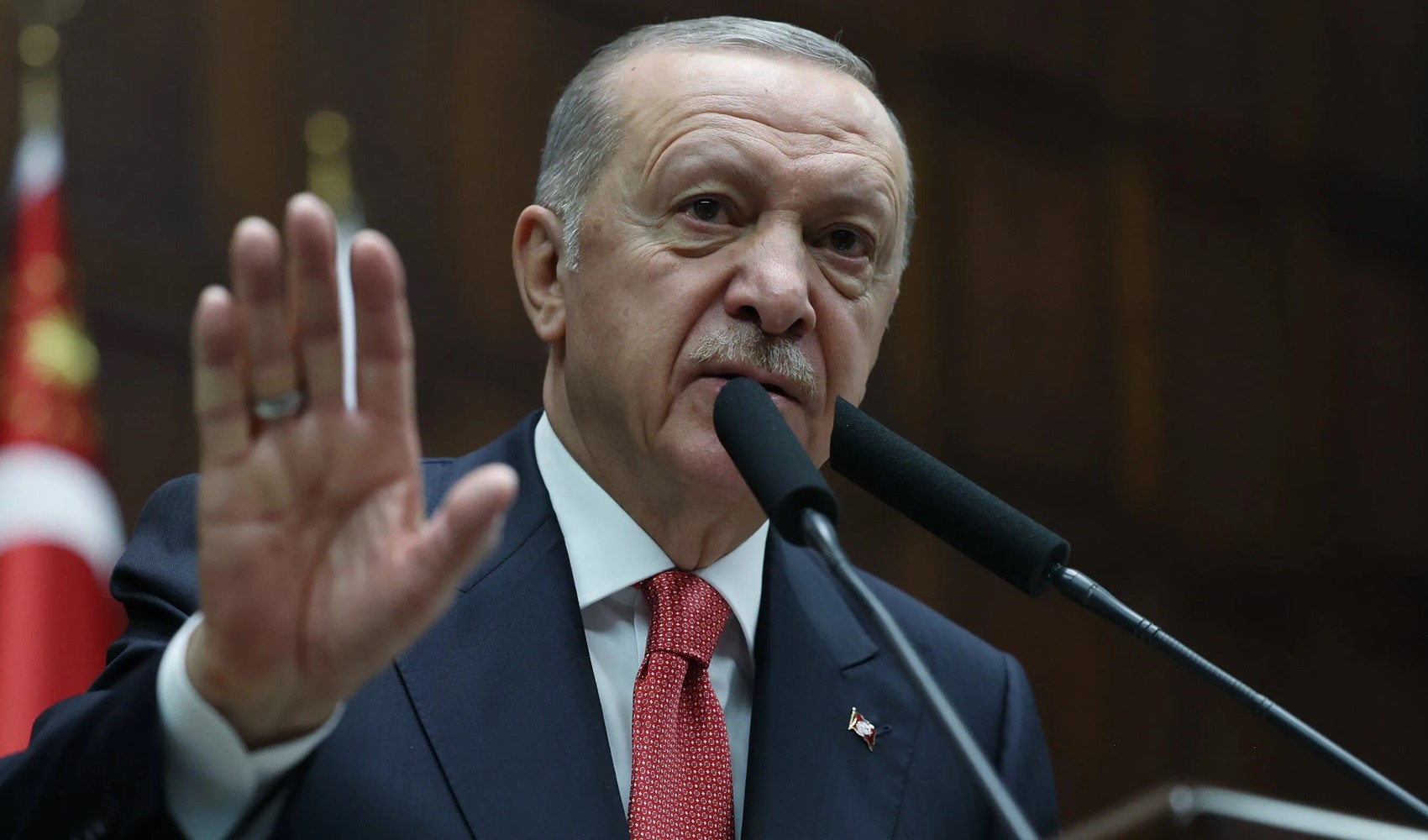
AKP Chairman and President Recep Tayyip Erdoğan argued in an article he penned for Bloomberg that the current structure of the United Nations (UN) Security Council must be changed.
Erdoğan called for the abolition of the veto power, an increase in the influence of elected members in decision-making processes, and the strengthening of the UN General Assembly.
ERDOĞAN'S CALL TO ABOLISH VETO POWER
Writing an article for Bloomberg titled "The UN must abolish the Security Council's veto power," Erdoğan stated that recent years' pandemics, energy crises, supply chain disruptions, and regional conflicts have revealed the problems of leaving the resolution of global crises to the will of a few countries.
Stating that the structure of the UN Security Council still reflects the balances of the post-World War II era, Erdoğan noted that the adaptation of global decision-making mechanisms to today's conditions cannot be postponed.
Erdoğan stated that broader representation and responsibility must be shared fairly, using the following expressions:
"We are obliged to include the experience, capacity, and will of different geographies in the resolution of global and regional issues. Our call that 'the world is bigger than 5' is, in this respect, an invitation to a broader understanding of responsibility. It is now essential to transform the need for reform into a concrete roadmap. At the center of this roadmap must be the abolition of the veto privilege. Because adding privileged new members to the Security Council does not solve the problem of decision-making power being concentrated in the hands of a few states, but rather expands the scope of the privileged structure. The abolition of the veto privilege must be both the starting point and the fundamental strategic goal of any meaningful reform. Reform cannot mean granting the same privilege to other states. A broad coalition should be formed within the General Assembly around the principle that no state should have the authority to permanently block the will of the majority of the international community."
PROPOSAL FOR AN ELECTORAL MODEL IN THE SECURITY COUNCIL
Stating that the balance between the Security Council and the General Assembly should be reorganized, Erdoğan proposed a structure based on the election of Council members for specific terms.
Erdoğan expressed that a system where there are no permanent memberships and where countries must regain the support of the majority of General Assembly members if they wish to serve again would increase the Council's representative capacity and accountability.
The following assessments were included in Erdoğan's article:
"The powers of the General Assembly should be strengthened, and the representative capacity of the Security Council and its accountability to the General Assembly should be increased through a structure where there are no permanent memberships, Security Council members are elected by the General Assembly for specific terms on a rotating basis, and countries wishing to serve again must regain the trust of the majority of members in the elections. We cannot build the international order of the future by preserving the hierarchies of the past.
Developments in the last quarter-century, which can be considered quite short in terms of world history, have shown that no balance of power and no international order is permanent. The system that promised peace, stability, and shared prosperity to humanity has been insufficient in preventing new wars, reducing inequalities, and responding to changing power balances."
Stating that new power centers have emerged from economy to security, and from technology to diplomacy, Erdoğan noted that international institutions have not been able to adapt to this change at the same speed.
EMPHASIS ON FINANCING FOR DEVELOPING COUNTRIES
Erdoğan stated that wars, the climate crisis, irregular migration, and economic vulnerabilities have increased the importance of states having strong institutions, resilient economies, and defense capacities. He expressed that the security and sustainability of trade, logistics, transport, and energy corridors are also becoming increasingly decisive.
Stating that Asia's economic weight is increasing and that Africa is demanding stronger representation consistent with its potential, Erdoğan noted that developing countries are bringing their own priorities to the agenda more frequently.
Erdoğan stated that the increasing influence of regional actors requires them to take on more responsibility in their own geographies, and expressed the following:
"The increasing influence of some regional actors brings with it the need for them to take on more responsibility in their own geographies. It is not possible to solve the issues of every region with methods determined from the outside. We believe that approaches based on the will of the relevant countries, local conditions, and common interests will produce more permanent and stable results. It is an inevitable necessity for countries with diplomatic capacity, economic means, and the ability to communicate with different parties to take on more effective roles in the establishment of peace and stability.
Expectations that globalization would spread prosperity have not been fully met. While injustices in income distribution have deepened, technology and economic dependencies have turned into new areas of competition. Under these changing conditions, responsibilities must be shared equitably to ensure global justice, and the right to development and access to the financing needed by developing countries must be guaranteed."
TURKEY'S STANCE ON UN REFORM
Stating that a broad international will must be demonstrated for changes to be made in the UN system, Erdoğan expressed that Turkey will continue to use its multilateral diplomacy experience in the search for reform.
Erdoğan stated that they support initiatives aimed at abolishing the veto privilege, increasing the influence of elected members in decision-making processes, and strengthening the role of the General Assembly.
Erdoğan expressed the following in the final part of his article:
"The meeting of countries from different regions on this common ground will strengthen the legitimacy and representative capacity of the international system. It is clear that in today's world, lasting peace cannot be established by the proliferation of disconnected blocs that do not talk to each other. For a 'fairer world,' we must bring together the experience, capacity, and will of different geographies on a common ground. Turkey will continue to fulfill its responsibility in this search for reform with its deep-rooted state tradition, diplomatic capacity, and strong relations established with different geographies."
News Source: 12punto
Most Read

Transaction suspension decision from MASAK
'Direct dialogue between Erdoğan and Trump has created room for maneuver'

From 1453 to 2026: As the West's 500-year world system comes to an end
A call from Şamil Tayyar following the fund operation
Will the Yemen tender fall to Turkey?
Partners of famous Istanbul shopping mall detained
The real test for the Left Party begins now
Operation on law firms and companies in 4 provinces

Armed attack on a school in Manisa: Students injured
'Her jeans were shredded, there was so much blood on the ground'