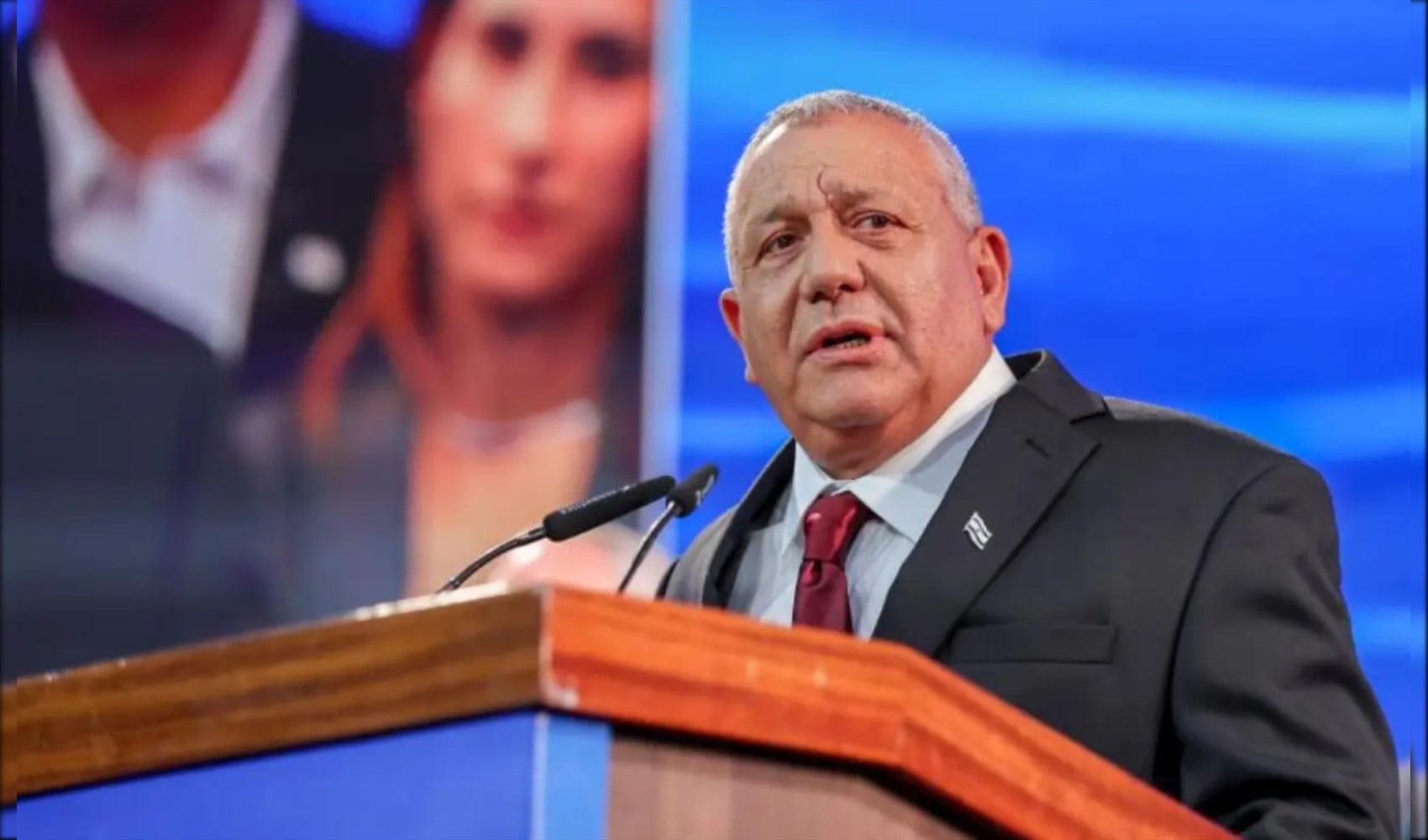
As the process of forming a government continues in Israel following the general elections, the Joint List alliance, which represents Arab groups and Palestinian citizens of Israel, has announced the candidate it will support for the task of forming a government. The alliance announced that it will recommend to President Isaac Herzog that Yashar Party leader Gadi Eisenkot be tasked with forming the government.
The Joint List reported that the decision, taken unanimously among the three partners, was made "in response to public demand to prevent Israeli Prime Minister Benjamin Netanyahu and his government from returning to power."
The statement noted that the opposition bloc has so far failed to show sufficient will to "oppose the policy pursued by Netanyahu, combat incitement against Arab citizens, and stand against attempts to undermine their legitimacy in expressing their political preferences," while emphasizing that supporting Eisenkot is nonetheless important.
The Joint List stated, "Even though Eisenkot has received the support of more members of parliament than Netanyahu, we believe it is important to widen the gap between them even further." The alliance indicated that this step could strengthen the possibility of changing the government and reduce the likelihood of forming a national unity government that could keep Netanyahu in power.
According to reports in the Israeli press, if the 11 members of parliament from the Joint List also recommend that Eisenkot be tasked with forming the government, the number of members of parliament declaring support for Eisenkot is expected to reach 67. Thus, Eisenkot would exceed the support of 61 members of parliament, which constitutes a majority in the 120-seat Knesset.
The result of the elections in Israel
In the elections, the bloc led by Netanyahu won only 53 of the 120 seats in the Knesset and failed to secure the 61-seat majority. Parties aligned with Netanyahu's rival, Yashar Party leader Gadi Eisenkot, won 48 seats. Thus, neither leader had a clear option to reach the majority required to form a government.
The parties representing Arabs in Israel, meanwhile, nearly doubled their number of seats in parliament to reach 19, becoming a decisive factor in the balance of power. However, both Prime Minister Netanyahu and his rival Eisenkot had announced before the elections that they would not cooperate with these parties.
News Source: 12punto