

Artificial intelligence is transforming engineering education: New areas of expertise are emerging
According to Prof. Dr. Burhan Pektaş, engineering education is now being shaped by artificial intelligence, data science, biotechnology, and cybersecurity.



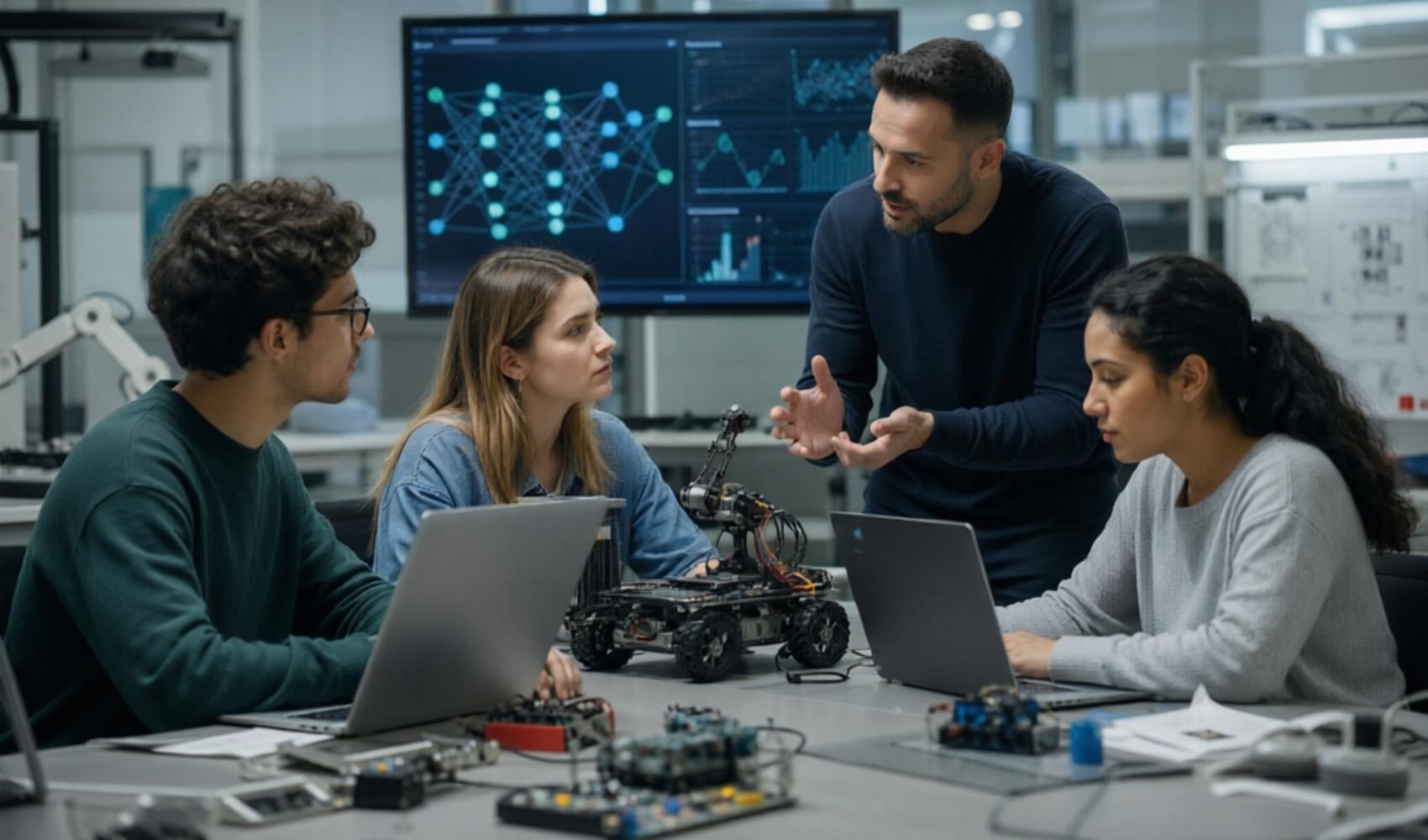
Artificial intelligence is transforming not only professions in the business world but also the content and methods of engineering education. Prof. Dr. Burhan Pektaş, Vice Dean of the Faculty of Engineering and Natural Sciences at Üsküdar University, stated that in the new era, engineering candidates must be trained with an interdisciplinary work culture, research infrastructure, and practical experience.
Pektaş emphasized that engineering education is now being addressed in conjunction with fields such as artificial intelligence, data science, biotechnology, neuroscience, and digital transformation. He noted that students have the opportunity to participate in research projects, work in laboratories, and develop solutions to real-world problems starting from their undergraduate years.
For students who want to be part of teams developing the technologies of the future, a strong theoretical education alone is not enough; an interdisciplinary work culture, research infrastructure, and practical experience are also of great importance.
According to Pektaş, technical knowledge remains a fundamental requirement in the age of artificial intelligence, but it is no longer considered sufficient on its own. Engineering candidates are also expected to possess skills in analytical thinking, problem-solving, critical evaluation, data literacy, teamwork, and effective communication.
Stating that engineers who can evaluate the societal impacts of technology will stand out, Pektaş said that ethical awareness, the habit of lifelong learning, and the competence to adapt quickly to changing technologies are also gaining importance.
NEW AREAS OF EXPERTISE ARE EMERGING
Noting that artificial intelligence brings new areas of expertise to the field of engineering, Pektaş stated that in the coming years, fields such as AI-supported systems engineering, autonomous systems engineering, AI security, explainable AI, bioinformatics, computational biology, digital health technologies, smart manufacturing systems, and industrial data analytics will gain more prominence.
Pektaş conveyed that they anticipate rapid development in new specializations born from the intersection of cybersecurity and artificial intelligence, as well as disciplines focusing on human-machine interaction.
Expressing that Üsküdar University brings engineering sciences together with health, biotechnology, and behavioral sciences under the same academic roof, Pektaş said this structure allows students to be introduced to current fields such as digital health applications, biological data analysis, and AI-supported decision systems.
Pektaş stated that artificial intelligence and data science are no longer just the subject of computer engineering; they have become a common area of study for departments such as software, electrical-electronics, industrial engineering, molecular biology and genetics, and bioengineering.
It was noted that students can develop projects in various fields—ranging from AI-based decision support systems to robotics applications, and from biological data analysis to cybersecurity solutions—within the scope of graduation projects, research studies, TEKNOFEST preparations, laboratory practices, and academic-industry collaborations.
Stating that university-industry collaborations also contribute to students establishing early contact with the sector, Pektaş expressed that there are opportunities to work with technology companies, software firms, defense industry organizations, health technology companies, and R&D centers through internships, projects, and research activities.
News Source: 12punto
Most Read

Increased rates for mandatory traffic insurance have begun
Name change notice sent to Yeni Parti

Message from Fenerbahçe players to İsmail Kartal
Unexpected crisis in Yeni Parti before the convention

New statement from Bülent Arınç regarding his controversial criticism of Melih Gökçek
The hours-long journey between the two provinces will drop to 2.5 hours

Trump announces 'Russia and Ukraine have reached an agreement'
Male body found inside the walls in Fatih

The judiciary has said Stop to the unlawful demolition at Denizatı Kent Site
Şamil Tayyar warned AKP about that province