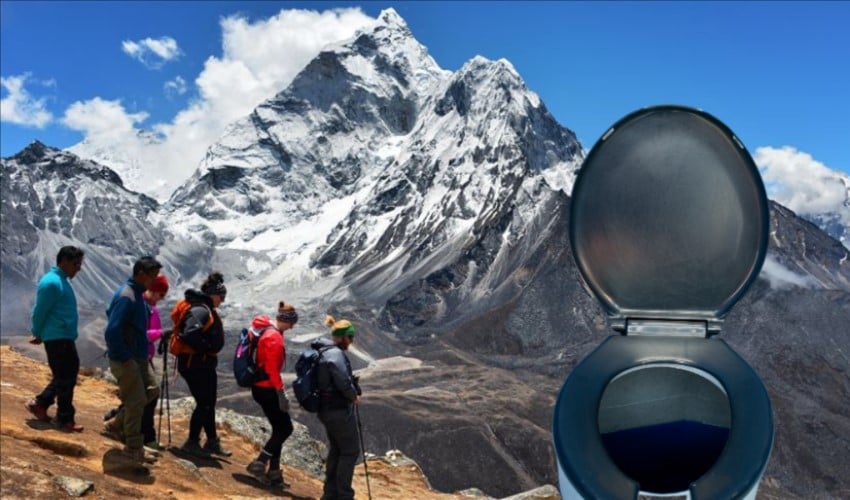
The interest in Mount Everest, one of Nepal's magnificent mountains, brings environmental problems along with its natural beauty and the thrill of climbing to the summit. Following recent complaints about increasing human waste, authorities are taking new measures to focus more on the cleanliness of Mount Everest. Those climbing Mount Everest will now have to clean up their own waste and bring it back to the base camp.
According to a report by the BBC, climbers will now be required to carry their waste with them. Mingma Sherpa, the mayor of the Pasang Lhamu rural municipality, emphasizes the severity of the environmental pollution by stating, "Our mountains have started to stink." For this reason, the municipality, which covers most of the Everest region, is warning climbers to put their waste in bags and bring it back as part of broader measures.
Due to the extreme cold climate of Everest, it is known that the waste left behind does not fully decompose. This situation threatens the health of climbers as well as causing environmental pollution. Mingma says, "We are receiving complaints about human waste being seen on rocks and some climbers getting sick. This is unacceptable and negatively affects the image of the region."
While the waste problem on Everest and other surrounding mountains remains a significant issue, the increasing number of cleanup campaigns led by the Nepalese army is considered a positive step. However, challenges regarding waste management persist.
BARRELS PROVIDED FOR WASTE
Although there are barrels at the base camps of Mount Everest to meet toilet needs, this process becomes more difficult during the climb. Many climbers and support staff leave their waste in pits, but this practice is not sufficient. As they progress toward the summit, waste must be bagged and brought back.
Climbers who will scale the Everest and Lhotse summits will be required to have their waste bags checked upon their return to the base camp. This measure is being implemented as part of environmental protection efforts.
The South Col, one of the high camps of Everest at 7,906 meters, has been dubbed an "open toilet." This area is particularly problematic because it is windy and has little snow. SPCC chairman Chhiring Sherpa states that the waste problem persists in these regions and emphasizes that more measures must be taken for a solution.
LIAISON OFFICE TO BE ESTABLISHED
There has been criticism that Nepal's central government has not sufficiently enforced previously adopted mountaineering rules. However, Pasang Lhamu Mayor Mingma states, "Everything will change now. We will establish a liaison office and ensure the implementation of our new measures, including ensuring that climbers bring their waste back," indicating that promising steps will be taken for the future.
These steps taken to protect the unique beauty and natural wealth of Everest are of a nature that will set an example not only for the region but for the whole world. The responsibility to protect the environment and contribute to cleanliness is now becoming even more prominent for those climbing Everest.
News Source: 12punto