

Microplastic alarm in the Mediterranean
A scientific report announced by the Alanya Municipality has revealed that the intense microplastic load on the coasts is being transported by facilities on the Adana-Mersin line, waste imports, and heavy rainfall.



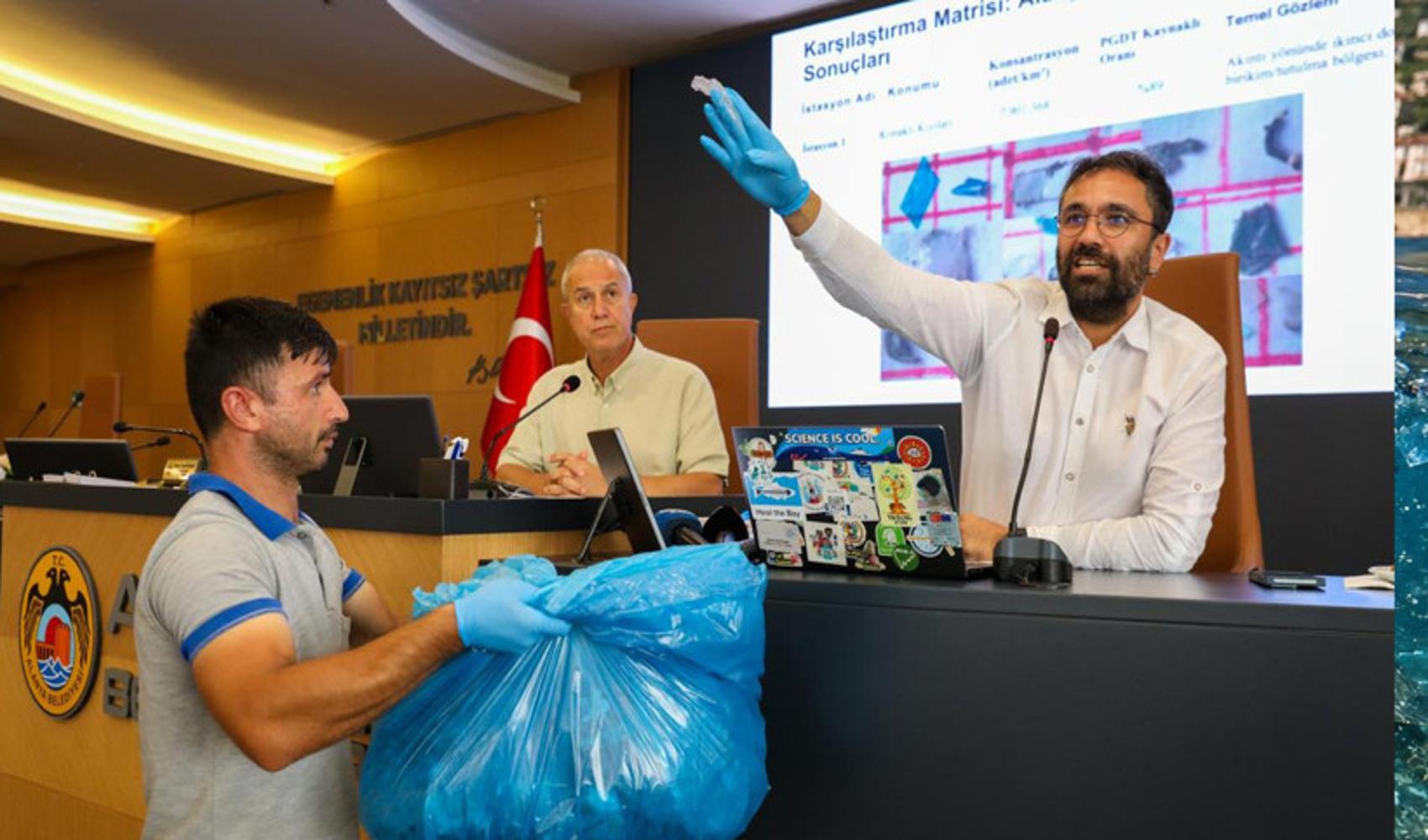
The results of a scientific study regarding the source of plastic and microplastic waste, which was seen intensely on the Alanya coast in June and July, have been announced. The study, conducted by the Alanya Municipality and Prof. Dr. Sedat Gündoğdu, revealed that the root cause of the pollution is not local sources, but rather plastic waste imports, environmental loads originating from recycling facilities in Adana and Mersin, and the extraordinary rainfall experienced in 2026.
The "Scientific Research Report on Plastic Pollution on the Mediterranean Coasts" was announced to the public at a meeting held at the Alanya Municipality. In addition to municipal officials, representatives from the tourism sector, non-governmental organizations, environmental volunteers, political party representatives, and members of the press attended the meeting.
Prof. Dr. Sedat Gündoğdu, a faculty member at the Çukurova University Faculty of Fisheries and a researcher at the Istanbul Policy Center at Sabancı University, pointed out in the report prepared after the field study conducted on the Alanya coast that the pollution was transported to the region by Mediterranean currents.
THE MAIN SOURCE OF POLLUTION IS NOT LOCAL
According to the report, the Dim Stream, wastewater treatment plants, cruise ships, and excursion boats were not considered the main source of the current intense microplastic load. The research stated that the lowest microplastic density in the region was measured at the station in front of the Dim Stream; no microplastics were detected at the outlet of the Alanya Wastewater Treatment Plant, and only one microplastic particle was found at the outlet of the Konaklı Treatment Plant.
The study stated that microplastics concentrated on the Alanya coast after a journey lasting weeks with currents in the Eastern Mediterranean. According to the Lagrangian modeling results, the time it takes for particles reaching the sea to reach the coast was calculated as an average of 51 days in winter and 33 days in summer.
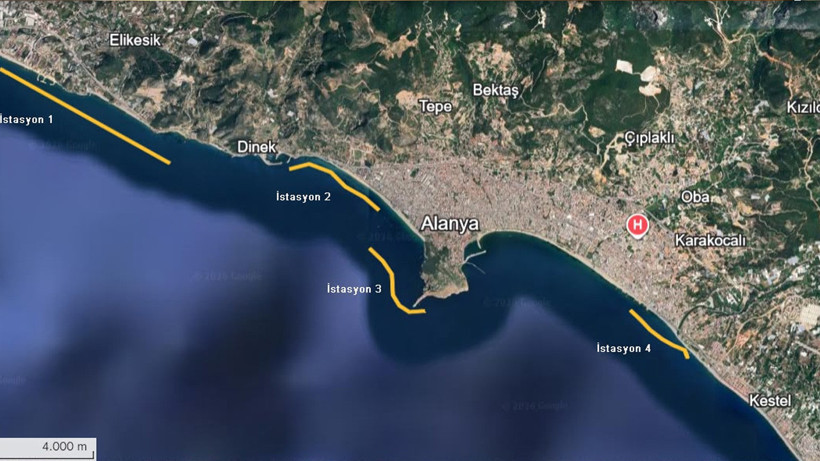
In the measurements, 7 million 901 thousand 368 microplastic particles per square kilometer were detected at Station 1 on the Konaklı coast. At this point, the rate of particles originating from plastic recycling facilities was announced as 89 percent. At Station 4 in front of the Dim Stream, 1 million 15 thousand 137 particles per square kilometer were determined; the rate here was recorded as the lowest level in the region.
The report emphasized that the Konaklı coast is one of the areas where microplastics naturally accumulate due to sea currents. For this reason, it was assessed that the pollution became more visible, especially on certain coastal lines.
THE IMPACT OF WASTE IMPORTS, RAINFALL, AND TRANSPORT
The research stated that over 70 thousand tons of plastic waste were imported into Turkey monthly in April 2026, and this amount was the highest level of the last 10 years. It was reported that approximately 60 percent of the plastic waste coming to Turkey is directed to plastic recycling facilities in Adana and Mersin.
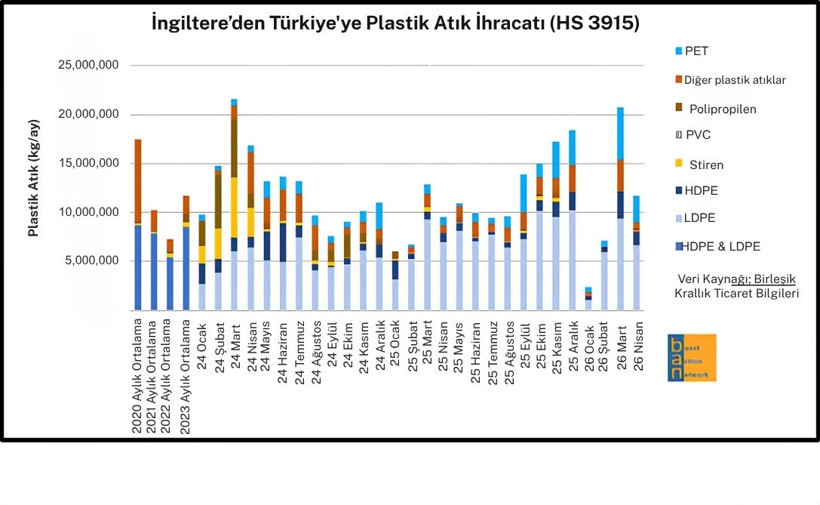
According to the report, while Turkey's annual official recovery capacity is around 1 million 125 thousand tons, the amount of domestic and imported plastic waste exceeds 4 million tons. While it is assessed that the gap between capacity and waste amount increases plastic leakage into the environment, the increase in fires at recycling facilities from 6 per year in 2017 to 150 in 2025 was also interpreted as one of the indicators of loss of control.
It was reported that rainfall in the 2025-2026 water year was 45 percent above normal, and 86 percent above normal in the spring of 2026. It was stated that this rainfall caused flooding in the Seyhan and Ceyhan basins, and that high flow rates carried microplastics left in the environment in the past into the rivers and increased illegal discharges at some facilities.
It was reported that in measurements made in irrigation canals in Adana, microplastic density increased 132-fold after facility discharge, and it was calculated that approximately 5.3 billion microplastic particles per hour were transported to the rivers from just three canals. The report also stated that agricultural plastic and greenhouse cover recycling activities around Çukurova, Anamur, and Gazipaşa also contributed to regional pollution.
Prof. Dr. Gündoğdu stated that more than 140 recycling facilities in the Adana and Mersin region should be inspected effectively. He called for the declaration of a state of emergency to prevent pollution, the prevention of illegal practices, making filter systems mandatory in facilities, and the implementation of legal regulations without delay.
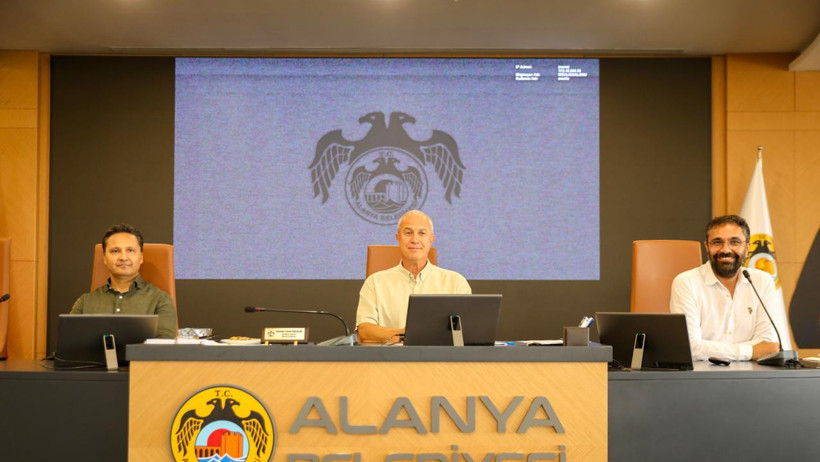
Alanya Mayor Osman Tarık Özçelik also said that the pollution poses a serious risk in terms of tourism. Reminding that Turkey earned over 62 billion dollars in tourism revenue in 2025 and that Antalya's share was approximately 17 billion dollars, Özçelik stated that if the pollution continues, the perception of tourism in the Mediterranean could be damaged.
In the report, it was recommended that greenhouse cover recycling facilities in Gazipaşa and Anamur be inspected more strictly to reduce pollution, that single-use plastics be gradually removed from excursion boats and beach businesses, and that early warning and monitoring systems be established at natural accumulation points such as Damlataş.
At the end of the meeting, non-governmental organizations and political party representatives stated that they were ready to support action plans for the protection of the Mediterranean. The Alanya Municipality also announced that it would continue its cooperation with relevant institutions in light of scientific data.
News Source: 12punto
Most Read

When there is the terrorist leader to talk about, who is Mansur Yavaş anyway!..

Melis Sezen revealed her monthly income in her statement

Time to leave Istanbul
beIN Sports responds to reactions regarding Okan Buruk on live broadcast

From 1453 to 2026: As the West's 500-year world system comes to an end

Microphones are open for prayer, closed to justice

Is the foreign agent law in effect?
Amedspor's victory celebration turns into a fire

Official Gazette / September 7 – 20, 2026
Number of MP transfers from the New Party to the CHP is rising