12punto.com.tr / Ayşegül Aydoğan Atakan
Vaccination is one of medicine's most important achievements. In fact, as experts put it, it is the greatest invention of science, which has managed to extend human life by 70 percent.
Experts, who state that 150 million lives have been saved thanks to vaccines in the last 50 years, have been struggling more with distrust of vaccines and anti-vaccine movements than with vaccination efforts in recent years.
Public health experts warn that distrust of vaccines could increase epidemics, while reporting that authorized institutions are not disclosing reliable data regarding vaccination rates.
In Turkey, which was one of the three countries in the world that produced its own vaccines in the 1940s and did not even pause vaccine production during the War of Independence, the current point reached in immunization leaves experts who have spent years of effort and intense labor in this field feeling helpless.
The World Health Organization lists vaccine hesitancy as one of the 10 greatest threats to global health. During the 'Vaccine Hesitancy Symposium' organized online by the Public Health Specialists Association for World Immunization Week, it was emphasized that vaccine hesitancy is one of the most important public health problems in our country.
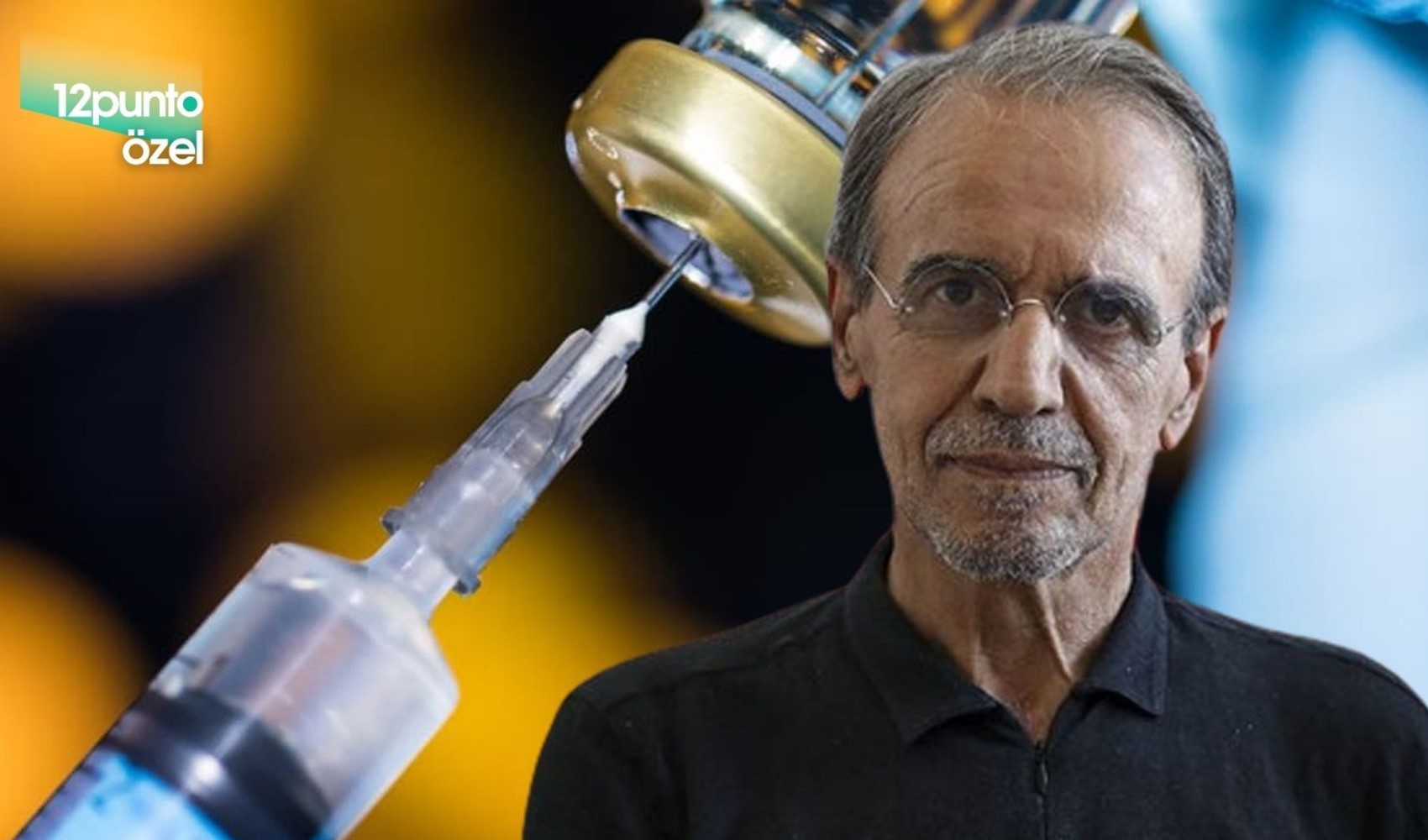
It would not have been possible to skip the views of Prof. Dr. Mehmet Ceyhan, one of the first names that comes to mind when vaccine and immunization efforts are mentioned in Turkey, the President of the Infectious Diseases Association and a retired faculty member from the Department of Pediatric Infectious Diseases at Hacettepe University Faculty of Medicine, for World Immunization Week.
Prof. Dr. Ceyhan evaluated what has happened over the last few years, marked by debates such as vaccine hesitancy and vaccine refusal, for 12punto readers.
VACCINE HESITANCY IS 9 TIMES HIGHER IN THE EAST
Stating that anti-vaccine movements are supported by sponsoring companies, Prof. Dr. Ceyhan said, "Since the 2000s, they have started to make their voices heard with the sponsorship support of certain companies to a very serious extent. These companies, which are the manufacturers of products marketed with slogans like 'natural methods that protect health,' naturally see vaccines as competitors.
The public thinks these people are scientists, but they have nothing to do with science. They have no scientific data, no research. Because of these people, the perspective on science and scientists in Turkey has gone back 100 years. This also applies to vaccines. These things were happening in the Middle Ages," he said.
Pointing out that vaccine refusal, which reached 40 thousand people in 2017, is a significant problem especially in the Eastern Anatolia region, Ceyhan provided the information: "In this region, vaccine hesitancy is seen 9 times more than in the Marmara region. The reason for this is the sects and religious groups dominant in that region. The public, who lack health knowledge and education, are influenced by the rhetoric of sect leaders."
'WE ARE DEPENDENT ON THE OUTSIDE FOR VACCINES'
Stating that vaccines have not been produced in Turkey for many years, Prof. Dr. Ceyhan says that we have become completely dependent on the outside for vaccines.
"Infectious diseases that can create an epidemic are just like earthquakes. The number of pandemics in the 21st century is higher than major earthquakes. We don't know when it will happen, but we will definitely experience a new pandemic," says Prof. Dr. Ceyhan, according to whom investment could be made for vaccine production with new technologies using half the money spent on any road or bridge project today.
INVESTMENT MUST BE MADE IN PREVENTIVE MEDICINE
Reminding that irregular migration makes the control of infectious diseases and vaccination efforts difficult, Prof. Dr. Mehmet Ceyhan continued his words as follows:
"Unfortunately, there is a population of around 500 thousand in our country that is not registered, and we do not know the status of vaccination rates. Rota, HPV (cervical cancer vaccine), and meningococcal (meningitis) vaccines should be included in the vaccination schedule, just like other vaccines administered free of charge.
The Rota vaccine is administered free of charge in 150 countries in the world, and the HPV vaccine in 104 countries. Meningococcal vaccines are in the vaccination schedule of approximately 50 countries. If any vaccine has reached a 18 percent application rate in a society, that is, if 18 out of every 100 children are vaccinated, then it is a more economical method for the state to purchase that vaccine and provide it for free than to sell it in the free market.
The cost of new vaccines that need to be added to the national vaccination scheme is far below the money allocated for any bridge or road project. When these three vaccines are added first, the budget that needs to be allocated is around 200 million dollars. On the other hand, the money spent on medicine in Turkey is 16.5 billion dollars. Spending should be made on preventive medicine, not on treatment."
'SUFFICIENT DOSES OF TETANUS VACCINE WERE NOT ADMINISTERED'
Pointing out that the tetanus vaccines that should have been administered after the Kahramanmaraş-centered earthquakes could not be administered sufficiently, Prof. Dr. Ceyhan said:
"Turkey's annual need for diphtheria-tetanus vaccine is around 4 million doses. These vaccines are administered to school-age children, pregnant women, and all adults every 10 years.
During the earthquake, it was necessary to administer tetanus vaccines to the public living in that region, the injured, and the rescue teams; unfortunately, most could not be administered. Our doctor colleagues mentioned tetanus cases and wrote about them, but the ministry did not disclose how many tetanus cases there were after the earthquake. Unfortunately, we don't know this..."
THE MINISTRY OF HEALTH HAS NOT DISCLOSED VACCINATION RATES FOR A LONG TIME
Explaining that the Ministry of Health last announced childhood vaccination rates as 98 percent in 2017, Prof. Dr. Mehmet Ceyhan warned, "According to World Health Organization (WHO) data, Turkey is one of the three countries with the highest number of measles cases in the European region today. (The other countries are Russia and Tajikistan).
We learned that vaccination rates fell from 96 percent to 93 percent when the Ministry of Health shared its 2021 data with the WHO in 2022. This is very important data because if vaccination rates fall below 95 percent, an epidemic risk can be mentioned."
News Source: 12punto