

Yellow spots around the eyes may be a warning sign for heart attack and stroke risk
According to research published in Atherosclerosis, rates of heart attack, stroke, and mini-stroke were found to be higher in individuals with xanthelasma compared to the control group.



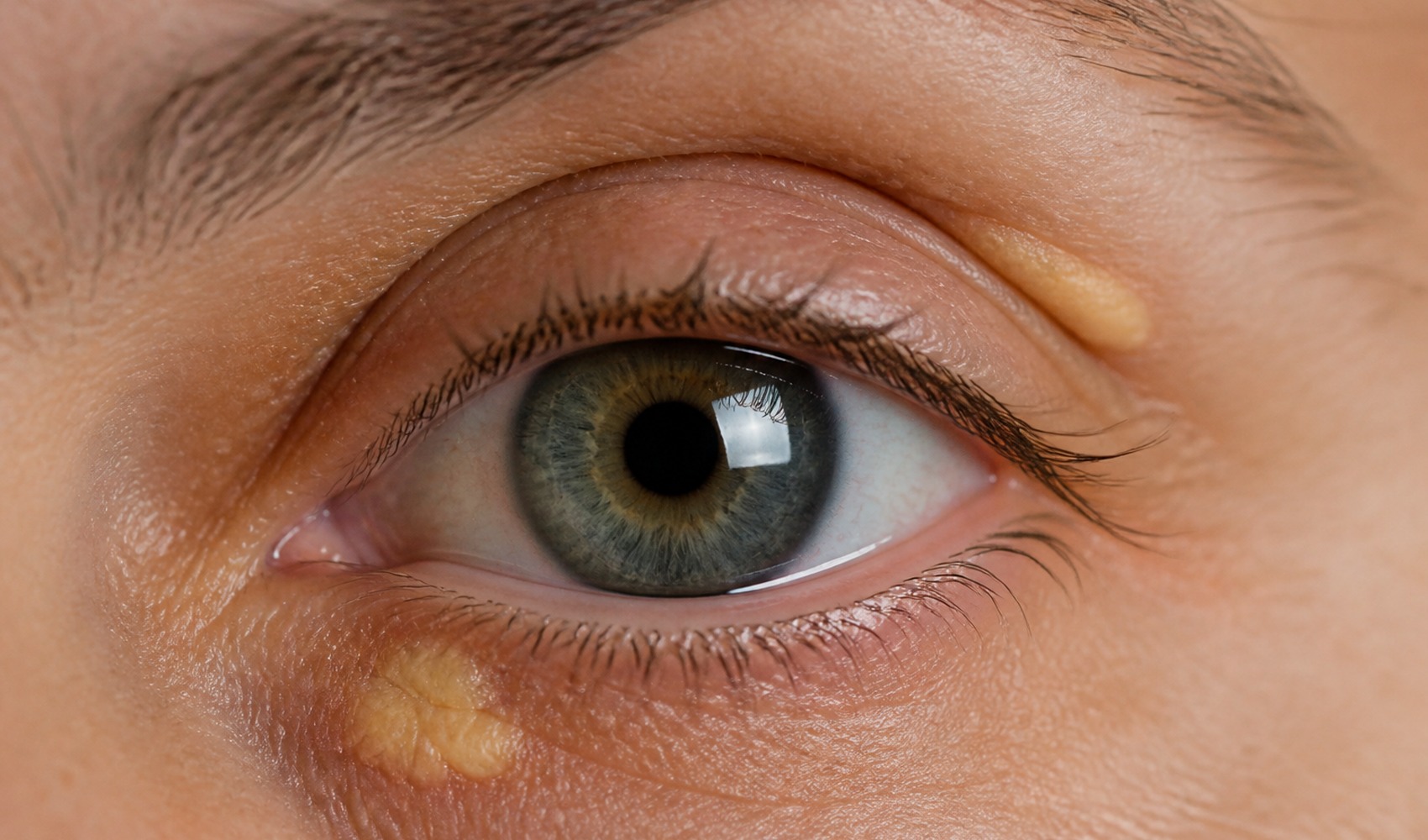
It has been reported that yellowish, slightly raised spots appearing on and around the eyelids should be taken into consideration regarding cardiovascular health. In a study published in the journal Atherosclerosis, it was determined that individuals with these formations, known as xanthelasma, had higher rates of heart attack, stroke, and transient ischemic attacks compared to the control group.
Xanthelasma is generally defined as pale yellow spots seen around the eyes. These formations occur as a result of macrophages, cells involved in the immune system, becoming filled with cholesterol and other fats. Although frequently associated with high cholesterol levels, it is noted that blood cholesterol does not always test high in every case of xanthelasma.
Plaques formed by the accumulation of fat and cholesterol inside blood vessels can narrow blood flow, leading to the process of atherosclerosis. Atherosclerosis is cited as one of the primary causes of risks linked to serious outcomes such as heart attack and stroke. Since this process often progresses for a long time without showing symptoms, early warning signs are important.
FINDINGS OF THE RESEARCH
In a study conducted by researchers from Stanford University, the health data of 17,925 people diagnosed with xanthelasma were compared with an equal number of people in a control group. In the first year of follow-up, it was determined that 1% of people with xanthelasma had a heart attack. In the control group, this rate was recorded at 0.35%.
The stroke rate was 0.95% in the xanthelasma group and 0.3% in the control group. The rate of transient ischemic attack, also known as a "mini-stroke," was found to be 0.6% in people with xanthelasma and 0.19% in the control group.
Researchers pointed out that although the rates remained low at a general level, the risk in people with xanthelasma was several times higher compared to the control group. It was reported that while the difference decreased slightly over time, serious heart and cerebrovascular events were still seen more frequently in the xanthelasma group during 5 and 10-year follow-ups.
The study did not conclude that xanthelasma alone causes heart attacks or strokes. However, experts stated that these spots around the eyes could serve as a warning for undiagnosed or insufficiently controlled cardiovascular disease risk factors.
According to the research, evaluating people with xanthelasma for cardiovascular health at an early stage may help identify underlying risk factors.
News Source: 12punto
Most Read

Increased rates for mandatory traffic insurance have begun

Message from Fenerbahçe players to İsmail Kartal

Unexpected crisis in Yeni Parti before the convention

Erdoğan: 'There is no situation where a villa will be allocated'...

Plan for Scotland, Wales, and Northern Ireland to break away from the United Kingdom

The problem is not Balbay’s words, but his identity

The hours-long journey between the two provinces will drop to 2.5 hours

The dust on the horse's nose and the religion that puts to sleep

Trump announces 'Russia and Ukraine have reached an agreement'

The civilian and media wings of the conspiracy must also be investigated