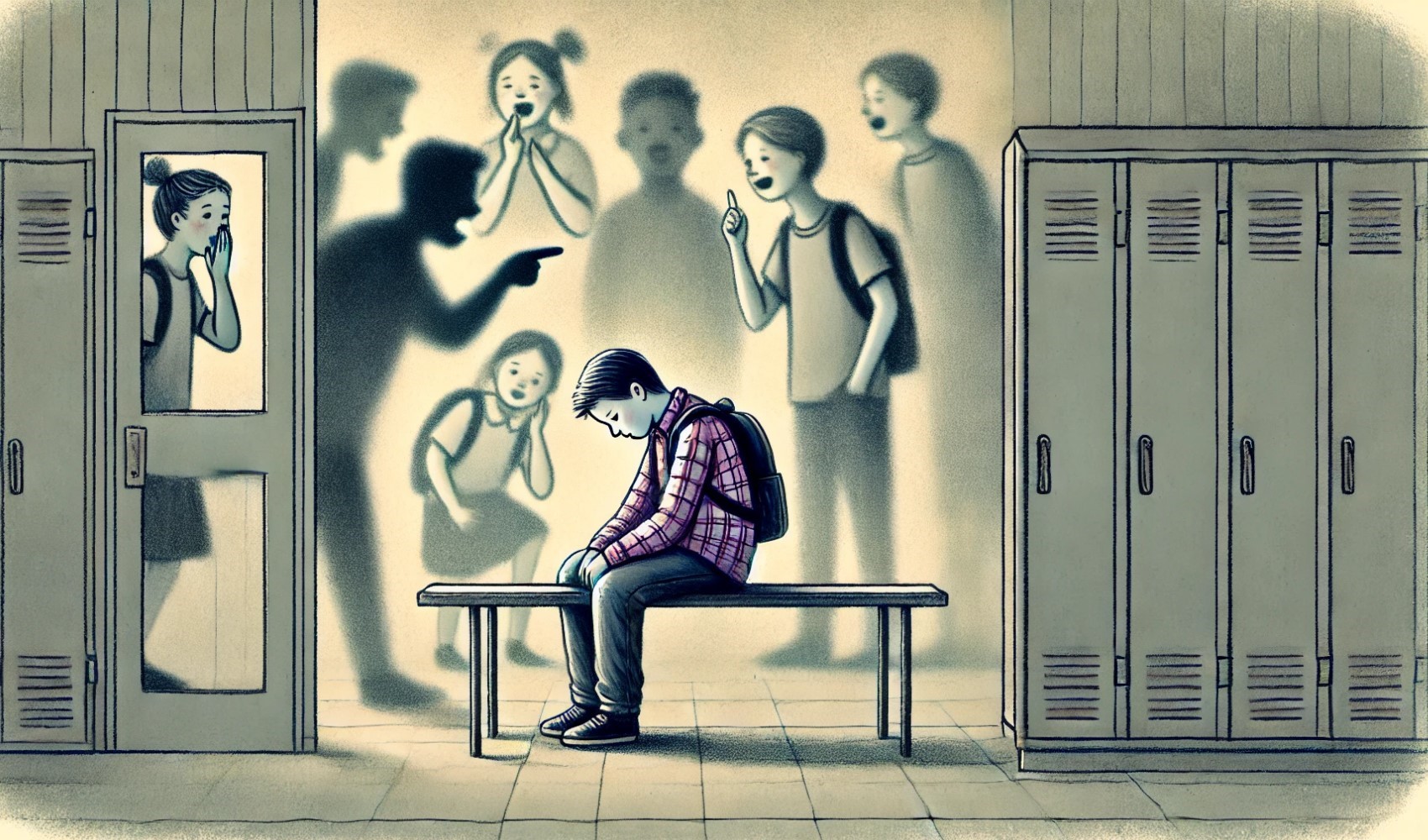
Peer bullying, which is increasingly common among children and young people, stands out as a significant social problem that negatively affects their school success and social lives.
According to 2022 data from the Turkish Statistical Institute (TÜİK), nearly 30 percent of children between the ages of 6 and 17 in Turkey are subjected to bullying several times a month.
With the widespread use of technology, cyberbullying is also at the forefront of these problems. Experts state that parents and educators need to be careful about this issue.
WHAT IS PEER BULLYING?
A child pressuring another child—whom they perceive as unable to defend themselves—verbally, physically, emotionally, or socially is defined as "peer bullying."
This bullying can take on physical, emotional, verbal, social, cyber, and even sexual dimensions.
According to the World Health Organization (WHO) study titled "Health Behaviour in School-aged Children," one in every six adolescents is exposed to cyberbullying. Actions such as malicious messages, unauthorized shared images, and posts on online platforms are evaluated within this scope.
11 SIGNS OF BULLYING
Certain changes can be observed in the behavior and life of a child who is being bullied by their peers. These signs include:
- A decrease in motivation to go to school,
- Loss of valuable belongings,
- Damage to personal items,
- A desire to leave social media groups,
- Avoiding participation in various activities,
- Unexplained bruises and marks,
- Using negative expressions about themselves,
- Giving up activities they once enjoyed,
- A decrease in self-confidence,
- Withdrawal,
- A decline in academic success.
PARENTS MUST BE VERY CAREFUL
It is recommended that parents closely monitor their children's circle of friends, how they spend their time at school, and their social relationships.
Since children often do not share the bullying they experience on their own, catching the clues is of great importance. Furthermore, it should not be forgotten that children who bully also need support.
Underlying these behaviors may be family problems, environmental factors, or negative experiences from the past.
Providing children with a sense of security and making them feel loved unconditionally is an important step in mitigating the effects of bullying situations. Additionally, it is necessary to cooperate with school administration and approach problems in a solution-oriented, rather than accusatory, manner. Parents bear a great responsibility in raising individuals who have strong empathy skills and respect for rights and freedoms.
News Source: 12punto