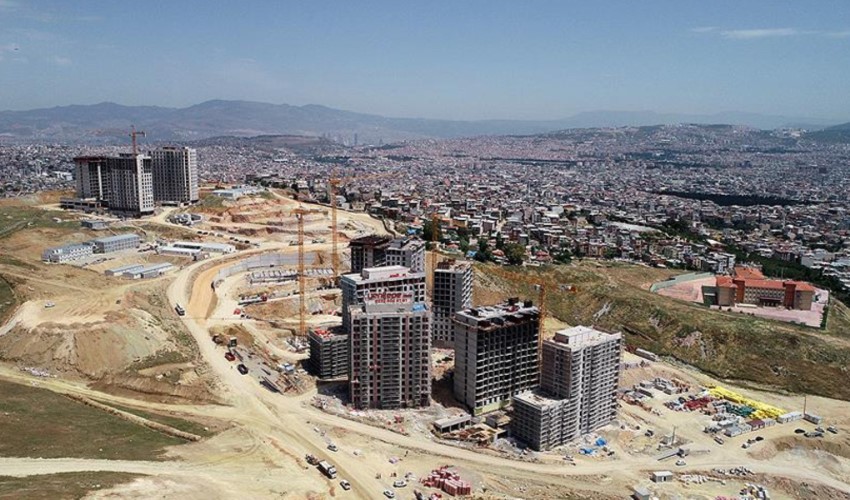
Following the earthquakes centered in Kahramanmaraş on February 6, 2022, the importance of proper urban transformation has once again come to the fore. However, as elections approach, urban transformation has begun to turn into a trendy buzzword rather than a matter of principle. Dr. Nebil İlseven wrote the 4 fundamental principles of urban transformation for 12punto.
İlseven's article is as follows:
When a subject related to social life gains the quality of a "trend," and especially when it starts to be used as a "populist sweetener"—seen as an indispensable ingredient for all sorts of promises and claims during an election period—the most vital issues become trivialized. On the road to the upcoming local elections, the subject of Urban Transformation is becoming the very subject of this kind of trivialization. An issue that requires holistic programs with a social approach is being brought to the agenda as a convenient "shortcut" in the eyes of voters who are looking for a way out to secure their future to some extent in the environment of despair they have been pushed into. This attitude is wrong; it is a tragic stance for all officials and authorized candidates, starting from the candidate who appears most qualified, who cannot perceive, evaluate, or ignore the issue beyond the headings of "zoning regulation," a construction business matter, the renewal of buildings, or the physical resistance of spaces.
As the process progresses, it is inevitable that the statements flying around the political scene regarding Urban Transformation will turn into flashy promises and cause serious confusion. The models brought to the agenda here contain elements that increase the density of cities, deepen infrastructure problems, necessitate new infrastructure needs and inefficient public investments for them, and damage harmony with the environment and social life.
In this form, the proposed "solutions" will cause both high-cost expenditures for the public and social alienation that is impossible to reverse. Moreover, special zoning regulations and the opportunities based on them, which at first glance seem attractive to individuals and are thought to facilitate the solution of the problem, create results that generate significant wealth transfers to individuals using public authority. This will damage feelings of social justice and equality and will erode social peace over time.
The indisputable, sole, and unique purpose of Urban Transformation is "to save lives." First and foremost, Urban Transformation is a "risk management" process that aims to protect "the lives of all living beings" in the pre-disaster period, before destruction and loss occur. This approach expresses a systematic that is very different from the "disaster management" practices that come into play after a disaster. Is this definition sufficient on its own? No. Urban Transformation is also evaluated as a process that targets social development and welfare with the goal of "sustainable cities."
In the first stage of Urban Transformation, it is essential to design and renew physical spaces exposed to disaster as durable (not just resistant). The ultimate goal here is not to produce "buildings that do not collapse," as seen in examples abroad, but to produce "structures that do not kill." The second critical issue is the use of durable building materials that are suitable for human health, provide energy savings, are accessible with economic costs, in project applications. Finally, it is essential to have an approach that considers urban transport efficiency for developments entering urban transformation at the parcel or island scale, is not open to the exploitation or waste of natural resources, but on the contrary, is in harmony with living nature, and evaluates green spaces and especially the parking needs of vehicles within the integrity of the plan.
When the subject is described with these features, the administrative structuring regarding implementation also emerges as a critical factor. The effective management of Urban Transformation processes is a matter of "scaling." While some of the existing administrative structures have suitable economic and administrative scales for Urban Transformation, it is a fact that many management units remain below or far above the appropriate (optimum) scale band. Therefore, in order to carry out Urban Transformation works in a healthy and purposeful manner, it is necessary to determine areas with a certain number of housing, population, and area characteristics, and to carry out and follow up the works specifically for these areas. This fact points out that the subject is essentially an area of interest and responsibility for local governments at the implementation stage. In regions that remain out of scale, developing different types and features of urban transformation projects under existing local governments will make it possible to realize both resource utilization and purpose-suitability targets in a timely and efficient manner. The unique role of Local Governments in this regard stands out in the areas of "creating standards," "developing solutions," and "effective supervision."
At this point, another issue that needs to be emphasized is the financing dimension of Urban Transformation activities. Considering the liquidity circulating in financial markets, the banking sector, public resources, and the capacity and capabilities of existing official and private operating systems, this issue should be handled primarily as a "cash flow" problem. Studies based on this approach show that the resources required to create the building stock that needs to enter Urban Transformation in a real sense exist within the financial system. Putting these resources into use within the framework of certain principles and standards will not negatively affect the balances of the economy; on the contrary, it will also contribute to alleviating the economic burdens that large segments of the public are currently bearing under great distress.
As a result, approaches that put Urban Transformation into play as a political "shortcut," abstracting the subject from all its socio-economic and socio-cultural dimensions, and perceiving solutions as zoning plan regulations, construction projects, and wealth-acquisition opportunities, are approaches that completely ignore the main purpose of "saving lives." The 4 fundamental principles of Urban Transformation are the litmus test for policy proposals on this subject: Urban Transformation "Will Create Trust, Will Be On-Site, Will Be With Consensus, and Will Be Fast..." It is considered that these principles are also the key to creating Sustainable Cities where Social Peace and Welfare are realized.
News Source: 12punto