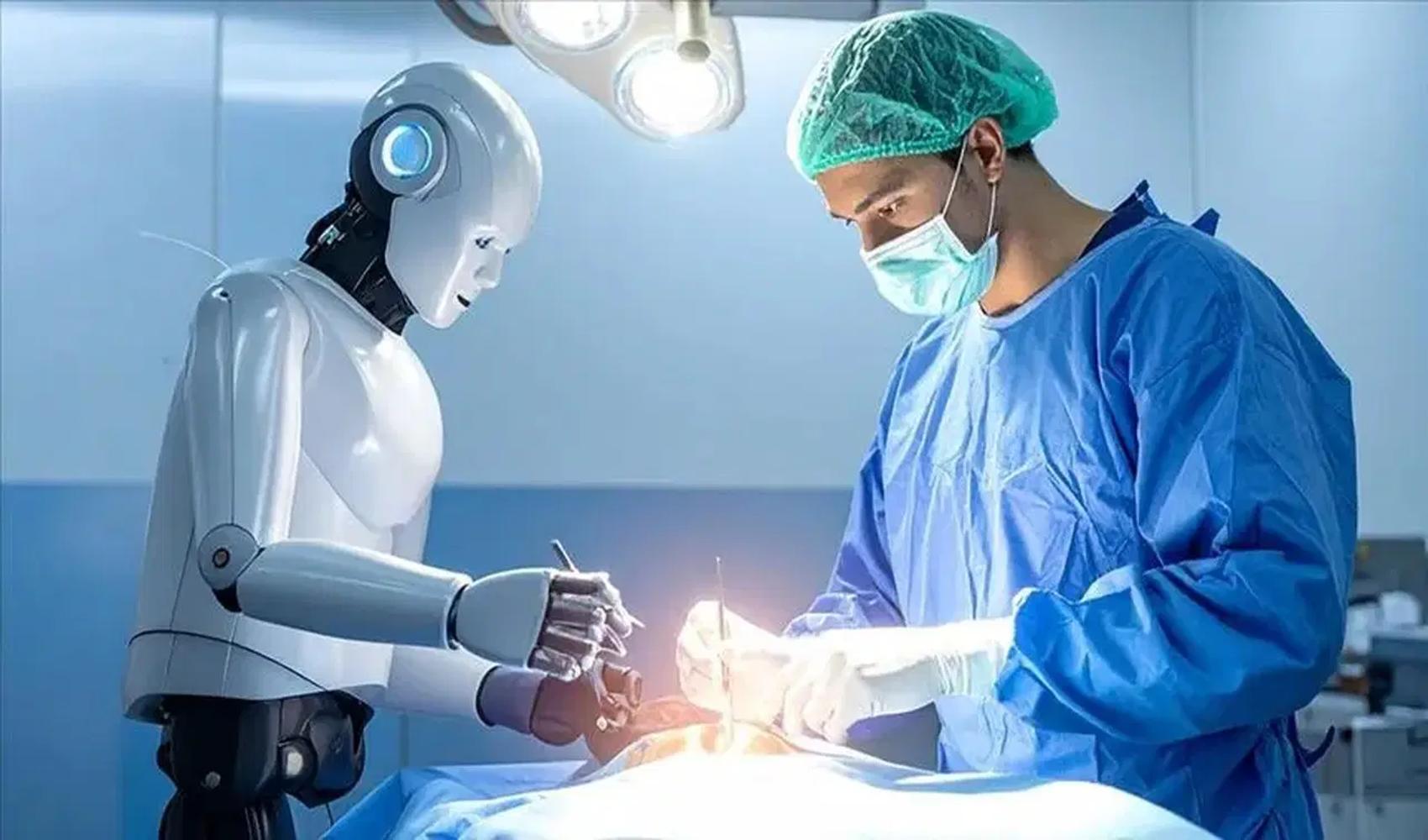
In the UK, 48-year-old Rhys Hibbert became the first patient in the world to undergo a brain surgery where an artificial intelligence system provided real-time support to surgeons. Hibbert, a father of two living in Bedfordshire, was operated on at University College London Hospital to remove a tumor from his pituitary gland.
Doctors stated that if left untreated, the tumor could have led to vision loss. The system used in the operation analyzed images from the surgeons' camera in real time, marking areas where critical blood vessels and nerves that are not directly visible were likely to be located.
Highlighting the importance of the technology for patient safety, Hibbert said, "There are no road signs inside our heads."
Hibbert's health problems began about 18 months ago. Hibbert, who was described as having led an active life previously, lost consciousness and had a seizure during a walk. Examinations revealed an 11-millimeter benign tumor in the pituitary gland located at the base of the brain.
The pituitary gland is known to play a role in regulating hormones that affect basic functions such as growth, metabolism, and blood pressure. However, the gland's proximity to the carotid arteries and optic nerves makes surgeries in this region extremely delicate. As the tumor pressed on his optic nerves, Hibbert's peripheral vision narrowed; complaints such as loss of balance, fatigue, and dizziness emerged.
HOW DID THE SYSTEM WORK?
The operation was performed with the help of an endoscope, a thin camera system advanced from the nose to the base of the skull. The fact that the tumor was located behind bone tissue and a tough membrane made it difficult for surgeons to determine the safest point of intervention.
In such surgeries, physicians usually benefit from images taken before the operation. However, because anatomy varies from person to person, the location of critical structures can differ during surgery. The new system, on the other hand, evaluated live images on a second screen, tracked surgical instruments, and marked risky areas.
The way the technology works is likened to facial recognition systems on smartphones. However, this system does not focus on recognizing faces, but rather on blood vessels, nerves, and other anatomical structures that are often not directly visible inside the body.
Researchers trained the AI on videos of hundreds of pituitary tumor surgeries. In the videos, blood vessels, nerves, and critical tissues were marked by experts. Prof. Hani Marcus from the medical team stated that the system was trained with more surgical footage than a surgeon could see in their entire professional life, describing the AI as an "experienced second pair of eyes."
Nevertheless, control of the operation remains entirely with the surgeons. The AI only provides support and guidance; doctors make the final decisions regarding the surgery. The research team aims to develop a "ChatGPT-like" system in the long term that can provide opinions to surgeons but leaves the decision to the physician.
Broader clinical trials are planned for the study, which is funded by the National Institute for Health and Care Research and Google. Researchers aim to evaluate the system's safety and its impact on surgical outcomes on more patients.
It was stated that Hibbert experienced a rapid recovery in his visual field after the surgery, his energy levels increased, and many of his pre-surgery complaints diminished. Describing the change he experienced after the operation, Hibbert said, "It gave me my life back."
News Source: 12punto