


Has the world come unhinged?



The world has begun to take on an increasingly chaotic state. The tensions that emerge at times as street protests and at other times as hot conflicts are, in fact, indicators of a major transformation. The main reason for the current confusion is that the unipolar system formed after the Cold War has expired, and the birth pangs of a new order to replace the old one have become apparent. Indeed, as the established order undergoes deconstruction, the nails are scattering, as is often seen during transition periods.
Beyond the ongoing wars in Ukraine or West Asia, recent developments in Europe are particularly noteworthy. The protests that began with the objections of high school students in France have turned into a total social outcry. The political mechanism is unable to bridge the gap between the ruling elites and the people. As state authority is shaken, security cannot be maintained in cities. Moreover, the events are spreading step by step to other European countries, starting with Belgium. We last witnessed such mass actions in 2019 with the 'Yellow Vests' incident. Objections to a system that constantly favors a narrow, privileged group and is now on the verge of bankruptcy had reached the point of toppling governments. Had the COVID-19 pandemic not intervened, perhaps the result would have been just that. However, this time, neither the influential circles that the neoliberal system has nurtured for years nor the chosen men of the global financial oligarchy, like Macron, have the power to reverse the course.
It is clear that difficult days await Europe, which transformed into a 'Union' status in the unipolar international system and had been floating in prosperity until recently. France is the visible face of the matter. In the background of the issue lies a familiar concept: The Debt Crisis! If you recall, in 2010, Europe's bankrupt economies, led by Mediterranean states, faced the risk of collapse. Germany, the engine and industrial giant of the European economy, had assumed the role of savior. Today, the situation is even worse. The debt-to-GDP ratios of countries have reached the heavens. For example, France's debt is around 125% of its national income. The more dire part of the matter is that there is no longer a productive industrial giant like Germany to save them, because the once-solid German economy is now a shadow of its former self due to high energy costs.
The fundamental contradiction of the EU is that while there is a common monetary policy with the euro, there is no common fiscal policy. That is, money is printed in one center, but tax collection and spending are under the authority of the states themselves. Is this system sustainable? Yes, in times of prosperity, but no in times of hardship! Even if this year is overcome, 2027 is an election year in Europe, and a structural transformation seems inevitable. It is not for nothing that the AfDs and Le Pens are rising. In short, the EU is approaching its finale!
On the other hand, it is an undeniable fact that the balance of power in the world is shifting from the Euro-Atlantic to the Asia-Pacific. So much so that even the West's centuries-old monopoly on technology production has now been broken by Asian countries. The US, which is also a Pacific rim nation, sees that the greatest challenge to itself could come from China and targets this country as a global rival. It is not entirely wrong to do so from its own perspective. Because when all military, economic, and geopolitical parameters are considered, only China can cope with the one-time hegemon, the US, in every field. While Europe still has a significant total economic size, it is a military dwarf, and Russia, which has a massive geographical advantage in addition to its significant military power, is economically weak.
We are going through turbulent times. It is not for nothing that the discourse that the rule-based international order has ended has emerged as the unipolar system based on US hegemony comes to an end. The new era began long ago. For now, trade and technology are at the center of the increasingly heated competition between the US and China, which are the world's largest economies by nominal dollar price and Purchasing Power Parity calculation, respectively. Chinese firms, which have taken the lead in electric vehicles, renewable energy, and telecommunications, can compete with their American counterparts in every field of the digital age we are going through, from artificial intelligence to space research. Currently, phenomena such as the shaking of the petro-dollar system and the internationalization of the yuan constitute the commodity and financial dimensions of the competition. Furthermore, in contrast to US-based international organizations like the World Bank and the IMF, institutions such as the China-led Asian Infrastructure Investment Bank and the BRICS New Development Bank confirm that the capitalist system is dual-centered with different models.
In the field of security, it is seen that different actors are developing capabilities on different scales. In addition to concepts such as conventional forces and first/second strike capability proportional to the number of nuclear warheads, the capability of new-generation air/space systems is now coming to the fore. Rather than the size of defense spending, the sustainability of production in certain types of lethal weapons and the applicability of new-generation technologies in the field are becoming increasingly important. In this context, perhaps the most striking development in recent years is seen in hypersonic missiles. In fact, with the proliferation of these missiles, it is also seen that aircraft carriers are losing their former importance in overseas power projection. While China leads in this field with its 'Dongfeng' systems and transfers some basic missile technologies to various actors, Russia makes a significant claim with its own hypersonic missiles. The US, on the other hand, is trying to close the gap. Air defense and UAV systems also emerge as another area where countries compete fiercely. Instead of excessively costly attack aircraft, it is accepted that UAV elements, which have much lower costs but are effective, are more functional in today's conflicts.
Although the US and China do not clash directly, the parties come face to face indirectly in conflicts in different regions. For instance, while the US's open support for Israel is known, it is also known that China protects Iran and the Houthis. These wars can produce results on a scale that will affect even international trade routes beyond regional geopolitics. Indeed, the closure of the Red Sea for the first time by Iran-backed Houthis in response to Israel's Gaza massacre, and now the shift of attention to Bab el-Mandeb, do not appear independent of the interests of the two superpowers mentioned above. If these wars are evaluated as precursors, it seems realistic to state that the world is moving step by step toward a final showdown between the US and China in the Pacific. A showdown does not necessarily mean a direct military conflict between the two. Another point that should be underlined is that not every development is shaped solely according to the interests of the two giants, and that other states have also become players with the capacity to direct the course, unlike the Cold War bipolarity. This is, in fact, the unique character of the renewed world system.
To sum up, the unipolar order based on US hegemony in the world has ended, and the international order has become increasingly chaotic with the spread of regional conflicts and social unrest during the transition process. In other words, the plain truth is that the world as we know it has come unhinged! A new multi-equation international order has emerged in which the US and China are the dominant powers, some regional or supra-regional powers are ranked behind them, and the rest position themselves accordingly. It would not be wrong to define this order as geopolitical multipolarity within a dual-centered capitalist system. Here, great power competition has become the new norm. However, unlike past experiences, it is likely that periodic collaborations will come to the fore in this order, rather than permanent alliances that allow the greatest power within a camp to completely control the others.
It is imperative for Turkey to reconsider its geopolitical position according to these changing conditions. What is happening right now is the exact opposite: a return to the old, that is, to Cold War paradigms. Due to the government's wrong policies and dependency relationships, the country seems to have lost its course. While there is an option to follow a national path with an effective neutrality doctrine between blocs, as in the foreign policy of the Atatürk era, indexing the country's fate to the West, which is losing its power, is Ankara's great contradiction. While the world has come unhinged, unfortunately, Turkey's has been lost! It seems inevitable that the current choice will bring a heavy bill to the country in the coming years.
Note: Those who are curious about the continuation of the discussion here and where we came from and where we are going can take a look at my book 'Turkey in the Renewed World', which was published by Kırmızı Kedi Publishing last year.
Would you like to get notifications about new developments and save news?
- NotificationsNew developments and breaking news
- SaveNews is stored in the app
Most Read

Politics without ideology
Turkish Airlines, get a grip
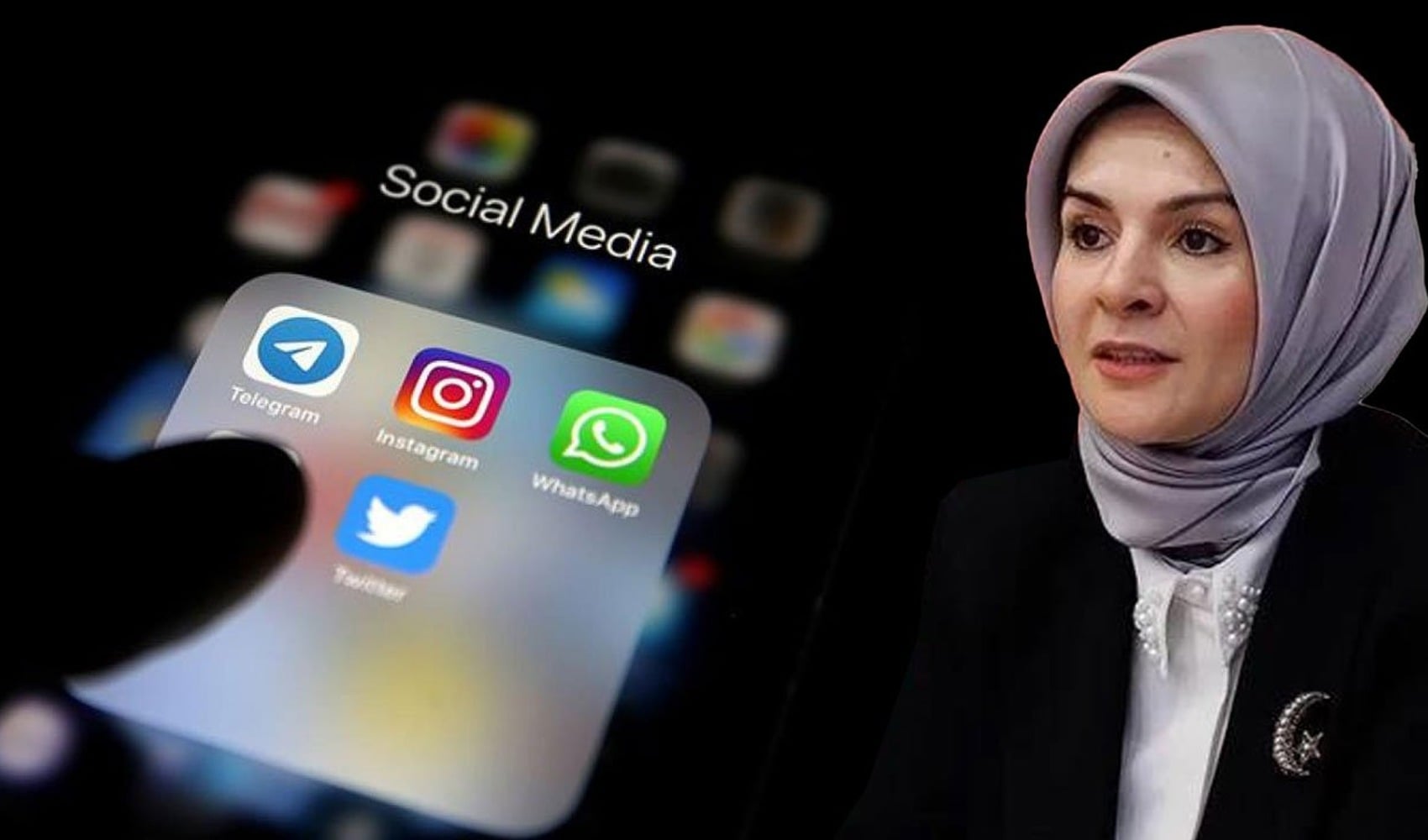
Age verification on social media will be conducted via e-Devlet
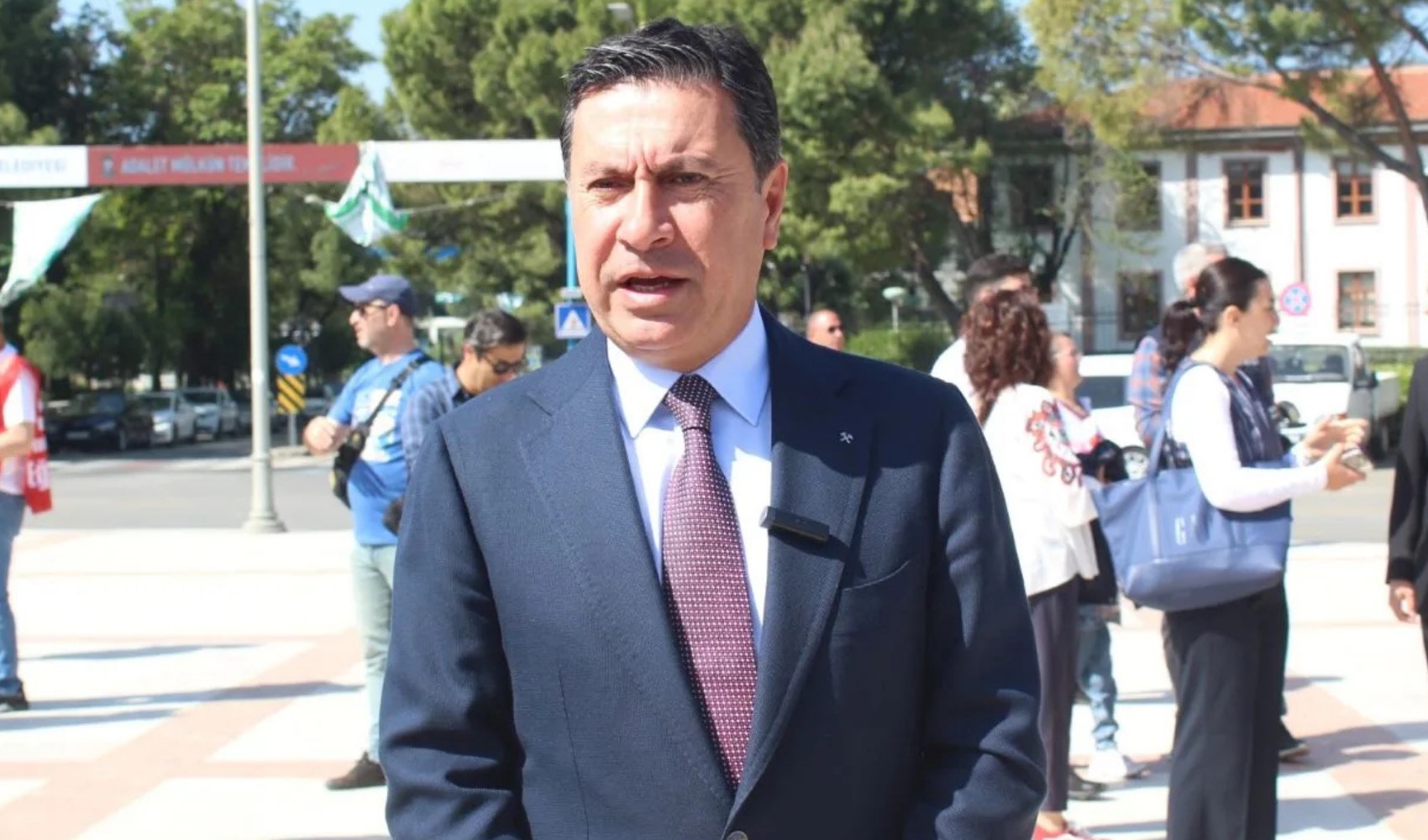
Ahmet Aras, rumored to be joining the AKP, speaks out
Has the world come unhinged?

The ex-husband of Atilla Taş's daughter Sezen speaks out

Orhan Kemal’s 'Luminous Realist' Leftism

Can planning and the price mechanism be siblings in the age of artificial intelligence?

7 coffins unearthed in governor's residence garden

New season begins on Güldür Güldür Show: A Mert Fırat surprise