


Can planning and the price mechanism be siblings in the age of artificial intelligence?



In my article titled “Why did Turkey collapse, and how can it be rebuilt?”, published on 12Punto on April 26, 2026, I made the following note while discussing what kind of economic order could replace the neoliberal system:
“The possibility of state capitalism evolving into a new model of communism at a later stage is a separate topic that should be addressed alongside the price mechanism in the age of central planning and artificial intelligence. I am noting this in my agenda to write an essay on it later.”
It seems today is the time for it.
In the previous article, I discussed a transition order that considers the social state, planned development, private enterprise, and fair distribution together, and I ended the article with two questions:
Plan or market? What kind of price mechanism in the age of artificial intelligence?
While seeking answers to these questions, we can neither accept the market as a perfect mechanism that solves all problems on its own, nor can we ignore the problems of past central planning experiences.
The addition I want to make to this discussion is the possibility that artificial intelligence might produce different solutions to the problems faced by both systems. In the age of artificial intelligence, can planning and the price mechanism be two compatible siblings instead of two opposing ones?
PLANNING IS THE WILL TO SHAPE THE FUTURE
When I say planning, I am not talking about re-establishing the exact same central planning system as in the Soviet Union. However, one must acknowledge the planning experience that yielded significant results in the early periods of the Soviet Union and also served as an example for Turkey's industrialization drive in the 1930s.
One of the main problems the Soviet system faced in later years was that central planning could not effectively operate the information and price mechanism. These problems were among the economic factors that contributed to the dissolution of the system. However, identifying the concept of planning solely with the Soviet experience causes us to overlook the true meaning of the plan.
Making a plan is trying to shape the future instead of waiting for what will happen to us and accepting the results that emerge. It is an effort to determine one's own destiny.
And every plan is also a system of preferences.
From which sources will we produce energy? In which sectors will we reduce foreign dependency? Which technologies will we invest in? How will we develop agriculture, industry, and cities? What kind of balance will we establish between our current consumption and the needs of future generations?
None of these are decisions that the market alone will make. How the created wealth is distributed is as much a subject of planning as the efficient use of resources.
This is why I attach great importance to the concept of the “Right to Plan,” which Prof. Dr. Bilsay Kuruç has been trying to bring back to the agenda for years. Based on the discussion opened by Kuruç and the Planning for the 21st Century group, I also wrote in my book that planning needs to be rethought in the age of data and information. (1)
Planning is not just the state's right to intervene in the economy. It is the right of society not to leave its future to coincidences and the results that will spontaneously emerge from the market.
So, how will we determine production quantities, the distribution of resources, and prices while planning our future? Here we come to the old debate of the 20th century.
THEY FOUND ADAM SMITH'S INVISIBLE HAND AND BROKE IT
The market economy has a theoretically very powerful mechanism: Price.
If a product becomes scarce, its price rises. When the price rises, the producer is directed to produce more. When production increases, the price falls. The scattered information possessed by millions of producers and consumers is transformed into economic decisions through the price mechanism.
The idea that individual interests can contribute to social benefit, which Adam Smith described with the “invisible hand” metaphor, was later associated with the functioning of the price mechanism in economic theories.
Price does not just show how much a product will be sold for. It also provides information to the producer and the consumer. It signals which product is becoming scarce, which one has increased demand, and where resources can create more value.
That is what the theory says, but this mechanism does not work in its pure form as described.
There are monopolies. There are oligopolies. There are financial markets. There are speculators. Big corporations have price-setting power. There are central banks' monetary policies, and states' tax and incentive policies.
I expressed this years ago on another occasion as follows:
They found Adam Smith's invisible hand and broke it.
In monopolistic and oligopolistic markets, the price is not always the price produced by free competition. Therefore, the price mechanism does not always direct resources to the most correct place for society.
Moreover, the market has another fundamental problem. As we discussed in the previous article, the market makes decisions not according to the needs of society, but according to demand supported by purchasing power.
A person's need for housing is not sufficient from the market's perspective. They must also have the income to buy that housing or pay the rent. The same problem applies to health and education.
For this reason, although the price mechanism produces very important information in the distribution of resources, it cannot be the sole foundation of a system that will meet all the needs of society.
The socialist economies of the twentieth century tried to solve the problem from the other extreme. They replaced the market with central planning and market prices with prices largely determined from the center. That, too, could not produce a sustainable solution.
It was not possible for a few thousand bureaucrats to constantly and accurately calculate what hundreds of millions of people needed, where, and how much; and in what quantity and at what price millions of goods and services should be produced and offered to the market. To give an example, I saw it during my visit to Moscow in 1990. Almost all of the men's shoes in a shoe store were size 43 and brown…
Moreover, the problem was not just calculation capacity. People's preferences were changing. The local information possessed by producers reached the center incompletely or with delays. Prices determined from the center did not always accurately reflect shortages and production costs.
The market was flawed, and so was central bureaucratic planning.
China today is implementing a different model that uses elements of both these systems together. The market and the private sector operate in a very large part of the economy, and a significant portion of prices are formed in the market. However, the state determines the strategic direction with five-year plans; it uses public power in infrastructure, finance, energy, and strategic technologies.
I discussed the freedom, power, and control problems of this model in the second essay I wrote on China. Our question here is different.
Can the problem that could not be solved in the 20th century between market and plan be solved in the 21st century?
THE THIRD PLAYER: ARTIFICIAL INTELLIGENCE
Soviet planners did not have today's technology. Today, billions of economic transactions can be recorded in seconds. Massive amounts of data are produced in countless fields such as production, inventory, consumption, energy use, logistics, population movements, health, and education.
Moreover, artificial intelligence does not just process this data. It can find relationships between them, make predictions, and calculate the likely outcomes of different options.
In fact, private companies have already started planning their own economic activities by utilizing these technologies. A retail chain is trying to predict how many bottles of milk will be sold in which store tomorrow. A shoe store can decide which colors and sizes of shoes to keep in stock. An airline calculates which seat on which flight to sell at what price with algorithms. Logistics companies plan millions of movements with computers. Factories optimize production and their inventories.
Of course, none of these are perfect. But the speed and scope of the planning that companies do at their own scale are developed to a degree that cannot be compared with the possibilities that planners in the past had.
Why shouldn't we use the same technology to plan the needs of society?
We can evaluate a country's housing needs, health and education infrastructure, energy demand, agricultural production, and industrial capacity with much more comprehensive data. We can compare the likely outcomes of different investment and distribution preferences in advance and see the deviations that arise during implementation more quickly.
However, I do not conclude from this that artificial intelligence will solve all the problems of planning.
Incomplete or incorrect data, the uncertainty of the future, people's constantly changing preferences, and the priorities of those who develop the algorithms can create new problems. Also, a company planning its own activities is not the same as planning an economy where millions of people live.
Artificial intelligence can neither predict the future perfectly nor does it have to collect all economic information in a single center. In contrast, it offers a new possibility that could change the planning debate of the past.
While planning the needs and resources of society, we do not have to surrender the price mechanism to either Adam Smith's broken invisible hand or the visible hand of a few thousand bureaucrats in a central planning office.
We can evaluate the price information produced by the market, production capacity, resources, and the needs of society much more comprehensively together with massive data processing systems and algorithms.
In such an order, while market prices continue to produce information for production and consumption decisions, planning can determine the long-term goals of society, strategic investments, and needs that the market cannot meet. Artificial intelligence, on the other hand, can strengthen the information flow, calculation, and coordination between these two mechanisms.
This approach does not mean an economy where all prices are determined from the center, nor does it mean that all decisions are left to the spontaneous results of the market.
Artificial intelligence can enable the plan and the market to work much more effectively as two complementary mechanisms, not as alternatives to each other.
But for this, we do not just need more powerful computers and more advanced algorithms. Because as we approach solving the old information problem of planning, we encounter a much more fundamental problem.
WHO WILL MAKE THE PREFERENCES?
At the beginning of the article, I said that the plan is also a system of preferences. Artificial intelligence can help us calculate what we could gain twenty years later if we invest more in education, what other areas we would have to give up if we allocate more resources to defense, and the likely outcomes of the options between increasing today's consumption and leaving more resources to future generations.
But artificial intelligence cannot decide which option we should prefer. Or rather, it should not.
Because deciding how to use society's resources, how the created wealth will be distributed, and in line with which goals the future will be shaped is not just a math problem. These are political and social preferences.
Moreover, as artificial intelligence strengthens planning, the economic and political power in the hands of those who make these preferences will also grow. Who that power is concentrated in and how it is controlled will become as important as the plan itself.
Then, new questions arise in the “Essays in the Age of Artificial Intelligence” discussion.
Who will make the plan's preferences? Who will control those who make the decisions? Is what we call democracy just going to the ballot box every four or five years and choosing administrators?
A strong democracy can only be possible with an effective and continuously functioning control system.
And in the age of artificial intelligence, is a “Dynamic Democracy” possible where citizens can continuously participate in decision-making and control processes?
We will seek the answer to these questions in the next essay.
(1) Prof. Dr. Bilsay Kuruç and Dr. Serdar Şahinkaya, Planning for the 21st Century group's “Right to Plan” conference dated November 12, 2022 https://21inciyuzyilicinplanlama.org; also Meriç Köyatası, Turkey's Factory Settings for the Twenty-First Century – Counter-Revolution in the Economy, p. 221
Would you like to get notifications about new developments and save news?
- NotificationsNew developments and breaking news
- SaveNews is stored in the app
Most Read

Politics without ideology
Turkish Airlines, get a grip

Age verification on social media will be conducted via e-Devlet
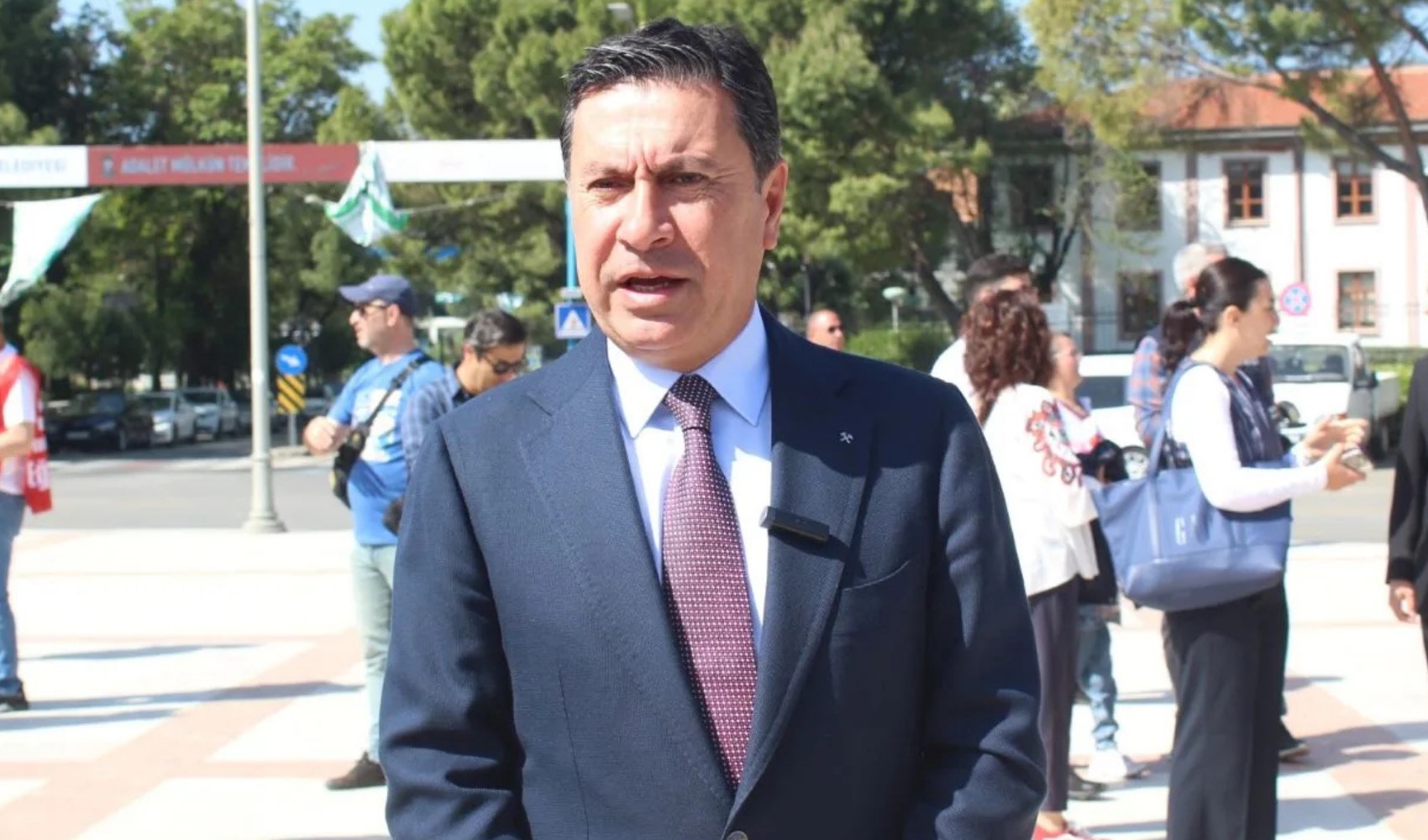
Ahmet Aras, rumored to be joining the AKP, speaks out
Has the world come unhinged?
Orhan Kemal’s 'Luminous Realist' Leftism

Can planning and the price mechanism be siblings in the age of artificial intelligence?

The ex-husband of Atilla Taş's daughter Sezen speaks out
Why did Atatürk want to dissolve the Parliament?
Cemil Tugay explains the behind-the-scenes of his transfer to the AKP