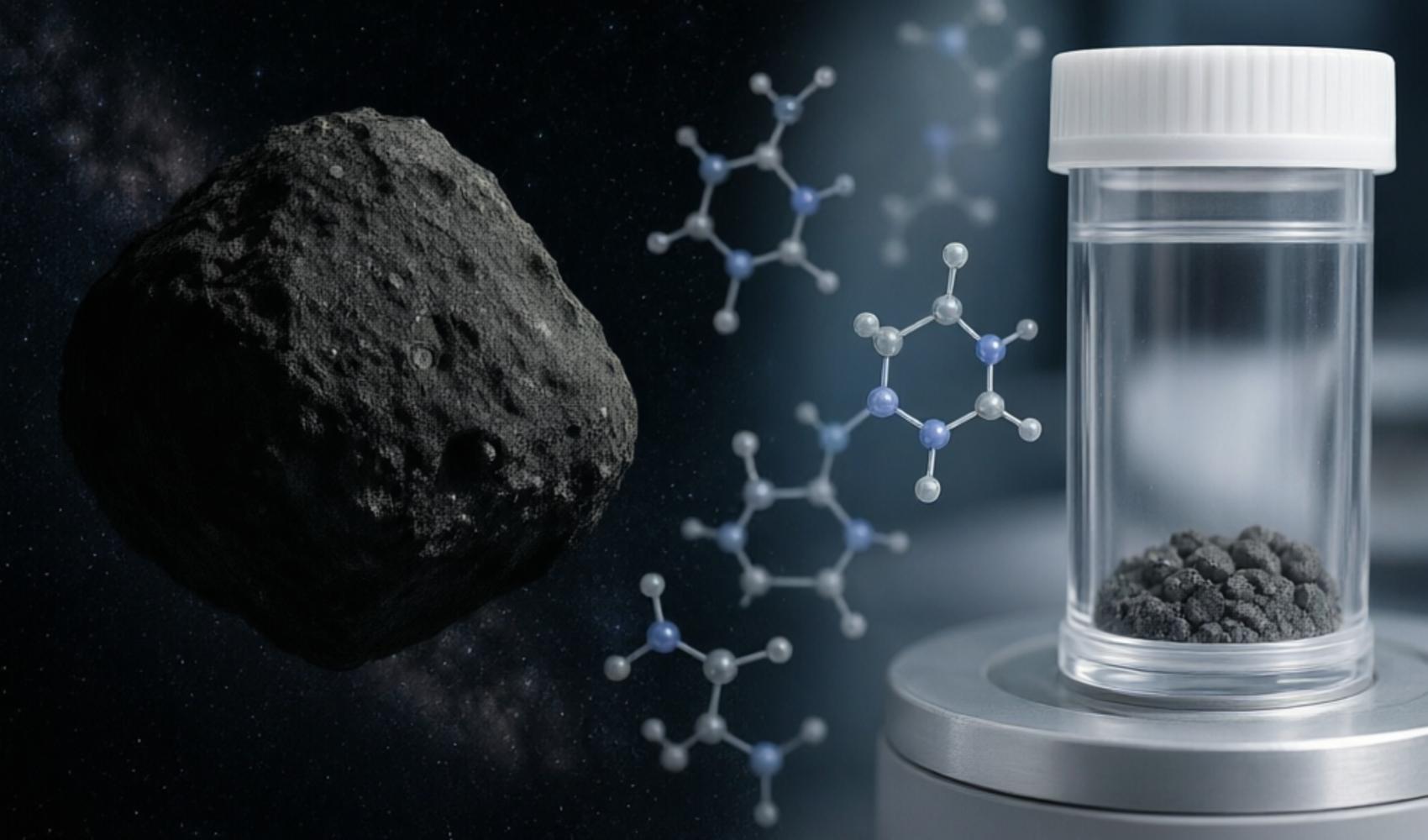
Samples brought to Earth from the asteroid Ryugu by Japan's Hayabusa2 mission have revealed a remarkable new finding in the debate over the origins of life. According to research published in the journal Nature Astronomy, all five basic nucleobases that make up the genetic code of DNA and RNA were detected in the samples.
The study reported that adenine, guanine, cytosine, thymine, and uracil molecules were found in the Ryugu samples. These molecules are considered the basic "letters" of DNA and RNA, which play a critical role in the storage and transmission of genetic information in living organisms.
Scientists have long been investigating whether the building blocks of life were formed solely through chemical processes on Earth, or whether they were transported to the young Earth via asteroids and comets. The results from Ryugu are cited as data that strengthen the possibility that these molecules may have formed widely in the early Solar System.
UNCONTAMINATED SAMPLES ARE CRITICAL
The Japan Aerospace Exploration Agency's (JAXA) Hayabusa2 spacecraft delivered a total of 5.4 grams of samples collected from Ryugu to Earth in 2020. The most important aspect of these samples is that they were transported to the laboratory without being exposed to Earth's atmosphere and environmental influences for a long time. For this reason, researchers can study the chemistry of the Solar System dating back approximately 4.5 billion years more reliably.
Initial signs of organic molecules in the Ryugu samples had been announced previously. A study conducted in 2023 announced the detection of uracil, which is found in RNA. The new study, however, was not limited to a single nucleobase and revealed that all five basic nucleobases necessary for the formation of genetic material were present in the samples.
Similar findings had been detected in some meteorites before. Various organic molecules were identified in the Murchison meteorite that fell in Australia and the Orgueil meteorite found in France, but the possibility of Earth-based contamination in such samples has always remained a significant question mark. Materials brought directly by space missions like Ryugu therefore carry a distinct scientific value.
The announcement that all five nucleobases were also found in samples collected by NASA from the asteroid Bennu points to a broader picture alongside the Ryugu finding. Carbon-rich asteroids are considered to be chemical "time capsules" remaining from the formation period of the Solar System.
The findings do not directly prove that life began outside of Earth. However, they make the scenario that some basic molecules necessary for life may have formed in space and been transported to the early Earth more plausible. This shows that the debate over the origin of life should be addressed not only with conditions on Earth but also with the early cosmic chemistry of the Solar System.
News Source: 12punto