

Artificial intelligence designs functional virus genomes from scratch for the first time: A debate on hope and safety in science
A Stanford team has produced 16 new bacteriophages capable of replicating in the laboratory. While the study offers hope for treatment, it has also brought biosecurity concerns to the forefront.



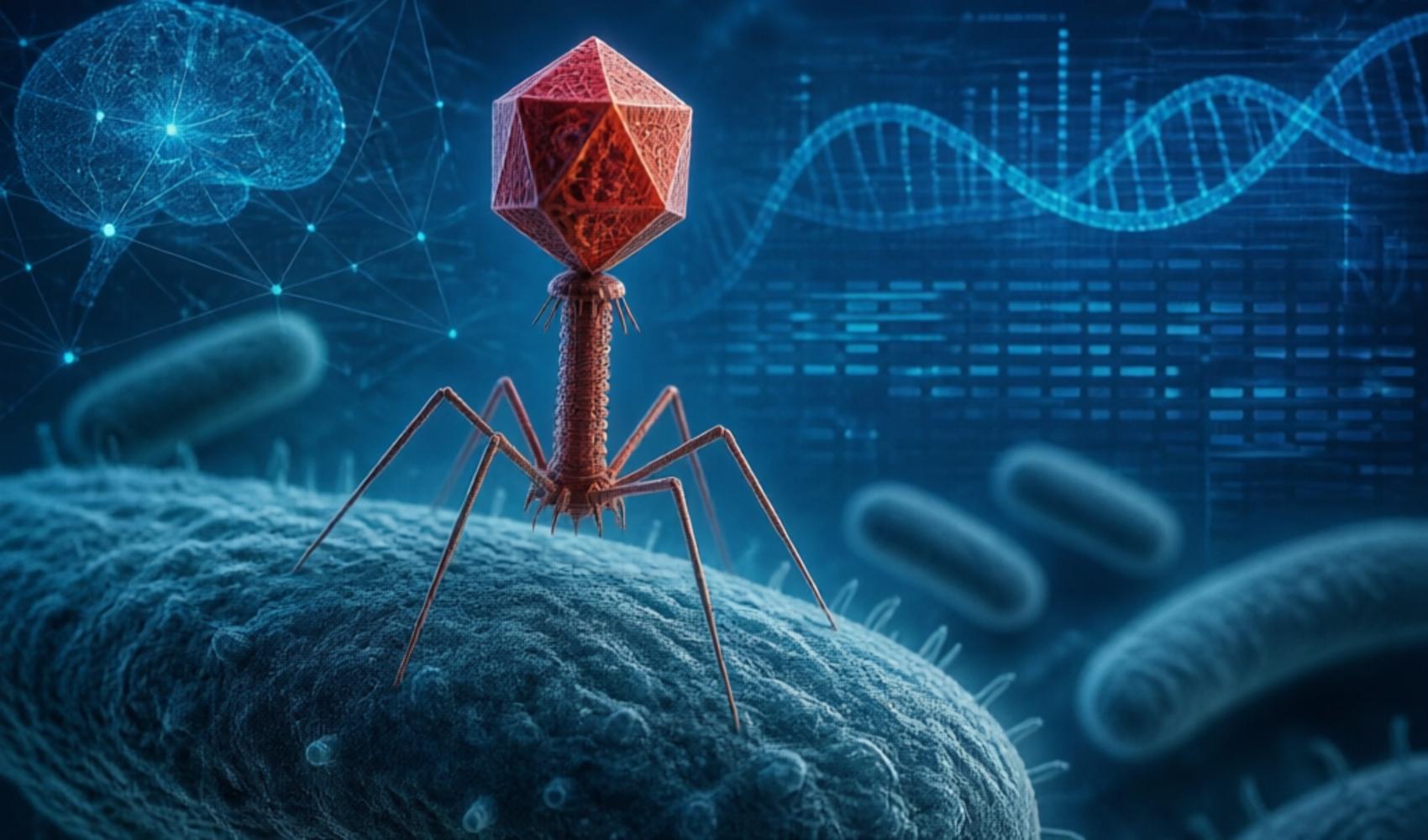
Researchers from Stanford University in the US have announced that they have used generative artificial intelligence models to design new virus genomes from scratch, and that a portion of these have become functional in the laboratory. The study is considered a significant threshold in the scientific world in terms of designing an entire genome map of an organism using artificial intelligence.
The viruses produced in the research were not designed as pathogens targeting humans; they were designed solely as bacteriophages that infect specific types of bacteria. For this reason, the team emphasized that the new viruses do not pose a threat to humans.

The study utilized artificial intelligence models named Evo1 and Evo2. Similar to the predictions made by large language models like ChatGPT on text sequences, these models were trained on genetic codes obtained from viruses, bacteria, plants, and humans.
Researchers selected the 302 most promising candidates from the designs produced by these models and synthesized them in the laboratory. As a result, it was determined that 16 new bacteriophages were effective in killing E. coli bacteria.
A NEW DOOR AGAINST ANTIBIOTIC RESISTANCE
Bacteriophages have long been on the agenda of scientists due to potential treatments that could be developed against antibiotic-resistant infections. The importance of the new study stems not only from the production of a specific type of phage, but also from demonstrating that artificial intelligence can take on more complex tasks in genetic design.
Brian Hie, an assistant professor at Stanford University, stated that generative artificial intelligence was used to design a complete genome for the first time. Prof. Marc Güell from Pompeu Fabra University in Spain described the study as a “very important milestone” and noted that it shows “for the first time in history, biology is beginning to be designed via computer.”

BIOSECURITY WARNING
However, the development has also brought the security dimension of synthetic biology back to the agenda. Dr. Thomas Inglesby and Dr. Moritz Hanke from the Johns Hopkins Center for Health Security wrote that the findings published in the journal Science raise “urgent biosecurity and biosafety questions.”
The two experts warned, “The issue is no longer whether generative virus genome design will exist, but whether it can be used without causing serious harm.” They also emphasized that the design of new viruses with the potential to cause disease should not be pursued.
The researchers, for their part, stated that as part of safety measures, they removed viruses that could infect complex organisms from the training database, worked on phages instead of viruses that infect humans, and conducted the experiments under safe laboratory conditions.
Scientists also remind us that viruses are not considered biologically alive. While a phage genome is approximately 5,400 base pairs long, the smallest living cell genome reaches approximately 500,000 base pairs. The human genome, on the other hand, consists of approximately 3 billion base pairs. Therefore, larger scientific steps are required for artificial intelligence to design living organisms.
News Source: 12punto
Most Read

When there is the terrorist leader to talk about, who is Mansur Yavaş anyway!..

Melis Sezen revealed her monthly income in her statement

Justice Minister Akın Gürlek announced

Time to leave Istanbul

beIN Sports responds to reactions regarding Okan Buruk on live broadcast

Tensions flare in Madrid derby

Microphones are open for prayer, closed to justice

Is the foreign agent law in effect?

From 1453 to 2026: As the West's 500-year world system comes to an end

Amedspor's victory celebration turns into a fire