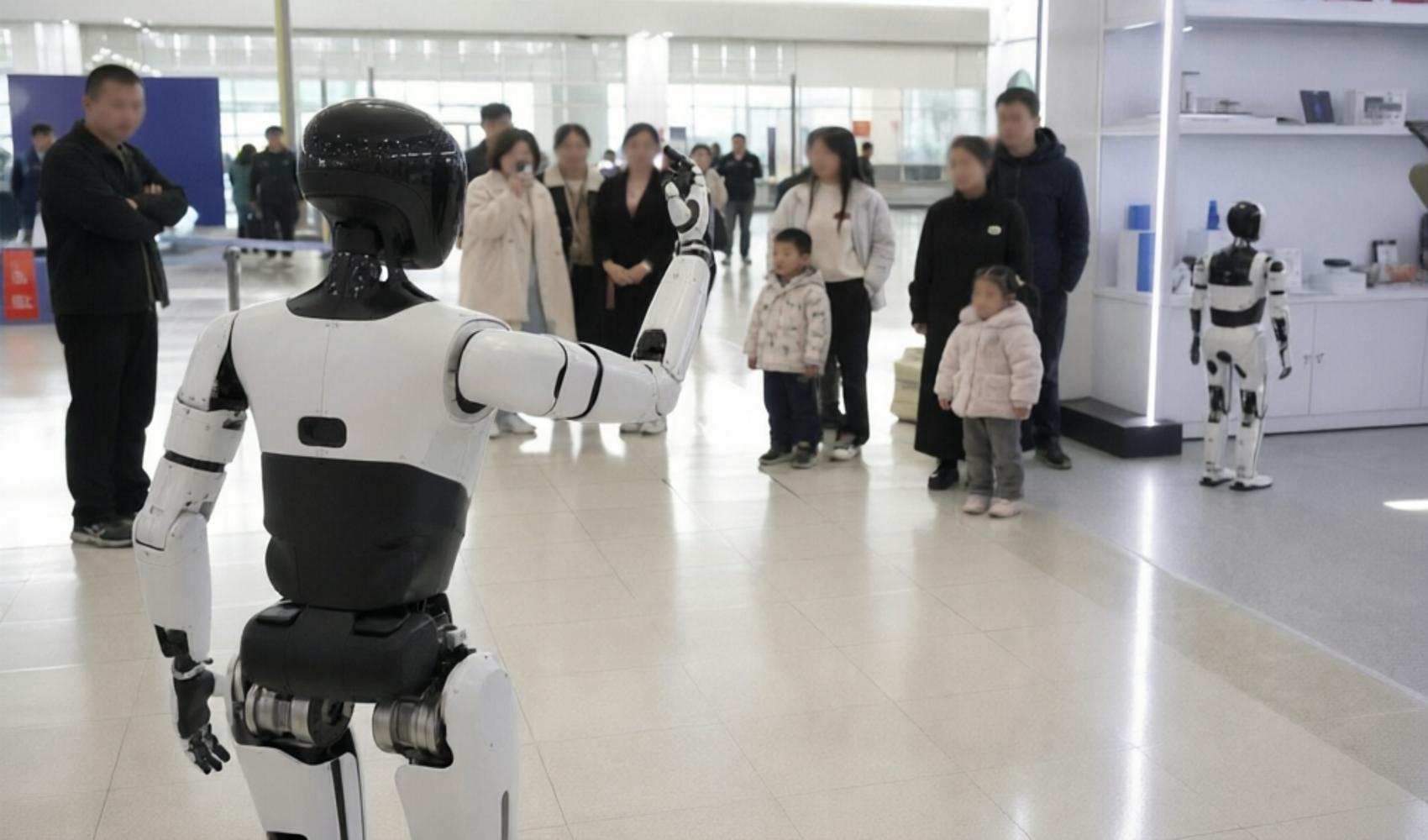
In China, humanoid robot manufacturers are garnering global attention with machines that dance, box, or perform in front of crowds. However, according to industry representatives and researchers, the vast majority of these robots have not yet reached the maturity required to take on complex tasks in factories or service sectors.
The sector, which is growing with heavy support from the Beijing administration, is becoming central to strategic technology goals while simultaneously sparking debates over whether production capacity has outpaced actual demand. As reported by Reuters, although Chinese manufacturers are developing globally competitive hardware, humanoid robots face significant limitations, particularly in terms of intuition, flexibility, reliability, and cost.
TRANSITION FROM DEMO TO FACTORY IS DIFFICULT
The 18 million dollar tender that Chinese robot manufacturer UBTech received from the Guangxi regional government last October is one example illustrating the current state of the sector. The project aims to supply humanoid robots and related hardware to a training center and generate data for "embodied AI" systems.
In these systems, trainers use headsets to see the environment from the robots' perspective and control devices equipped with sensors to transfer their own movements to the robots. The goal is to create training data for robots that can perceive the physical world, make decisions, and take action.
However, three people working at the center in Liuzhou, which Reuters visited in April, said the project is dependent on subsidies and lacks a clear roadmap to profitability. High operating costs and the low prices paid for robot training data are cited as factors complicating this picture.
The problem is not unique to a single center. According to experts, while China's humanoid robots can perform impressively in pre-choreographed shows, they struggle with tasks that require deviating from programmed routines. This limits the technology's claim to being a general-purpose labor alternative in the near term.
PRODUCTION ACCELERATED BY PUBLIC SUPPORT
According to BofA Global Research data, the humanoid robot sector shipped approximately 20 thousand robots worldwide last year; 95 percent of these shipments were carried out by Chinese manufacturers. Gan Xiaobin, an official from China's Ministry of Industry and Information Technology, announced that the country expects to produce more than 100 thousand humanoid robots this year. BofA projects that global annual shipments could reach 1.2 million units by 2030.
According to the National Development and Reform Commission, China's top economic planning body, there are more than 150 humanoid robot companies in the country. This number exceeds the number of electric vehicle brands in China. Public procurement data shows that central, provincial, and local governments spent at least 230 million dollars on humanoid robots and related products in the first half of the year. This amount was 62 million dollars in the same period of the previous year, and 6 million dollars in the same period of 2024.
Beijing's approach bears similarities to the industrial policy followed for electric vehicles and solar panels: a sector deemed strategic is subsidized, production capacity is established at an early stage, and the goal is to lower costs through intense competition. However, analysts say that unlike mature sectors such as automobiles or solar panels, humanoid robots are still an early-stage technology.
For this reason, some experts question how economically sensible human-shaped general-purpose machines are, given that robotic arms used for specific production tasks are already cheaper and more reliable. Hello China Tech analyst Poe Zhao commented, "Economic conditions do not support widespread use today." According to Zhao, the market is expected to focus more on "dangerous, repetitive, and structured jobs" in the near term.
The capital flowing into the sector is also at the center of the debate. Kevin Xu of the US-based Interconnected Capital stated that some founders see China's humanoid robot sector as a bubble, saying, "Sooner or later there will be 100 percent consolidation. The only question is who will do it and how ugly it will be."
China's rise in the robotics supply chain has geopolitical consequences beyond commercial competition. The US President Donald Trump administration banned the import of new Chinese-made humanoid robots in July; the need to protect the US AI sector from disruption and cyberattack risks was cited as the reason.
For now, UBTech and Unitree stand out among the companies that analysts see as having the potential to survive. However, the fundamental question facing the sector remains unchanged: while China tries to establish global dominance in humanoid robots through production capacity and public support, it remains unclear when the robots will truly become reliable for daily and industrial tasks.
News Source: 12punto