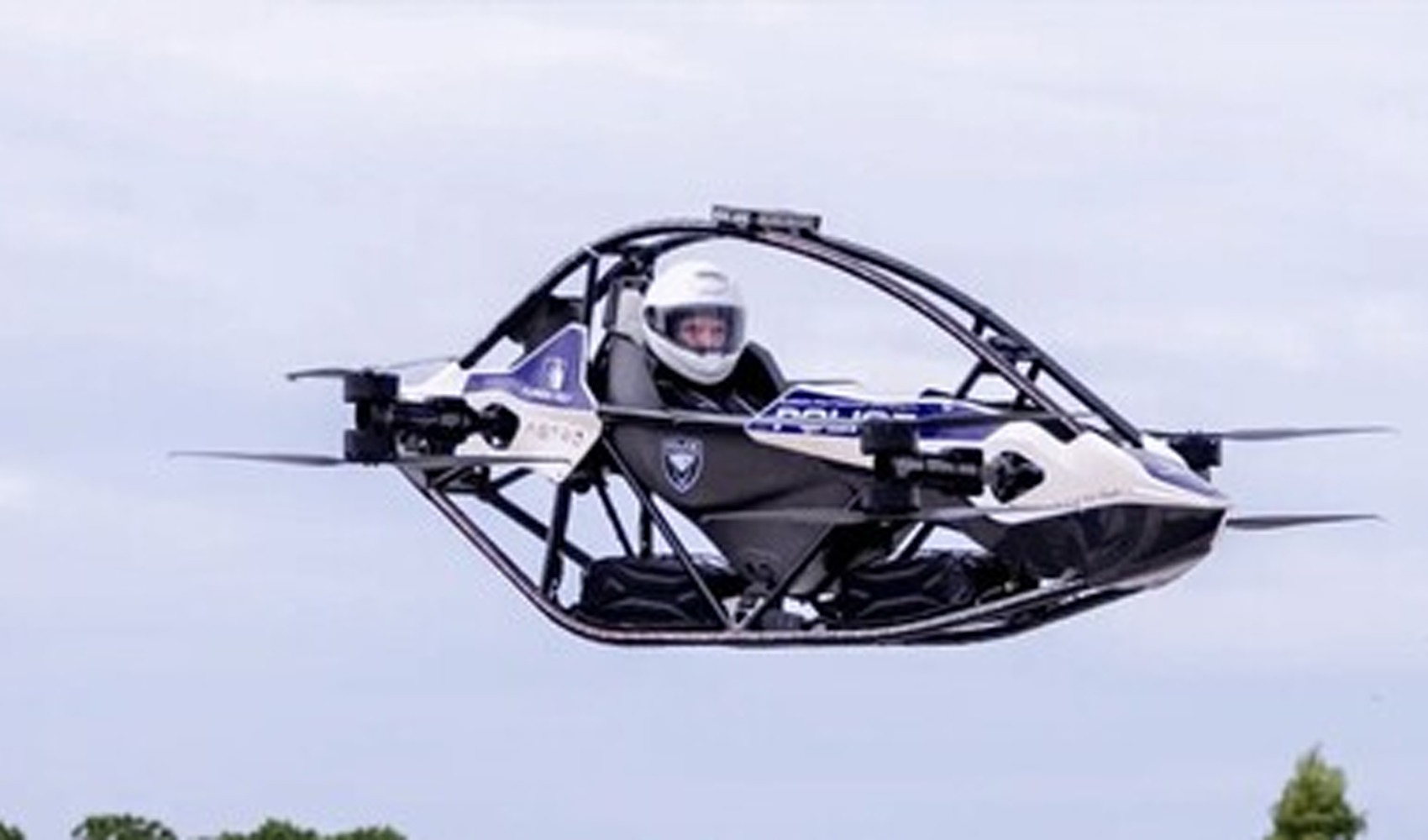
Florida Polytechnic University, located in the city of Lakeland in the U.S. state of Florida, has unveiled the Astro, a single-seat electric vertical take-off and landing (eVTOL) aircraft for its police unit. Developed in collaboration with the Swedish aviation company Jetson, the vehicle stands out from classic patrol cars with its police livery, open cockpit, and small roof light.
The university announced the vehicle as a notable first for police use in the United States. However, the Federal Aviation Administration (FAA) must grant final approval before the Astro can be used for routine duties.
Developed based on the Jetson ONE platform, the Astro takes off with eight electric motors and eight propellers. Since it can perform vertical take-offs and landings, it does not require a traditional runway, and according to manufacturer data, its flight time is approximately 20 minutes. Its maximum speed is software-limited to 102 km/h.
The vehicle can carry a single police officer, and the specified upper weight limit for the pilot is 95 kilograms. For this reason, the Astro is not positioned as an air ambulance or a team transport vehicle to carry multiple officers or injured individuals.
USAGE AREA AND COST DEBATE
According to University Police Chief Aaron Murray, the Astro could allow an officer to quickly reach areas that are difficult to access with land vehicles. Searching for missing persons, monitoring the campus perimeter, assessing damage after storms, and delivering emergency supplies are among the planned uses for the vehicle.
The police unit also aims to cooperate with other law enforcement agencies in the region if necessary. However, the vehicle's limited flight time and single-person capacity have raised questions regarding its operational utility.
It is stated that the university paid approximately 150 thousand dollars, or about 7.5 million TL, for the Astro. Criticisms particularly highlight the 20-minute flight time, high cost, and the fact that the university police already use surveillance drones. The main difference between the Astro and drones is its ability to transport an officer to the scene.
The manufacturer, Jetson, reports that the vehicle is designed to maintain flight in the event of a motor failure for safety. Automatic landing, a redundant battery system, and a parachute that can be deployed in an emergency are also among the announced safety features.
The Astro's role at the university will not be limited to police duties alone. Students and academics will use the flight data obtained from the vehicle in engineering research. Plans also include creating a digital twin of the vehicle and developing campus-specific virtual reality scenarios for police training.
News Source: 12punto