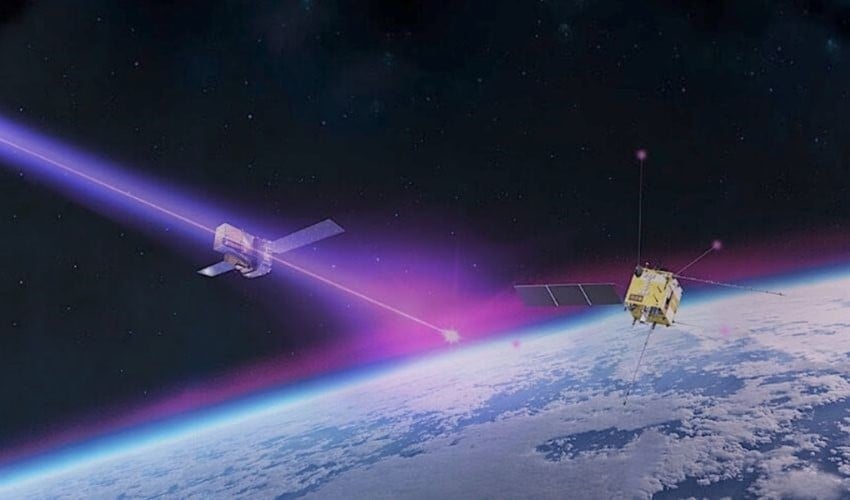
According to an ESA statement, the gamma-ray burst, designated GRB 221009A, which affected the ionosphere layer of Earth's atmosphere, was detected by the ESA's International Gamma-Ray Astrophysics Laboratory (Integral).
It was noted that the explosion, which was also recorded by high-energy detection satellites in orbits close to Earth, was extremely bright and long-lasting.
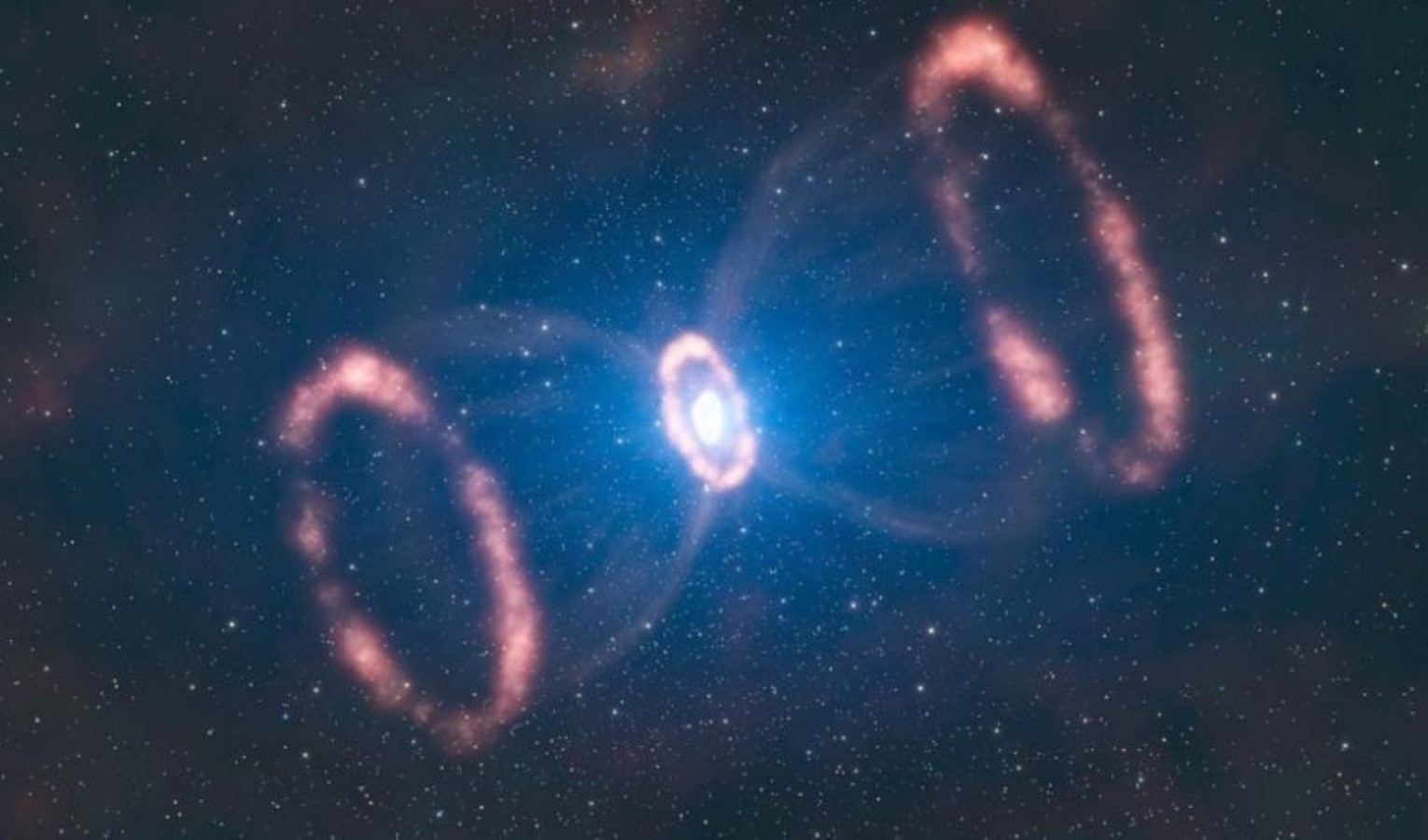
"Gamma-ray bursts" are energy emissions resulting from massive stellar explosions called "supernovae" or the collision of two super-dense neutron stars.
THE BRIGHTEST AND MOST POWERFUL EXPLOSION TO DATE
It was emphasized that while Integral, launched in 2002, records gamma-ray bursts every day, including those originating from the Sun, GRB 221009A, detected on October 9, 2022, at 15:21 Central European Summer Time, was different from the others.
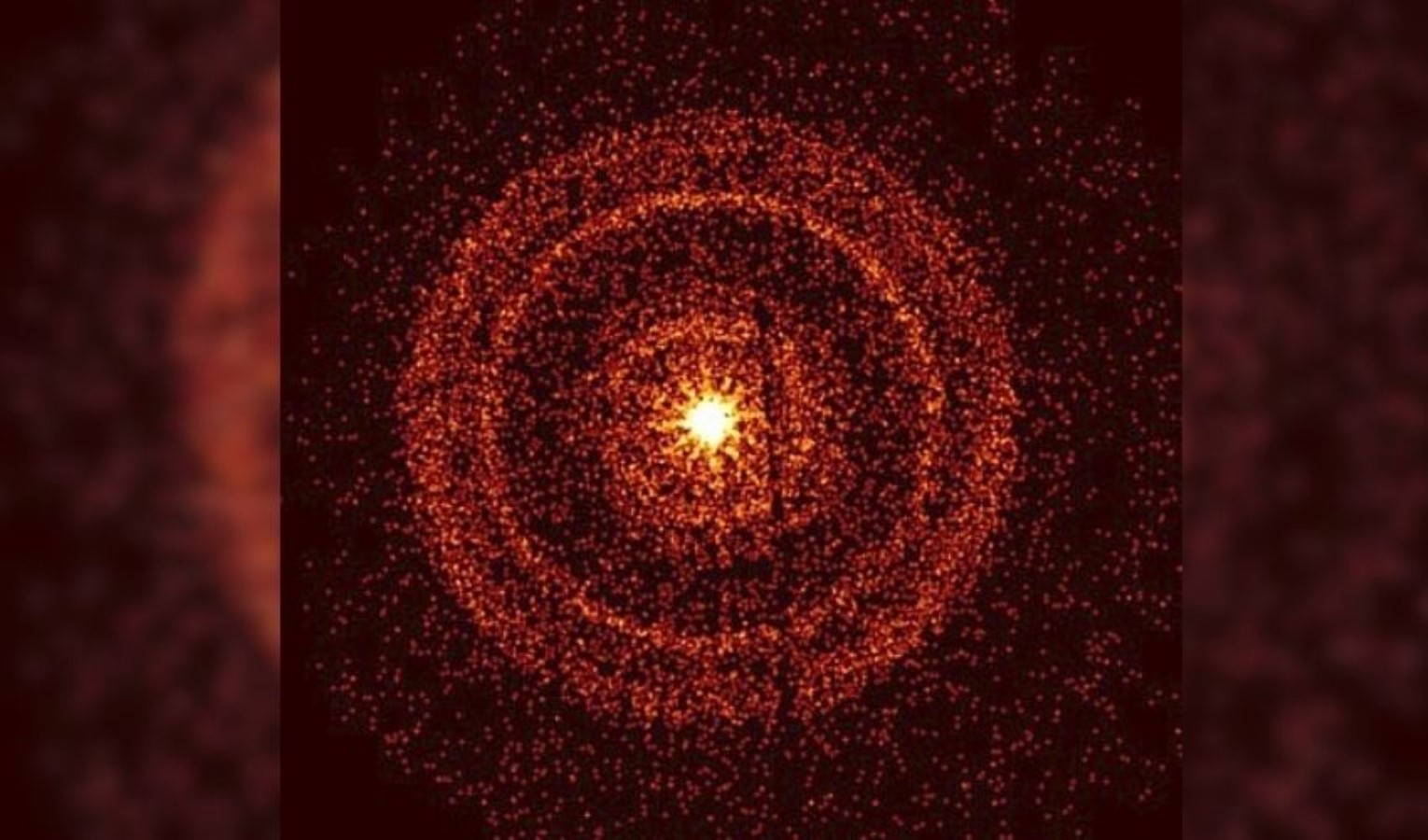
The lead author of the study, Mirko Piersanti, a researcher at the University of L'Aquila in Italy, stated, "This was likely the brightest gamma-ray burst we have ever detected."
Prof. Dr. Pietro Ubertini, a member of the National Institute for Astrophysics in Rome and principal investigator of Integral's IBIS instrument (gamma-ray imager), one of the study's authors, said, "We have been measuring gamma-ray bursts since the 1960s, and this is the most powerful value measured to date."
It was noted that GRB 221009A was 10 times more powerful than any previously measured, and that gamma-ray bursts of this magnitude reach Earth only once every 10,000 years.
The 800-second gamma-ray burst reportedly triggered lightning detectors in India and, as detected by instruments in Germany, had an effect on the ionosphere for several hours.
The ionosphere, the upper layer of the atmosphere from 50 to 950 kilometers above the Earth containing electrically charged gases called plasma, is divided into the upper ionosphere (350 kilometers and above) and the lower ionosphere.
EFFECTS OF THE GAMMA-RAY BURST ALSO DETECTED BY THE ZHANGHENG SATELLITE
Researchers believe that the disturbance GRB 221009A may have caused in the ionosphere could also be monitored by the "Zhangheng" Seismo-Electromagnetic Satellite (CSES), a joint Chinese-Italian project tasked with observing the effects of solar flares on the ionosphere and changes caused in the ionosphere by seismic events such as earthquakes.
While previously recorded gamma-ray bursts only caused electromagnetic changes in the lower ionosphere during nighttime hours when there were no solar effects, and in no case caused changes in the upper ionosphere, scientists detected a strong and intense ionospheric disturbance in the upper ionosphere for the first time with CSES due to the effect of GRB 221009A.
On the other hand, Laura Hayes, a solar physicist at the ESA, stated in her 2020 research that GRB 221009A also affected the lowest parts of the ionosphere, noting that such an effect could only be produced by very large solar flares.
Hayes noted that the lower layer of the ionosphere "descended" due to the effect of GRB 221009A, which was detected through the bouncing of low-frequency radio waves between the ionosphere and the Earth's crust.
A NEARBY STELLAR EXPLOSION COULD BE THE CAUSE OF MASS EXTINCTION
Researchers emphasized that the fact that an explosion occurring in a galaxy about 2 billion light-years away—and thus 2 billion years ago—could have such a large effect on Earth suggests that a supernova occurring within the Milky Way Galaxy could have much more serious consequences.
In the worst-case scenario, it was stated that a relatively nearby explosion would not only affect the ionosphere but also damage the ozone layer, causing dangerous ultraviolet radiation from the Sun to reach the Earth's surface.
It was emphasized that such an effect could be a possible cause of some mass extinctions known to have occurred on Earth in the past, but that much more research is needed to confirm this.
The research was published in Nature Communications.
News Source: AA