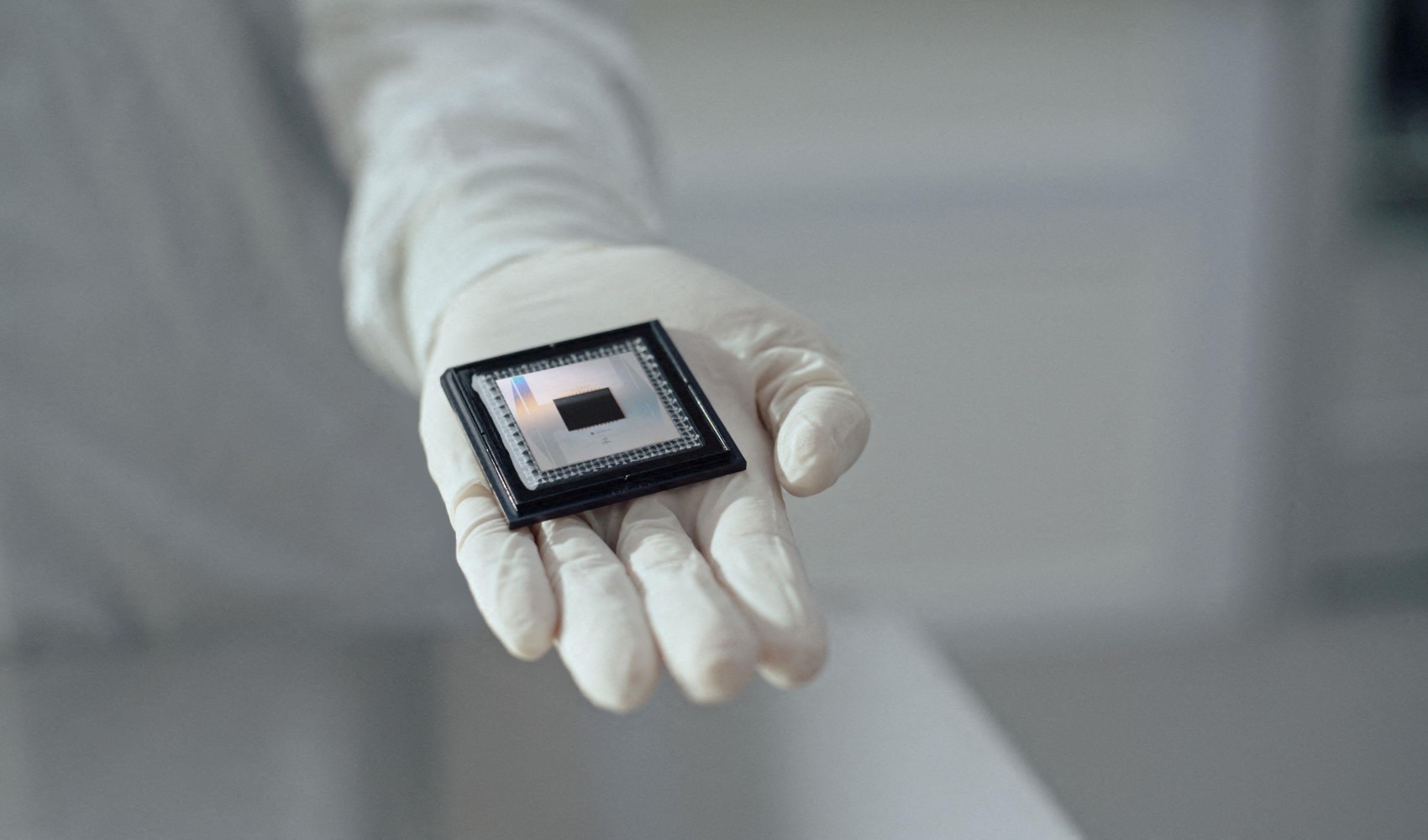
Google has reported a notable result regarding error rates, one of the biggest technical hurdles to the widespread and reliable use of quantum computers. Using a "magic state cultivation" method tested on its Willow quantum processor, the company reduced errors occurring during the preparation of certain quantum states by approximately 40 times.
In the experiments, it was reported that the accuracy of logical T states, which can be used in complex quantum calculations, reached 99.99 percent. This result demonstrates that quantum computers must advance not only by producing more qubits, but also by enabling reliable operations on those qubits.
NEW METHOD AIMS FOR FEWER RESOURCES
Qubits used in quantum computers are extremely sensitive to environmental influences. Therefore, detecting and correcting errors that arise during computation is critical for the system's usability. However, some quantum operations cannot be performed directly and with low error on qubits protected by classical error correction approaches.
This is where special quantum states called "magic states" come into play. These states are considered necessary for quantum computers to perform more complex operations. However, preparing these states with high accuracy requires significant hardware and computational resources in traditional methods.
One of the current approaches, "magic state distillation," relies on obtaining a smaller number of more reliable results from a large number of potentially erroneous quantum states. This process can be costly enough to consume a large portion of the resources of future quantum computers. Furthermore, since each magic state can only be used once, the system must constantly produce new states.
The "magic state cultivation" method tested by Google, on the other hand, relies on preparing a potentially erroneous quantum state in a small area and checking it with precise measurements. While failed attempts are eliminated, the successful quantum state can be expanded into a larger structure. Thus, instead of producing a small number of good results from a large number of defective states, high accuracy is targeted with a smaller system from the start.
REAL HARDWARE TEST ON WILLOW
During the testing of the method on real hardware, the Google team also encountered some technical challenges. While unexpected deviations were seen in initial measurements, tests and simulations revealed that the problem was related to noise from electrical equipment in the laboratory and temperature fluctuations.
Researchers subsequently made improvements to the processor's control systems and developed a new measurement technique called "kickback tomography" to evaluate the accuracy of quantum states. This technique reduced the noise effect encountered in previous measurements, allowing for a more reliable evaluation of the results.
Google also demonstrated that prepared quantum states could be transferred between different error correction methods. Using a technique called "grafting," a transition was made from a color code with a distance of 3 to a surface code with a distance of 5. Color code and surface code are known as two different approaches used to detect and correct errors in a quantum computer.
Demonstrating this transfer on a real quantum processor is seen as important for systems that could use different error correction methods together in the future. However, the emergence of additional errors during the transition indicates that the method still needs to be developed for practical use.
Google's result reveals that the "magic state cultivation" approach does not remain only at a theoretical level and can be applied on quantum hardware. However, for the method to be used in real-scale quantum computers, it must demonstrate similar success in much larger systems.
News Source: 12punto