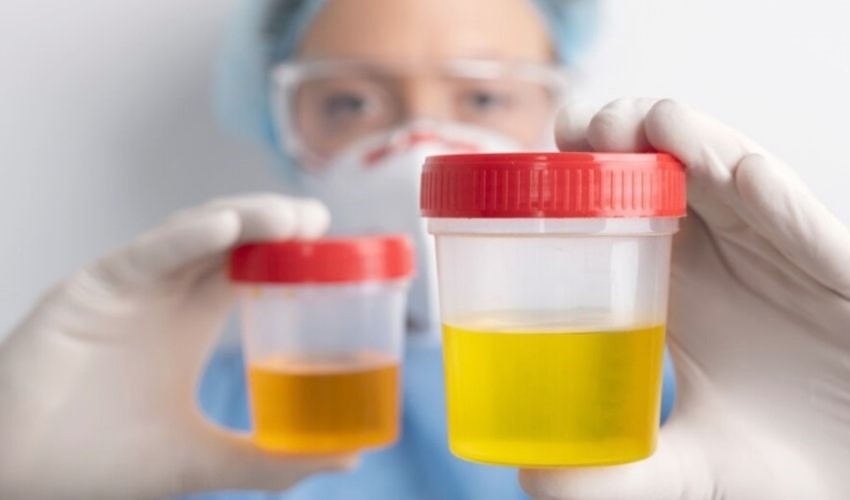
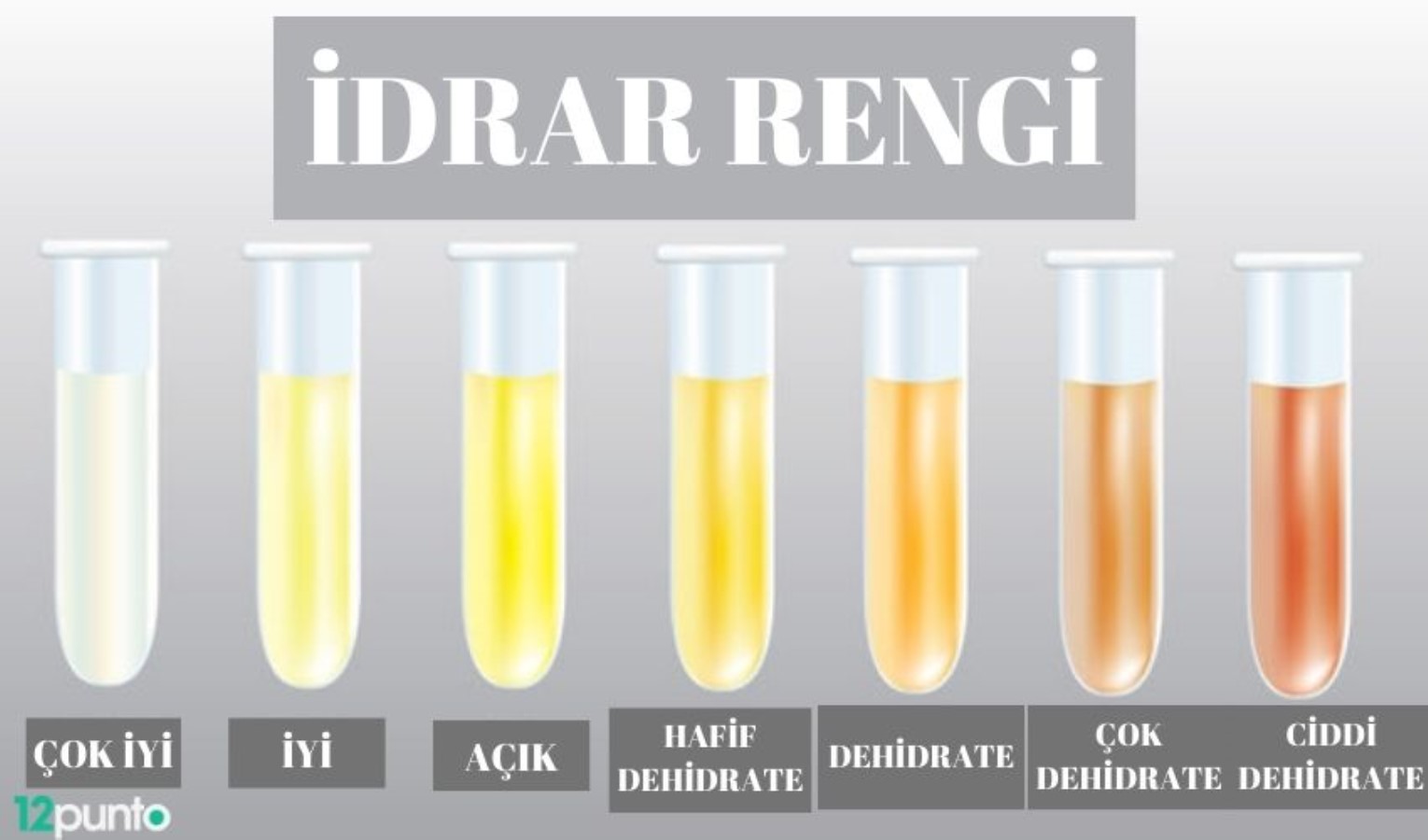
Every animal needs to excrete urine to get rid of waste in its body. Although a healthy person's urine is distinctly yellow, scientists have been unable to solve what gives our urine this color for hundreds of years. Now, a research team working at the University of Maryland and the U.S. National Institutes of Health believes they have solved this mystery by identifying a microbial enzyme that makes our urine yellow. The findings are detailed in a study published last week in the journal Nature Microbiology.
GUT MICROBIOME
According to Brantley Hall, a microbiologist and co-author of the paper at the University of Maryland, researchers have discovered that the color of urine is caused by an enzyme found in the gut microbiome called bilirubin reductase, drawing on studies dating back to the 1960s and a challenging three-and-a-half-year laboratory experiment.
As reported by Popular Science Turkey, Hall says, “The gut microbiome is full of incredible chemists.” “All these molecules that gut microbes make are very important for human physiology. As we understand more about the microbial chemistry in our gut, we will also understand important things. But first, we need to figure out which enzymes are responsible for what. If you don't know what's happening, you can't even start the research.”
Scientists already knew that this yellow color comes from the way the body gets rid of old blood cells.
Red blood cells generally reach the end of their life cycles after about 120 days and are broken down in the liver. A byproduct of this process, called bilirubin, is a bright orange component secreted from the liver into the gut. Bacteria living in the gut then convert bilirubin into a colorless compound called urobilinogen. Urobilinogen is eventually broken down into a yellow pigment molecule called urobilin, which plays a role in this coloration. What scientists did not know was which bacterial enzyme was responsible for this.
Identifying this enzyme has remained a microbial mystery for a long time for two main reasons. According to Brantley, the first difficulty encountered in this regard is that it has historically been very difficult and expensive to produce anaerobic microbes in the laboratory.
“The microbes that perform this function cannot live with atmospheric oxygen,” says Hall. “They die within minutes or seconds. And they never grow.”
Brantley and his research team managed to take advantage of scientific progress made in the last 15 years in cultivating these microbes in the laboratory that survive and multiply without oxygen.
The second obstacle was the lack of genome sequences of microbiomes in the gut. Recent advances in genetic sequencing mean that the research team has more sequences to work on to see how microbes in the gut function.
“In our own case, we identified microbes that break down bilirubin and those that do not,” says Hall. “We then conducted a comprehensive genome analysis between the two and identified candidate genes.”
TOWARDS THE GUT MICROBIOME
In the study, the research team compared the genomes of species living in the human gut that convert bilirubin to urobilinogen with species that also live in the gut but cannot perform this conversion. In this way, they identified the gene encoding bilirubin reductase. They then tested whether the enzyme in question would convert bilirubin in the bacterium to urobilinogen as well as it does in other gut bacteria, using the bacterium Escherichia coli (E. coli).
After searching for this gene in all known bacterial species, the researchers discovered that the enzyme is primarily produced by a bacterial species belonging to a large group of bacteria called Firmicutes, which is dominant in the gut microbiome. Screening the gut microbiomes of over 1,000 adults to find the urine-coloring gene, scientists found that 99.9 percent of these individuals harbored the gut bacteria carrying the bilirubin reductase gene.
“To me, the most surprising thing was to see how common this function is in adult humans,” says Hall. “Essentially, everyone's urine is yellow and everyone's stool is brown, so we knew there had to be microbes that do this. Actually, there aren't that many microbes that do this, and in essence, they are common in every human.”
POSSIBLE APPLICATIONS IN MEDICINE
The study also examined whether this gene is present in adults with inflammatory bowel disease (IBD) and in infants with jaundice. This gene was found in only about 68 percent of people with IBD and in about 40 percent of infants under three months old who are at high risk for jaundice. Although more research is needed, identifying what these enzymes and genes are could help develop better treatments for IBD, jaundice, and even gallstones.
“People are very excited about gut health, and I love talking to people about it,” says Hall. “Everyone either has a gut problem or knows someone who does. I think there is a tremendous opportunity in terms of positively regulating the gut microbiome and gut health.”
News Source: 12punto