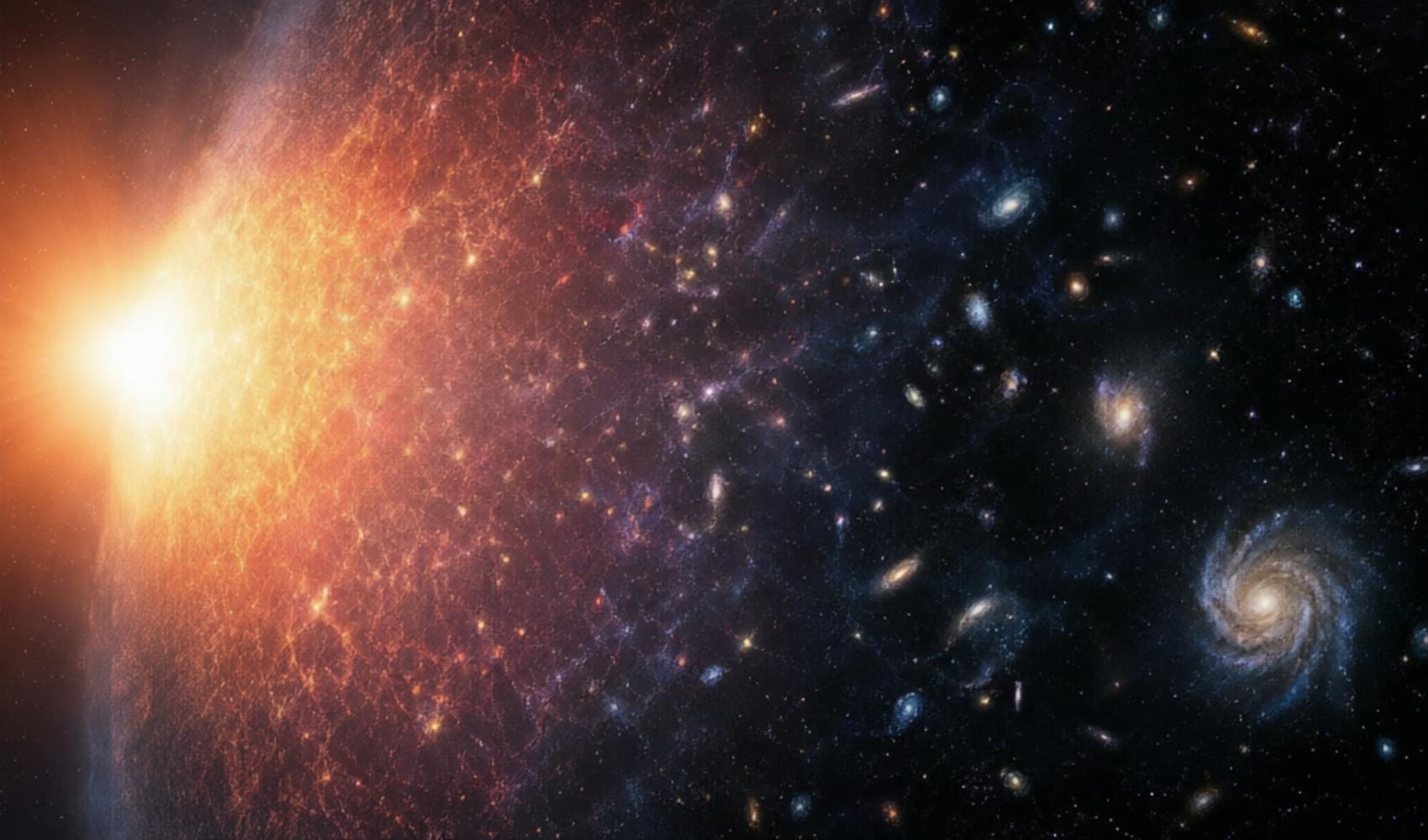
The Big Bang is often understood in everyday language as "the universe exploding from a single point." However, in modern cosmology, this model describes how space itself has expanded, starting from a very hot and dense early phase. The strength of the model lies not in a single observation, but in the fact that many independent measurements point to the same general picture.
The reason scientists take the Big Bang seriously today is that the model does not just offer a story about the past; it produces testable predictions. The expansion of the universe, the cosmic microwave background radiation, the abundance of light elements, and the large-scale distribution of galaxies are among the strongest pillars of these predictions.
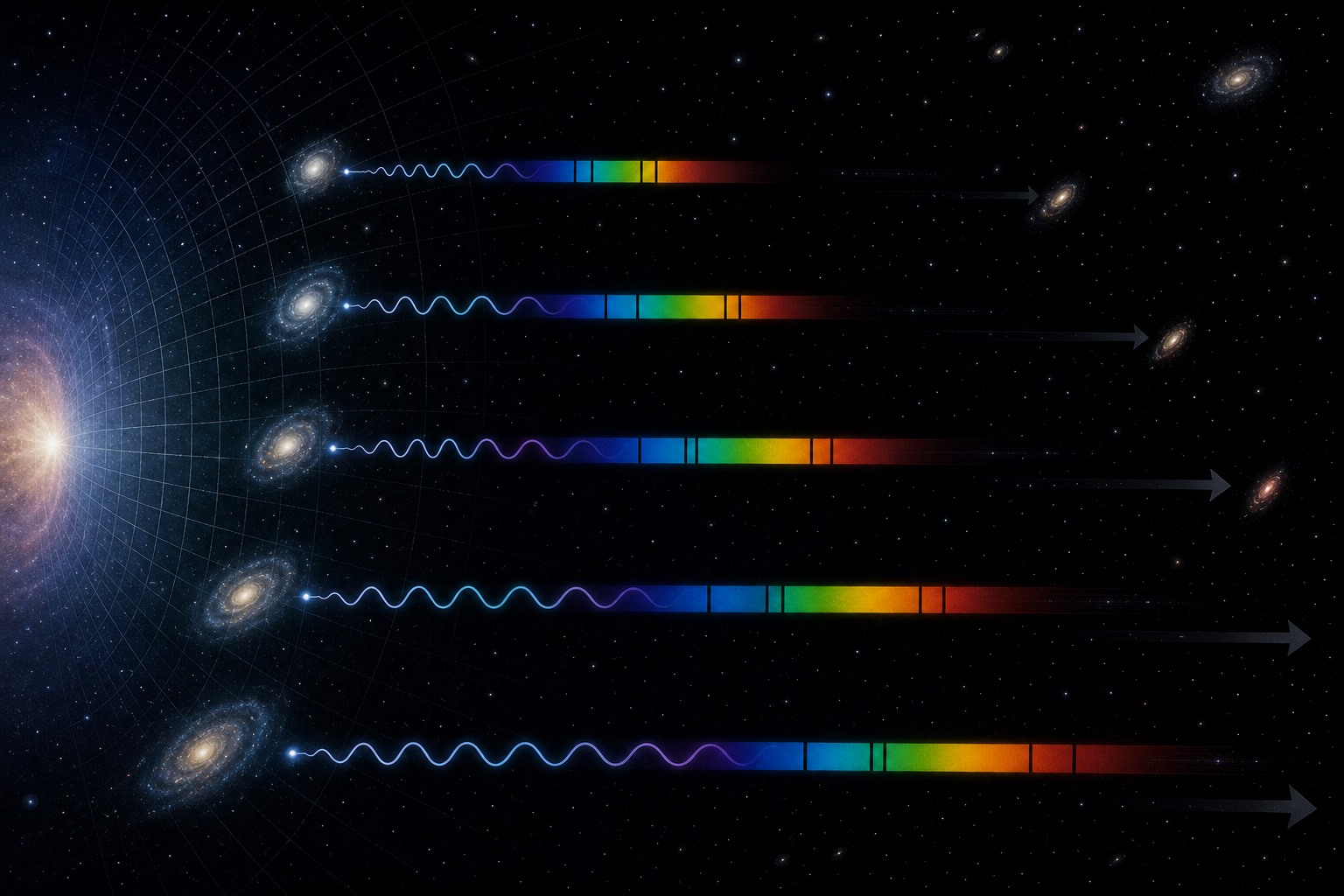
One of the most fundamental pieces of evidence for the Big Bang model is that distant galaxies appear to be moving away from us. When the light from galaxies is examined, it is seen that the spectral lines are generally shifted toward the red. This "redshift" means that the wavelength of the light is stretching, which is consistent with the idea that the universe is expanding.
This situation should not simply be thought of as galaxies flying out like pieces of an explosion within space. A more accurate description is that the scale of space between galaxies grows over time. Therefore, light coming from very distant galaxies carries information about a period when the universe was smaller and denser in the past.
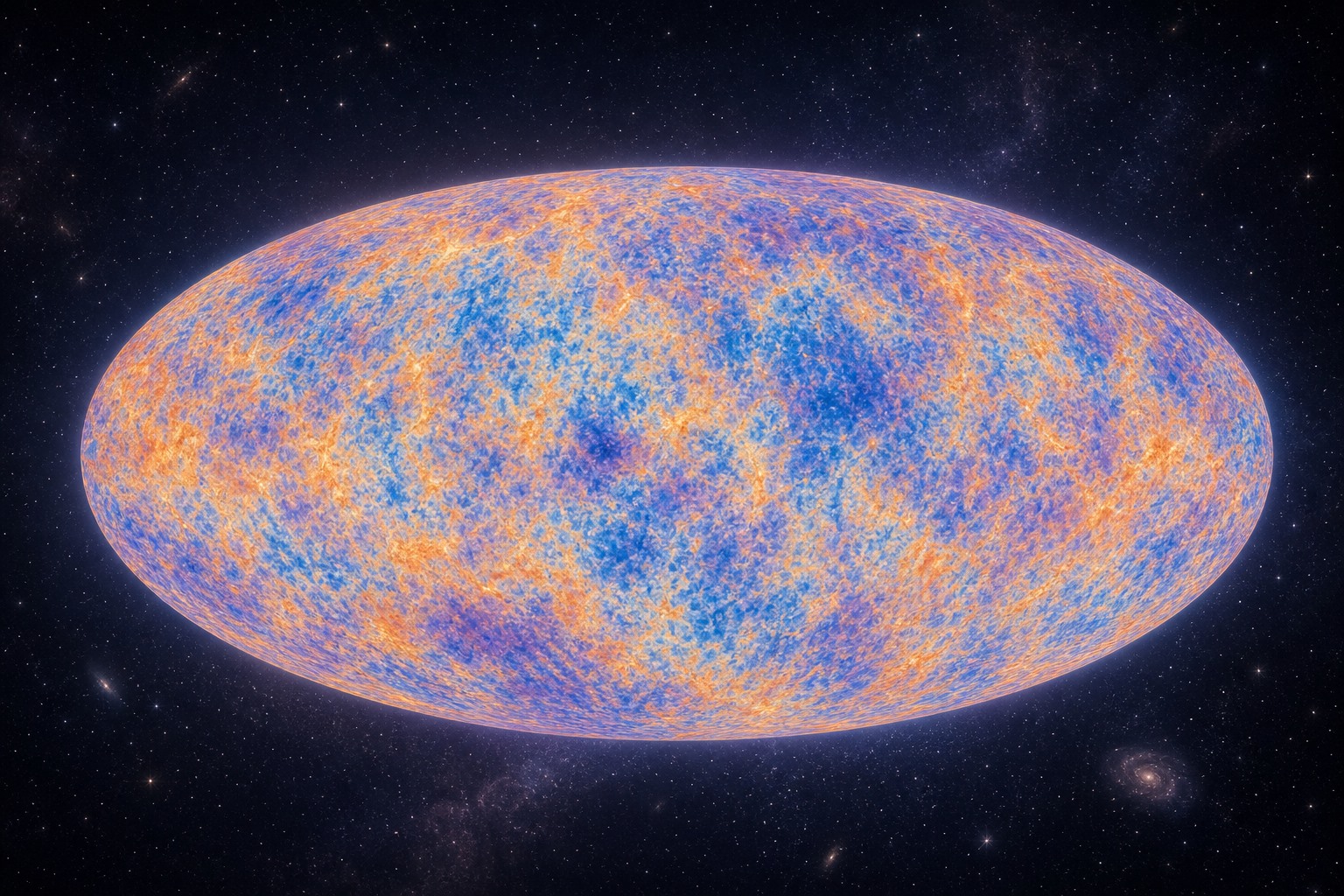
One of the most striking findings supporting the Big Bang is the cosmic microwave background radiation. This radiation is a very faint microwave signal coming from every direction in the universe and is interpreted as a remnant from the hot phase of the early universe.
When the universe was young, matter and light were too dense to be easily separated. As the universe expanded and cooled over time, light began to travel freely. This background radiation, which corresponds to a temperature of approximately 2.7 Kelvin today, acts as a kind of "fossil light" of the type expected by a hot and dense initial model.
THE ABUNDANCE OF LIGHT ELEMENTS
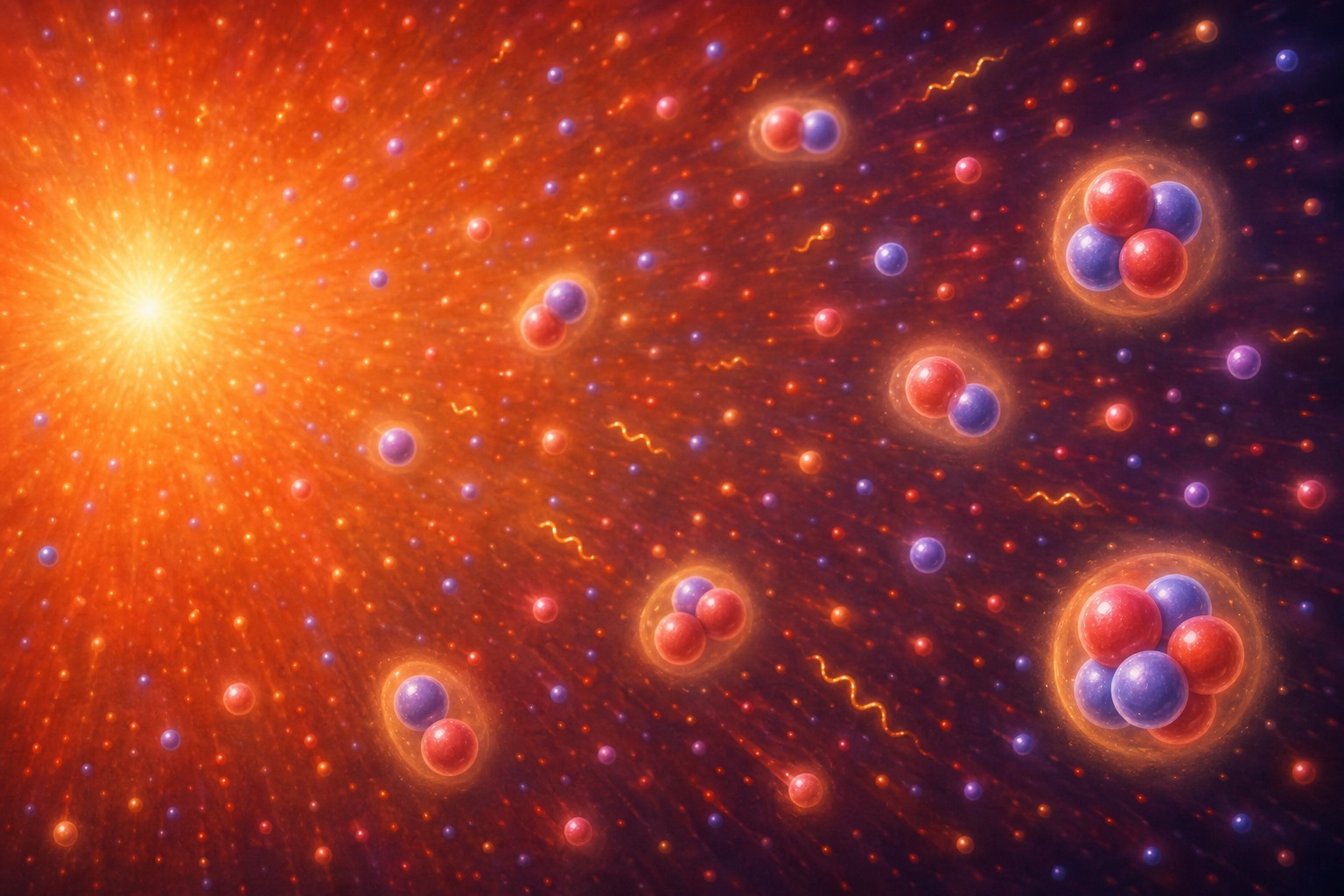
Another strong pillar of the model is the proportions of light elements in the universe. In the early period after the Big Bang, temperature and density allowed for the formation of light nuclei such as hydrogen, helium, and deuterium. This process is called "primordial nucleosynthesis" in cosmology.
The important point is this: The Big Bang model does not just say "light elements were formed"; it also allows for calculations regarding the conditions under which these elements should emerge and in what approximate proportions. The fact that the observed abundances of light elements are largely consistent with these calculations means the model has passed another independent test.
LARGE-SCALE DISTRIBUTION OF GALAXIES
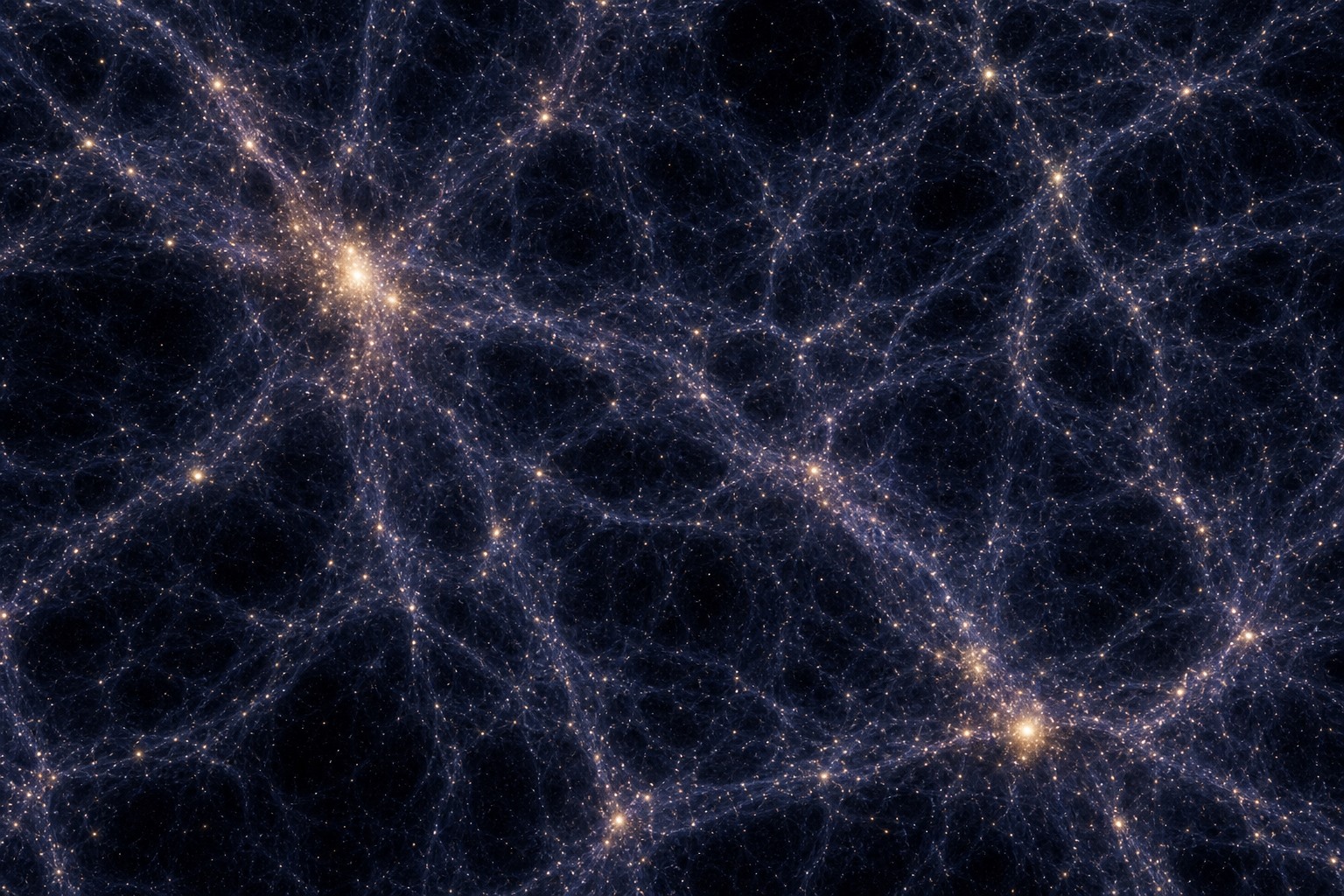
The universe is not just made up of individual stars and galaxies; on very large scales, it exhibits the appearance of a "cosmic web" consisting of galaxy clusters, filamentary structures, and giant voids. This structure is explained by the growth of small density differences in the early universe over time under the influence of gravity.
The very small temperature fluctuations in the cosmic microwave background are also important in this respect. These fluctuations are seen as traces of the initial conditions that later paved the way for the formation of galaxies and clusters. In other words, the background radiation and today's galaxy distribution are like different pages of the same cosmic story.
WHY DOES THE STRENGTH OF THE MODEL NOT RELY ON A SINGLE PIECE OF EVIDENCE?
The real element that makes the Big Bang model strong is that evidence from different fields complements each other. While the redshift of galaxies shows that the universe is expanding, the cosmic microwave background supports the fact that the universe was hotter and denser in the past. Light element abundances point to the physical conditions of the early universe; large-scale structure shows how small initial fluctuations grew.
Although each of these pieces of evidence is important on its own, a more convincing picture emerges when they are considered together. This is because the same model can explain both the very early period of the universe and the current distribution of galaxies. In science, strong models do not just interpret past observations; they also produce predictions that can be tested with new measurements.
Of course, the Big Bang model does not answer all questions about the universe on its own. Topics such as dark matter, dark energy, the details of cosmic inflation, and the nature of initial conditions are still areas of research. However, these open questions do not eliminate the fundamental pillars of the model; they are more a part of the effort to understand the early and late periods of the universe in more detail.
In conclusion, the Big Bang is not a randomly proposed idea in modern cosmology; it is a comprehensive scientific framework where different evidence such as expansion observations, cosmic background radiation, element abundances, and the large-scale structure of the universe converge.
News Source: 12punto