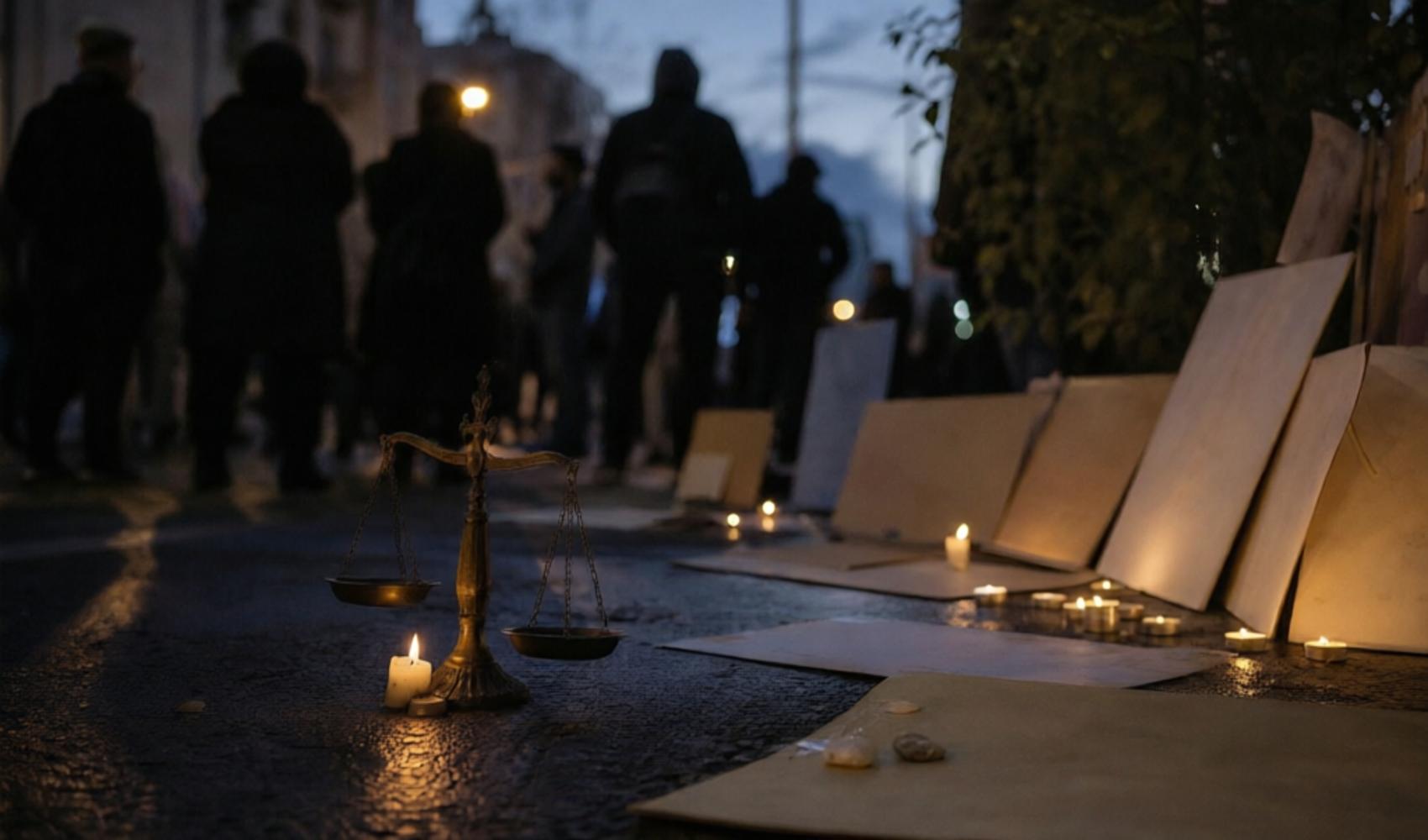
Amnesty International has criticized the international community for still failing to take concrete steps regarding the grave human rights violations that occurred during the suppression of protests held in Iran in January 2026. The organization warned that the failure to ensure justice over the past six months has perpetuated a "cycle of deadly repression" in the country.
In its statement, Amnesty International noted that the protests spread across the country with demands for human dignity, freedom, and an end to the Islamic Republic system, while security forces used unlawful and lethal force on a mass scale to suppress the demonstrations.
Diana Eltahawy, Amnesty International's Regional Director for the Middle East and North Africa, said, "It is unforgivable that six months after Iranian security forces unlawfully killed thousands of men, women, and children across the country in just two days, the international community has still taken no concrete steps to ensure international justice."
Eltahawy stated that this inaction deprives the victims and their families of justice and expressed that the risk of similar massacres in the future is increasing. Amnesty International reiterated its call for the establishment of an independent international justice mechanism regarding the situation in Iran and for the UN Security Council to refer the matter to the International Criminal Court.
BACKGROUND OF THE PROTESTS
According to the statement, the protests began on December 28, 2025, following rapidly rising inflation, a sharp devaluation of the currency, mismanagement of basic services, and deteriorating living conditions. The demonstrations, which started in Tehran, quickly spread across the country and turned into a broader popular uprising.
Amnesty International reported that the Supreme National Security Council of Iran announced in a statement released on January 21, 2026, that 3,117 people had been killed during the uprising. It was noted that Mai Sato, the UN Special Rapporteur on the situation of human rights in Iran, stated in an interview with the press on January 16 that at least 5,000 people had been killed by security forces.
The organization argued that following the massacre, a coordinated process of repression began across the country, involving mass arbitrary detentions, enforced disappearances, bans on assembly, pressure on the families of those killed, and the execution of dissidents.
Amnesty International also stated that on June 18, the US and Iran signed an agreement to end the war, but that human rights, justice, and reparations were not addressed in the text. The organization emphasized that the international community should not allow diplomatic processes to overshadow human rights violations.
News Source: 12punto