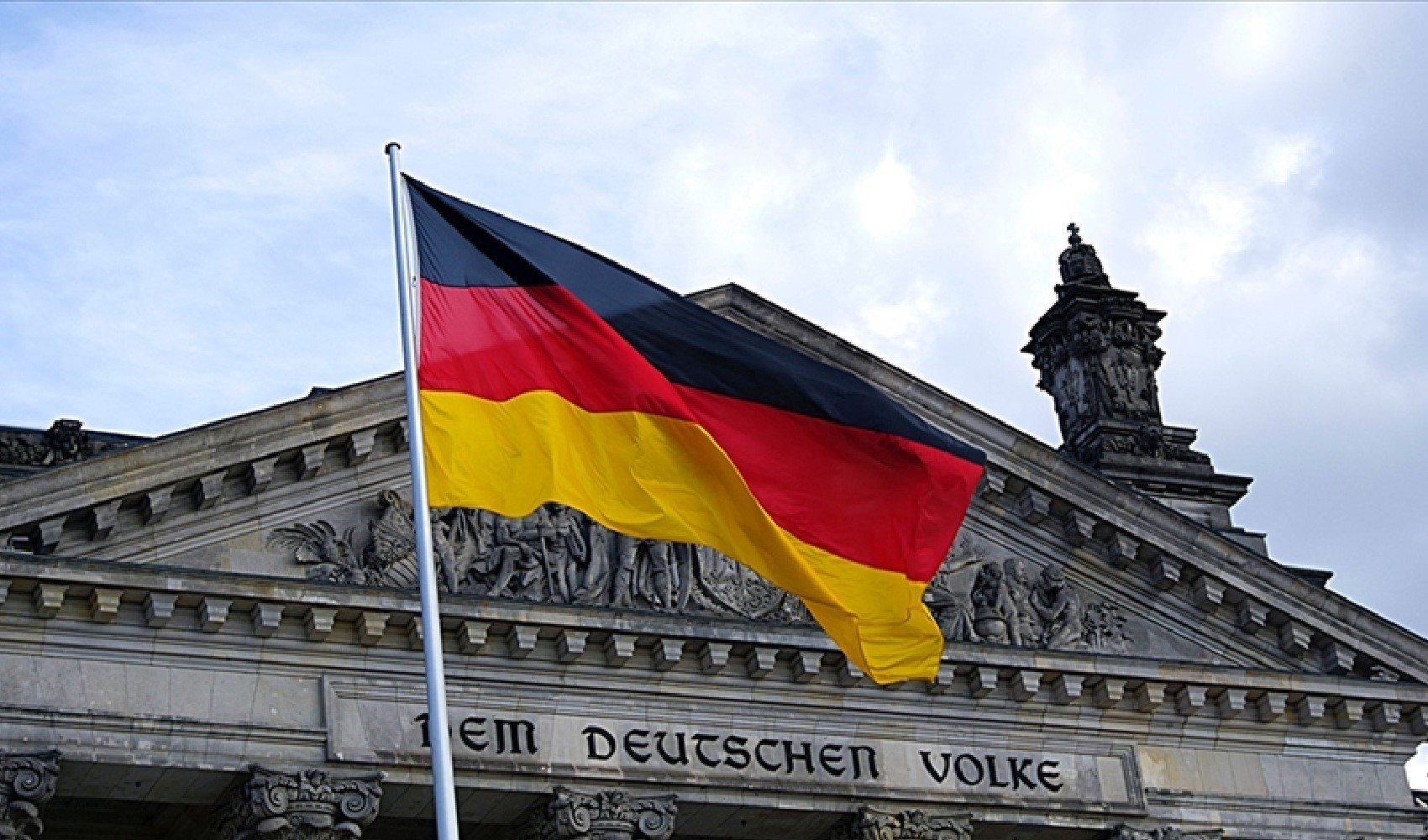
Christian Dürr, the FDP parliamentary group leader, announced in Berlin that all FDP ministers have been withdrawn from the government following the dismissal of Finance Minister Christian Lindner, who is also the party leader.
Dürr stated that all FDP ministers would submit their resignations to President Frank-Walter Steinmeier.
With this move, the FDP has decided to end its coalition partnership with the Social Democratic Party (SPD) and the Greens.
FDP LEADER BLAMES CHANCELLOR SCHOLZ
Dismissed Finance Minister Lindner made a statement in the Bundestag regarding the tension between the coalition partners.
FDP Chairman Lindner said, "The Chancellor (Olaf Scholz) demanded that I suspend the debt brake in the constitution. I could not accept this as it would violate my oath of office. Therefore, the Chancellor terminated his cooperation with me and the FDP at this evening's coalition meeting."
Noting that he had proposed early elections to Chancellor Scholz to facilitate the formation of a new federal government and to ensure Germany's ability to act, Lindner added, "The Chancellor flatly rejected this proposal at the coalition meeting."
Stating that they have carried the responsibility of coalition partnership for nearly three years, he said, "We have clear principles and convictions. Now our country is facing a decision on a new direction. We need a new era of growth, prosperity, and innovation, and the Free Democrats are still ready to take responsibility for this country, and we will fight to do the same in another government next year."
Lindner criticized Chancellor Olaf Scholz for lacking the strength to enable a fresh start for Germany.
Explaining that his party planned to reduce the tax burden, implement a practical climate and energy policy, and provide more control over immigration, Lindner pointed out that these proposals were not even accepted as a basis for negotiation by the Social Democratic Party (SPD) and the Greens, and made the following assessments:
"Olaf Scholz has long failed to realize that our country needs a new economic revival. He has long underestimated the economic concerns of the citizens. Even today, he questions the necessary decisions that would allow citizens to be proud of Germany again. The Chancellor's proposals are insufficient, unambitious, and do not contribute to overcoming our country's fundamental weakness in growth. We cannot maintain our prosperity, social security, and ecological responsibility in this way."
Vice Chancellor and Minister for Economic Affairs Robert Habeck from the Green Party stated that they knew the government had not been making a good impression for some time, saying, "We have argued often, but I want to say that this evening is not wrong or right for us, but almost tragic."
Stating that Germany has a role in the fight for peace and freedom in Ukraine, Habeck said, "We want peace and freedom in Europe, and we have a special role here. The FDP was not ready to seize these opportunities or to take these paths."
Foreign Minister Annalena Baerbock also said, "Today is not a good day for Germany or for Europe. But we will continue to fulfill our responsibility."
Markus Söder, Chairman of the Christian Social Union (CSU) and Minister-President of Bavaria, who is in the opposition, called for an immediate vote of confidence in the Bundestag, not in mid-January.
In a post on the social media platform X, Söder said, "The government is history. No more time can be wasted. Germany now needs new elections and a new government quickly. There should be no tactical delays."
THE PROCESS LEADING TO THE GOVERNMENT CRISIS
There have been problems for some time between the SPD, the Greens, and the FDP, which make up the coalition in Germany, regarding economic issues.
The coalition government has been facing difficulties regarding the 2025 budget, the second pension package, and a growth package called the "Growth Initiative - New Economic Dynamics for Germany."
In particular, the FDP's fiscally hawkish stance caused disagreement among partners regarding the budget to be prepared for 2025 and created an atmosphere of a government crisis in the country.
Finance Minister Christian Lindner and Minister for Economic Affairs and Climate Action Robert Habeck presented different and independent proposals to revitalize the economy. These proposals, which were not coordinated between the parties, showed that there was a deep division in the coalition.
Due to the disagreements, FDP leader and Finance Minister Christian Lindner proposed early elections, and Chancellor Scholz, who rejected this, dismissed Lindner from his ministry.
The general elections, which were expected to be held on September 28, 2025, are expected to be moved to an earlier date due to the government crisis.
Chancellor Scholz announced that he would call for a vote of confidence on January 15, 2025, for this purpose.
If Scholz fails to receive a vote of confidence, he will ask President Frank-Walter Steinmeier to call for elections, and following this process, elections could be held in Germany within 60 days.
It could be possible to hold early elections in Germany as early as March 9, 2025.
The FDP held the ministries of Finance, Justice, Transport, and Education in the government.
News Source: AA