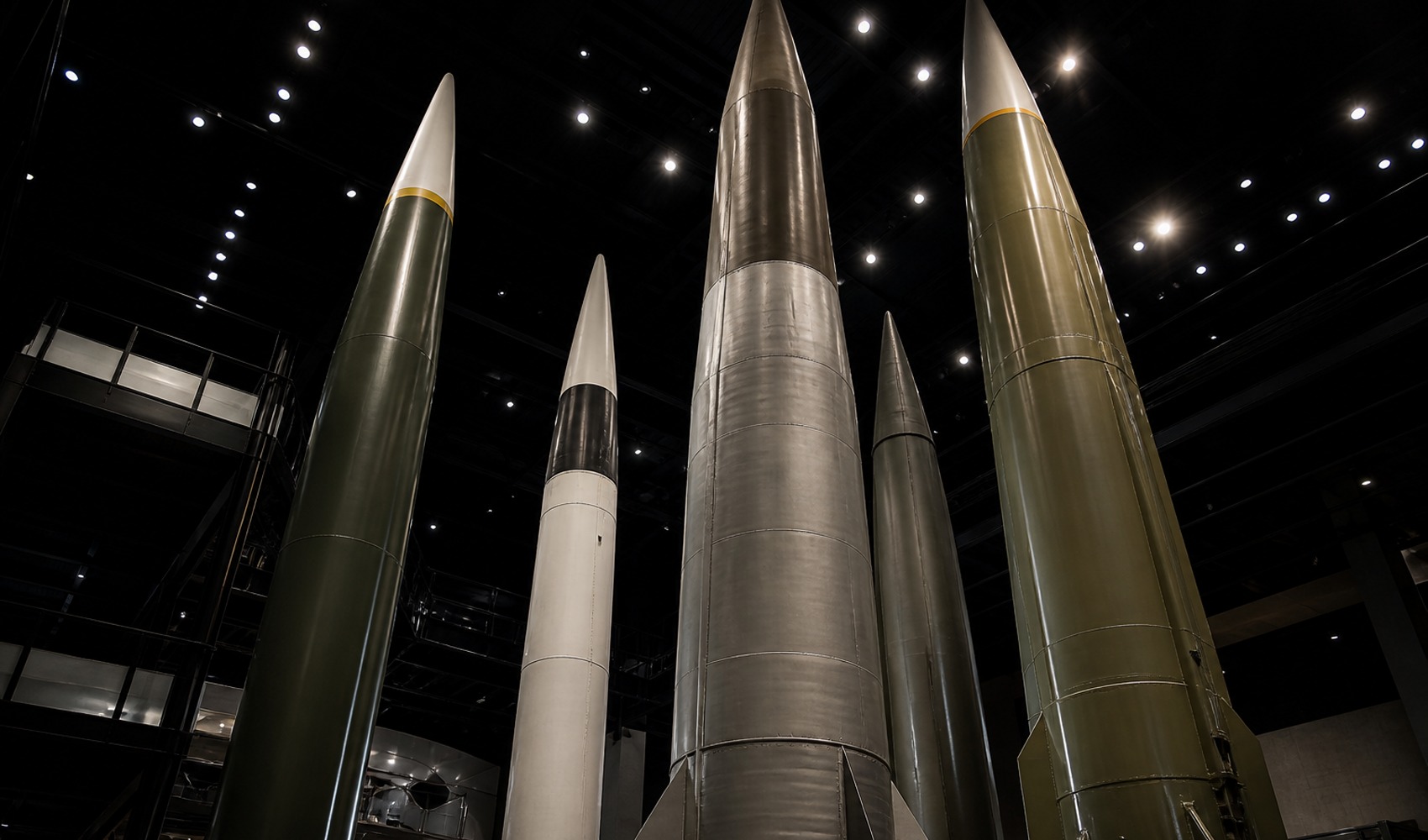
The British magazine The Economist has assessed that the fear of "nuclear catastrophe," which limited escalation during the Cold War, is weakening among the leaders of major nuclear powers. The analysis states that the old balance based on the prospect of mutual destruction is eroding, and that nuclear actors, led by the US and China, are expanding or modernizing their arsenals.
Recalling the 1986 summit in Reykjavik between US President Ronald Reagan and Soviet leader Mikhail Gorbachev, the magazine wrote that the contacts made at that time paved the way for subsequent treaties that eliminated certain categories of nuclear weapons. It was also emphasized that the two leaders reaffirmed the long-term goal of completely abandoning nuclear weapons.
It was stated that the picture is now reversed. According to the analysis, while the US is increasing its missile defense capacity, it is also developing collaborations in the field of nuclear technology with allies such as Saudi Arabia and South Korea. It was also reported that US President Donald Trump advocates for the "Iron Dome" air defense system, which aims to protect the country against missile attacks.
ARMS CONTROL AGENDA IS NARROWING
According to The Economist, China under Xi Jinping, while stating that it is against nuclear war, refuses to participate in trilateral nuclear arms control negotiations with the US and Russia. Beijing explains this stance on the grounds that its own arsenal is much smaller compared to American and Russian inventories.
The analysis also argued that China's determination to support international sanctions aimed at limiting the nuclear programs of North Korea and Iran has diminished. It was noted that Beijing avoids pressure to a level that would risk the stability of the political regimes in these countries.
International Atomic Energy Agency Director General Rafael Grossi also said in an interview with Le Temps in June that the current situation in the nuclear field cannot be directly compared to the arms race of the early 1980s, and stated that nuclear disarmament remains a distant goal.
According to data from the International Campaign to Abolish Nuclear Weapons (ICAN), US spending on nuclear weapons increased by 22 percent in 2025, reaching 69.2 billion dollars. This amount means that Washington allocates more resources to its nuclear arsenal than all other countries combined. On the same list, China ranked second with 13.5 billion dollars, the UK third with 12.6 billion dollars, and France fourth with 7.7 billion dollars.
Under the Treaty on the Non-Proliferation of Nuclear Weapons, the US, Russia, the UK, France, and China are recognized as official nuclear powers because they produced and tested nuclear weapons before January 1, 1967.
News Source: 12punto